Eyes on Evil: The Story of Sigrid Schultz
Washington, District of Columbia | Film Feature
Documentary, History
Eyes on Evil tells the story of Sigrid Schultz, the fearless Chicago Tribune correspondent who reported from the heart of Nazi Germany as democracy crumbled into dictatorship. What can we learn from her front-row seat to fascism’s rise?
Eyes on Evil: The Story of Sigrid Schultz
Washington, District of Columbia | Film Feature
Documentary, History

1 Campaigns | District of Columbia, United States
Green Light
This campaign raised $17,025 for post-production. Follow the filmmaker to receive future updates on this project.
69 supporters | followers
Enter the amount you would like to pledge
Eyes on Evil tells the story of Sigrid Schultz, the fearless Chicago Tribune correspondent who reported from the heart of Nazi Germany as democracy crumbled into dictatorship. What can we learn from her front-row seat to fascism’s rise?
About The Project


- The Story
- Wishlist
- Updates
- The Team
- Community
Mission Statement
The Story

I'm thrilled to announce that we have reached our initial goal of $14,000, and we're now officially working toward our stretch goal of $20,000! The additional funds will allow us to license all the historical footage we need plus hire a sound designer. Thank you for your support!
Synopsis

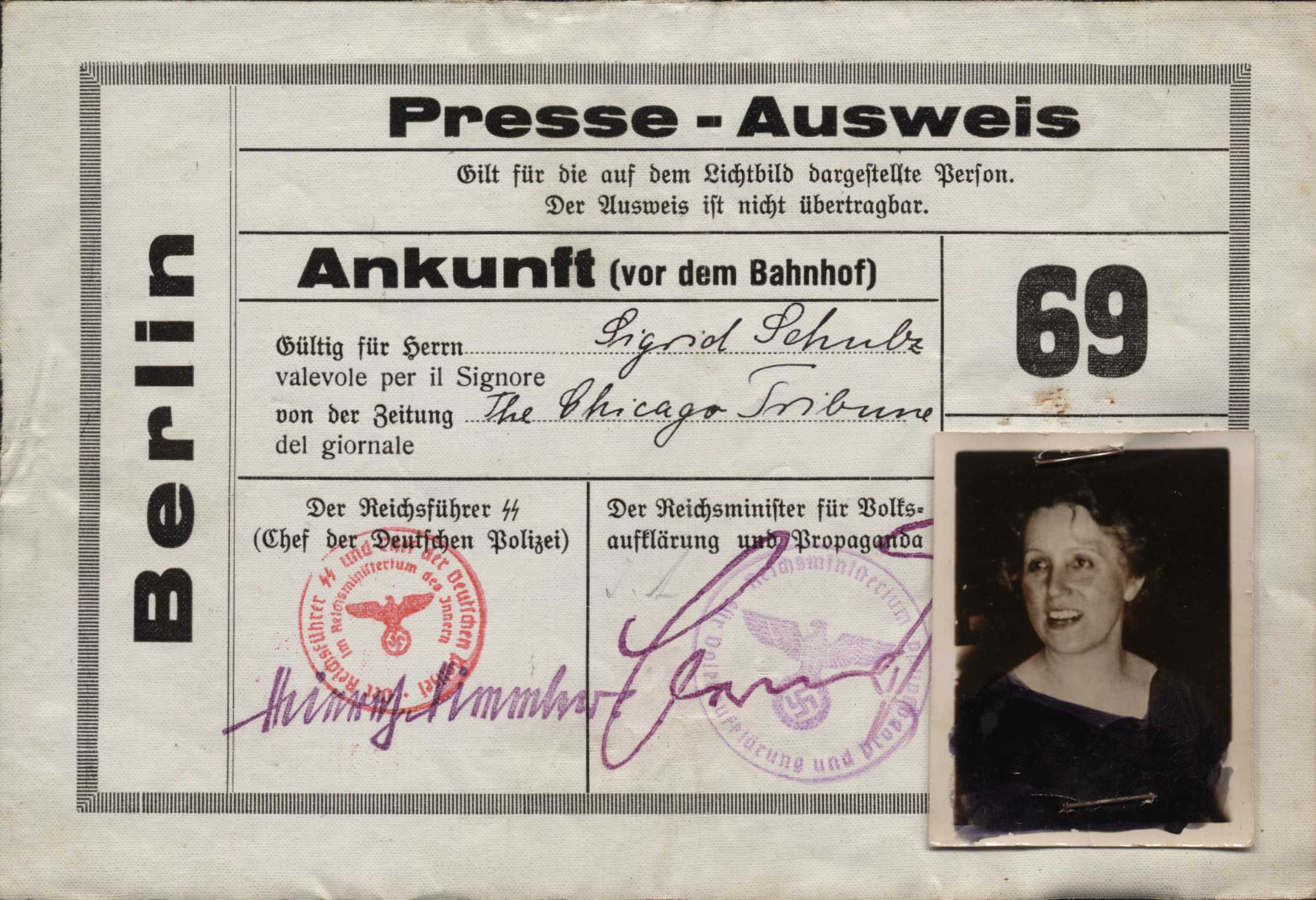
From warning early and often about the threat Hitler posed, to secretly writing under the alias “John Dickson” to evade Nazi censors, to powerfully reporting on the liberation of the Buchenwald concentration camp, Schultz emerged as one of the most important foreign correspondents in U.S. history. Yet, until recently, little was known about her. After the war, Schultz faded into obscurity in Westport, Connecticut, struggling to adapt to the postwar world.
While the film illuminates the life of an extraordinary woman forgotten by history, at its heart, it is about journalism itself: what it means to do it well; the limits of its power; and the personal toll of bearing witness to evil.
This film has a distribution agreement with PBS Plus. All donations by U.S. citizens are tax-deductible via our 501(c)3 fiscal sponsor Women in Film & Video.
The Characters
The film centers on three key relationships in Schultz’s life:
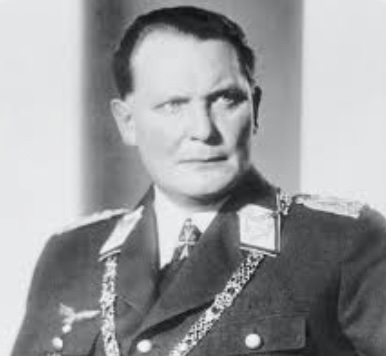
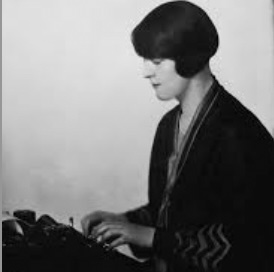 Dorothy Thompson, the Philadelphia Public Ledger’s bureau chief, served as both a peer and rival. Their contrasting styles, initial assessments of Hitler, and navigation of the male-dominated world of journalism reflect broader tensions in the press corps.
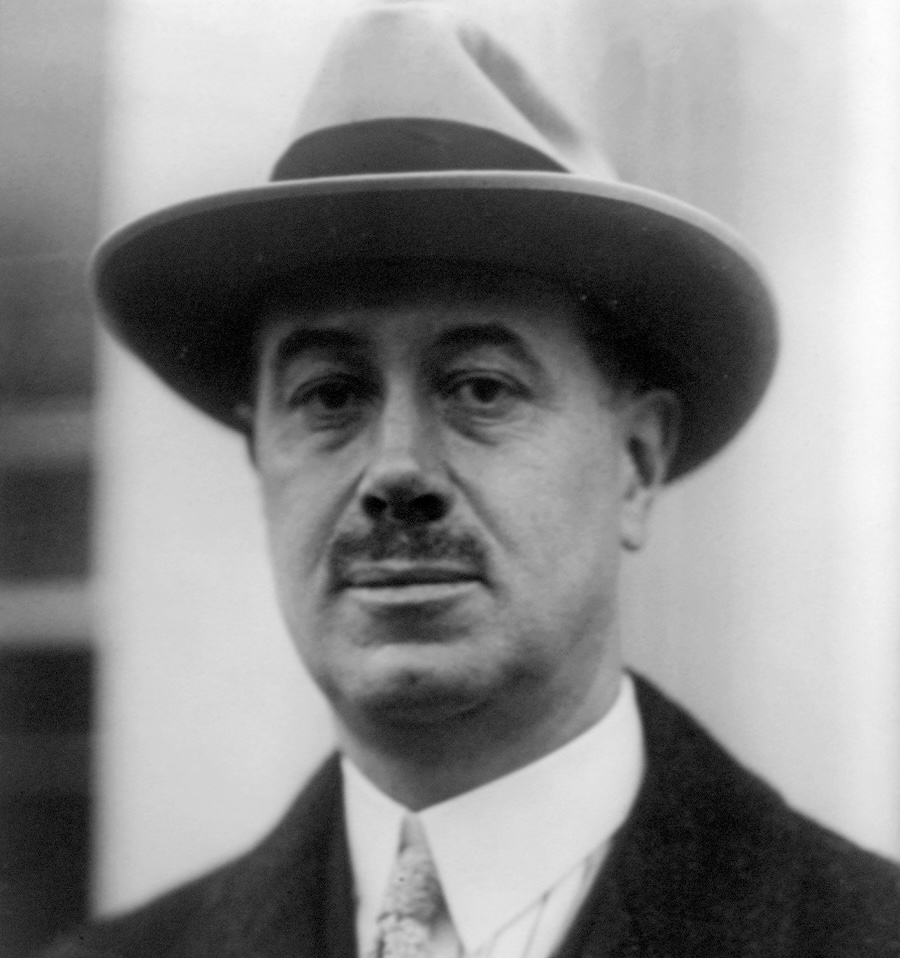 Colonel Robert McCormick, editor-in-chief and CEO of The Chicago Tribune, a staunch “America First” conservative and isolationist, often clashed with Schultz’s reporting.
Why Now?
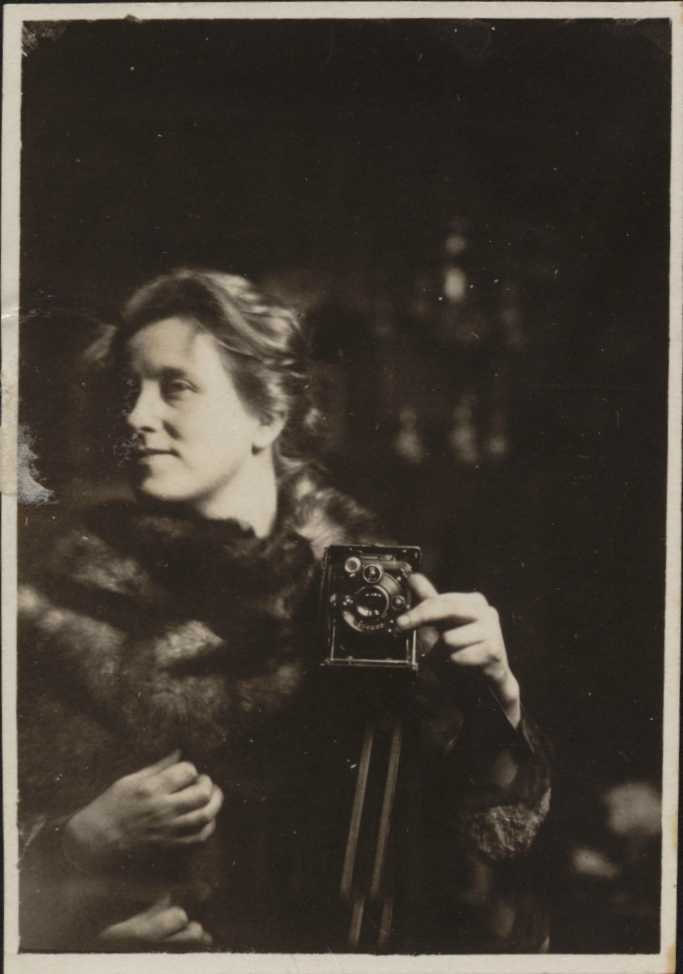
Amid growing attacks on press freedom and fears that U.S. democracy is unraveling, Sigrid Schultz's life offers a clear reminder that truth-telling is an essential defense against authoritarianism. What started five years ago as a project to give a remarkable woman reporter her due, has turned out to be, in 2025, a story of great modern relevance. It's about the fragility of democracy, the importance of an independent press, and having moral courage in times of fear.
In the archives, I uncovered a radio interview from 1969 in which Schultz was asked what we can learn from her experience covering Nazi Germany. Her response back then, which is in the final scene, is just as worthy of our attention today as it was back then.
Director's Statement
I first learned about Sigrid Schultz when I read Andrew Nagorski’s fascinating book, Hitlerland, about Americans living in Berlin during the Nazis’ rise to power. I was immediately struck by the Chicago Tribune correspondent whose feistiness, bravery, glamor, and dramatic encounters seemed plucked straight from a Hollywood movie.
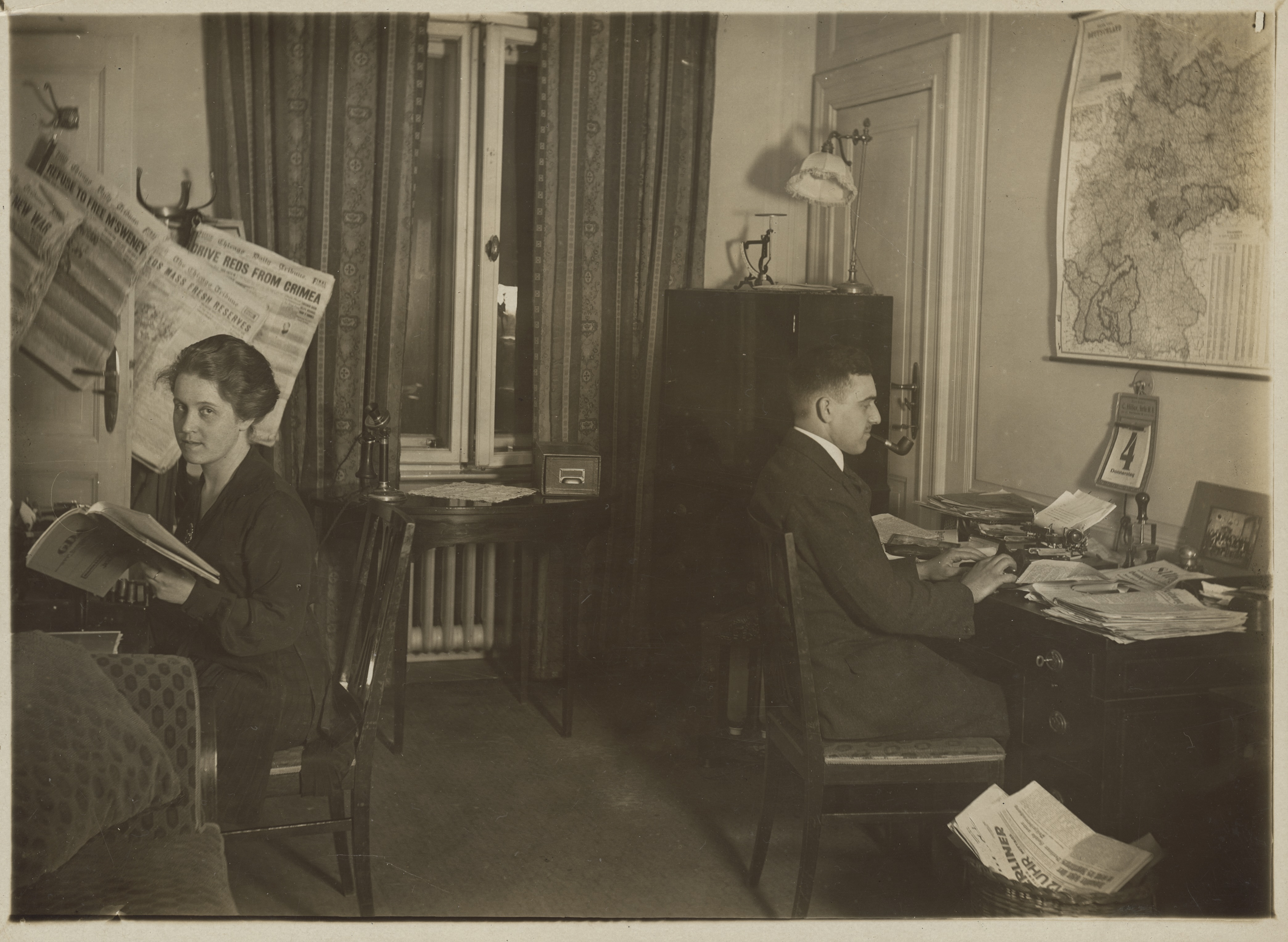
Source: Wisconsin Historical Society
This was a woman who, unlike most other American reporters, had observed Berlin from WWI all the way through the outbreak of WWII; who had alerted the world early to the threats of Nazism; who had interviewed Hitler several times; who had cooked for Hitler’s deputy, Hermann Goering, to extract information; and who had been among the first reporters to cover the liberation of the Buchenwald concentration camp. Other American journalists said she was the most informed voice on Nazi Germany. And she had done it all at a time when foreign correspondence was primarily a man’s domain. How on earth had I not heard of this extraordinary female journalist? It turned out that, until recently, there were no biographies about Schultz, nor had she managed to finish her memoir before she died in 1980.
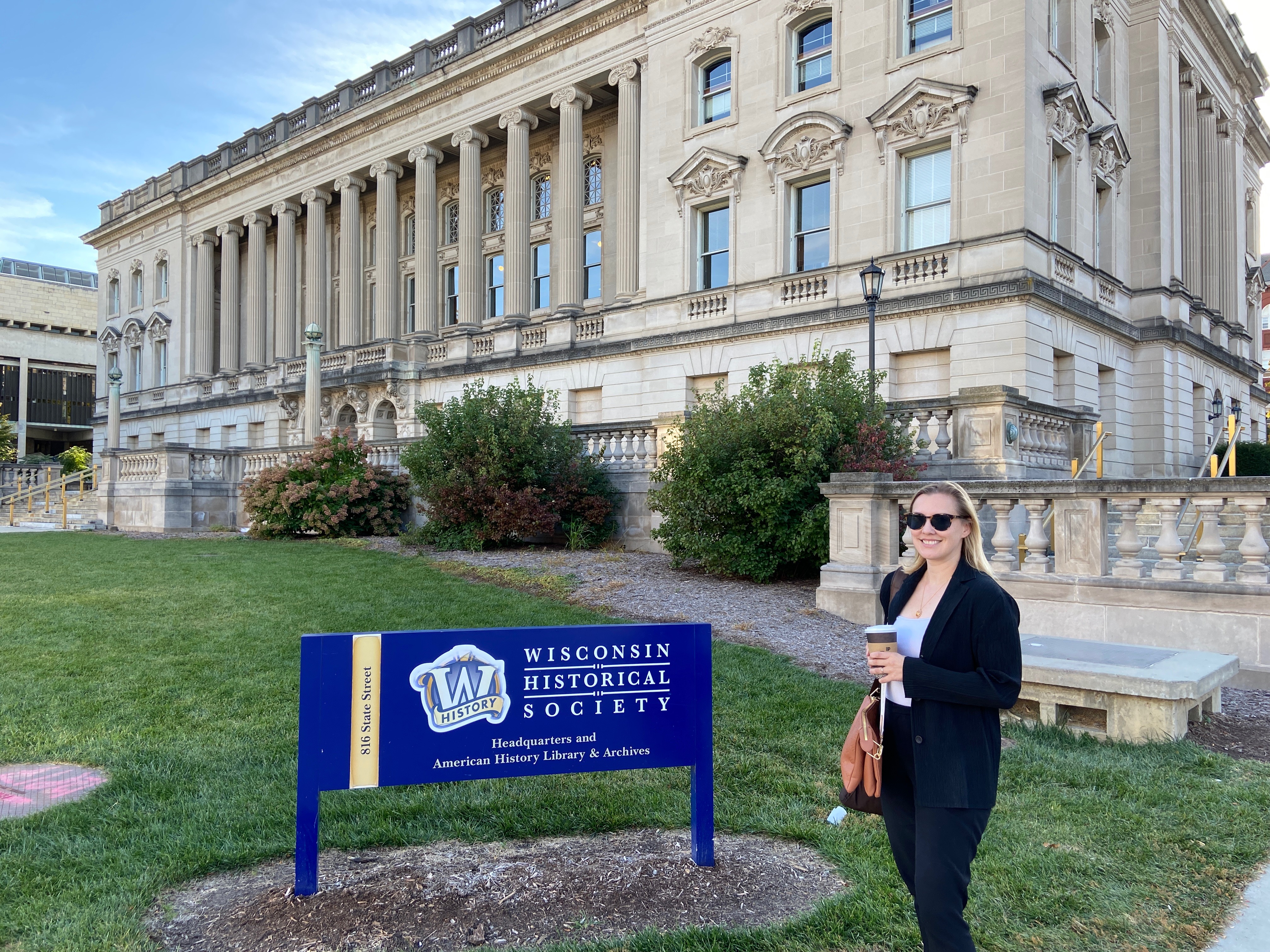 As a longtime journalist, including at Reuters, Deutsche Welle, and Voice of America, I knew that I was the one to tell Schultz’s story. By chance, I found out that most of her photos, writings, and memorabilia are at the Wisconsin Historical Society in my home state. Since 2020, I’ve spent countless hours in the archive and spoken with historians, authors, journalists, and those who knew her in her final years in Westport, Connecticut. Petros Gioumpasis, my director of photography, and I have also filmed reenactment scenes and Schultz's artifacts in Westport, and walked in Schultz's footsteps at the Buchenwald Memorial near Weimar, Germany.
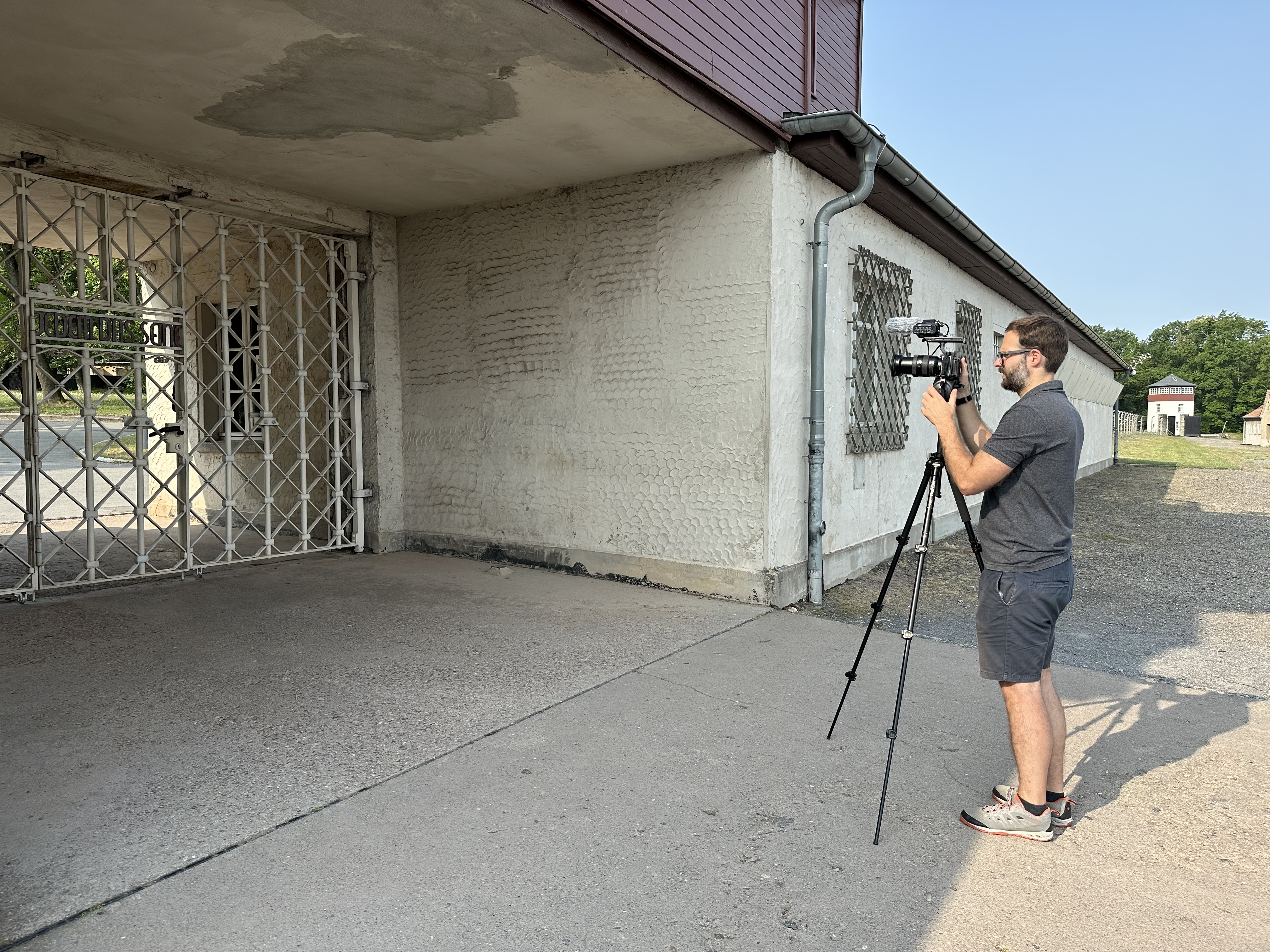
Petros Gioumpasis filming at the gates of the Buchenwald Memorial
Your Contribution Will Help Us Tell This Story
I am proud to say that our film is almost finished. After five years of research and production, we now have a rough cut. However, licensing historical footage is very costly. We have a generous donor who will match every dollar raised in this campaign. Therefore, when we reach our goal of $14,000, we will be able to purchase the rights to most of the archival photos and videos in the film. If we reach our stretch goal of $20,000, we will be able to not only purchase all of the archival material, but add sound design as well — a critical element in bringing these historical scenes to life. All pledges by U.S. citizens are tax-deductible via our fiscal sponsor, Women in Film & Video.
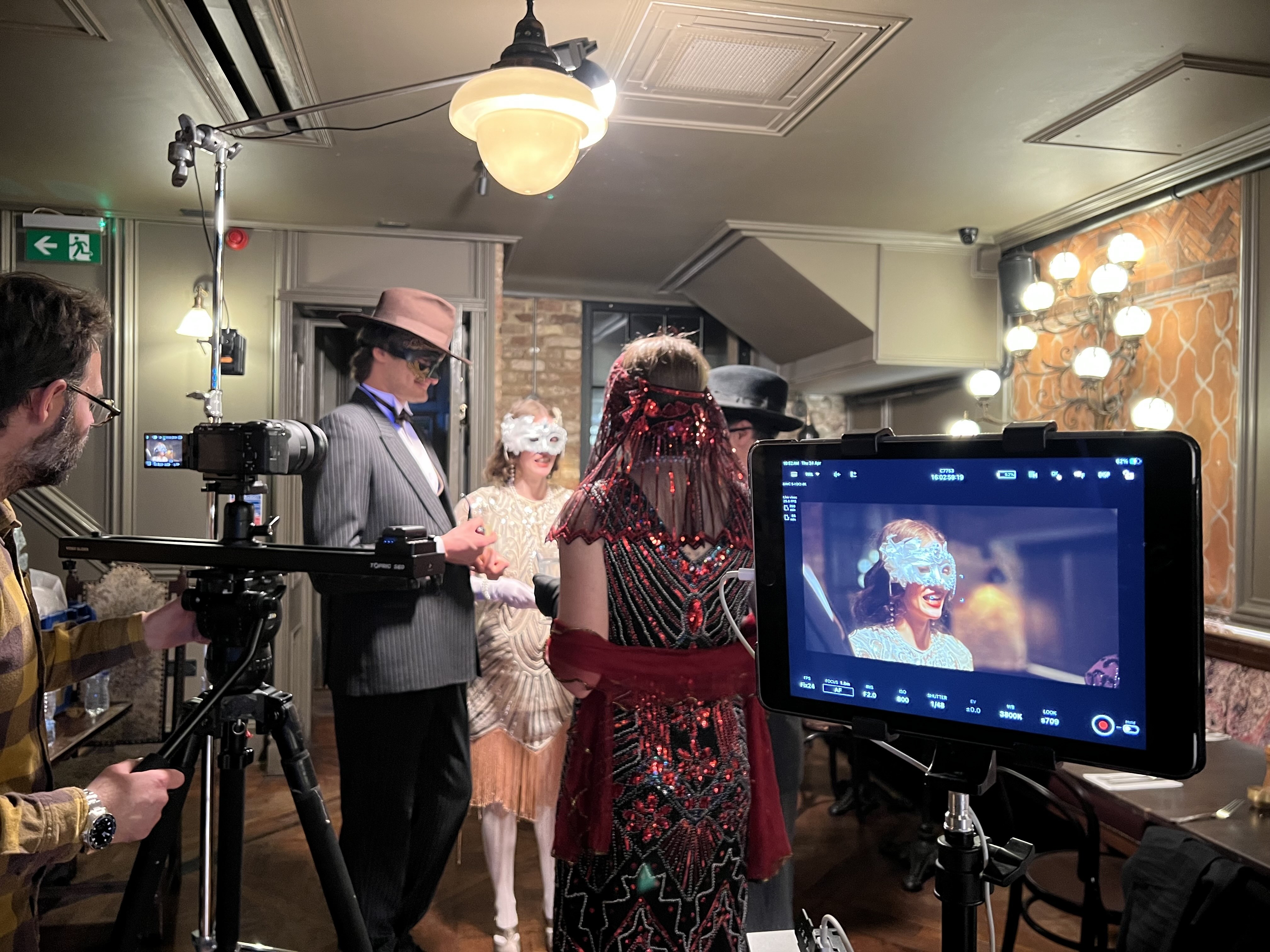
Filming the reenactment of a masked ball in 1919, where Schultz launched her journalism career.
Our Outreach
We think it's critical to bring this work to public venues early next year to spark discussion about the role of journalism during politically turbulent times. These include film festivals, journalism schools, newsrooms, Holocaust Museums, and other venues dedicated to promoting democracy and press freedom. We're also excited to have a distribution agreement with PBS Plus to air EYES ON EVIL for Women's History Month in March 2027. We think it's important to keep learning from the past and will be immensely grateful for your support. Thank you for your interest in our project!
Wishlist
Use the WishList to Pledge cash and Loan items - or - Make a pledge by selecting an Incentive directly.
Sigrid Schultz Photos
Costs $5,000
My film draws heavily on photos of Sigrid Schultz from the Wisconsin Historical Society (more than 80 images).
Historical Footage
Costs $8,000
Your contribution will help me license historical footage from the Chicago Film Archive, German Federal Archive, AP, NARA, and more!
Westport Archive
Costs $1,000
The Westport Museum for History & Culture in Connecticut holds Sigrid Schultz artifacts and photos that we wish to license.
Cash Pledge
Costs $0


Direct link:
Share this update!
About This Team
A little bit about me and my team:
My name is Vanessa Johnston and I am the Director and Producer.
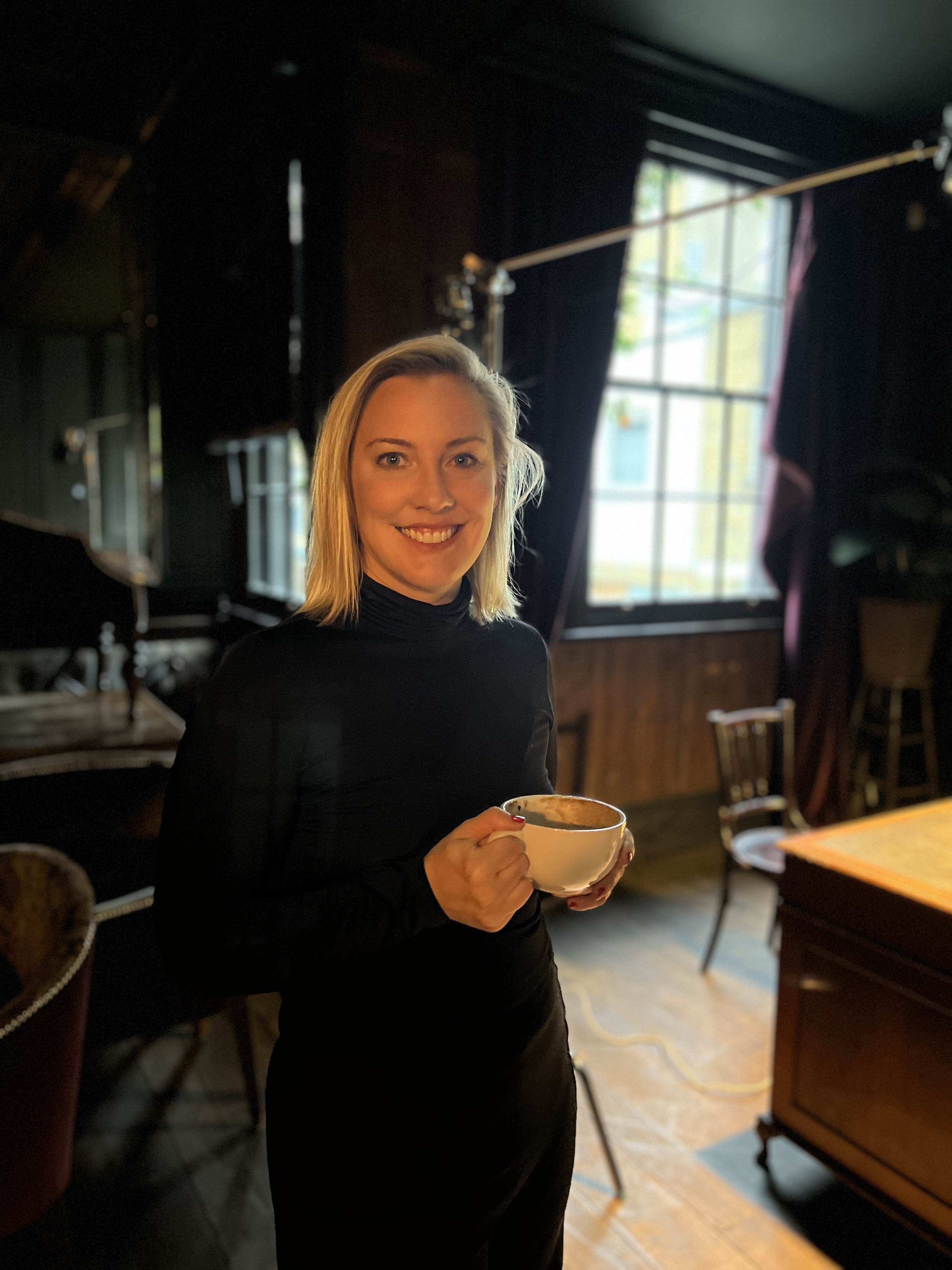 I'm a documentary filmmaker and video journalist based in Washington, DC. In 2022, I founded Plumline Films, a production company that specializes in history and current affairs documentaries. For nearly a decade I was a news producer for Reuters, covering the top stories coming out of the White House, Congress, and the Supreme Court. Most recently, I directed and produced the short film, BREAKING: From the Streets to the Olympics, which won the first Gold Telly Award for Voice of America. It also won a top award for Best Documentary on History & Society at the New York Film Festival. In 2022, I received the Documentary Seed Fund Grant Award from Women in Film & Video to develop my feature on Sigrid Schultz. I began my journalism career as a radio reporter at Deutsche Welle in Bonn, Germany. My work has also appeared on PBS, The Financial Times, and the BBC. I hold an M.A. in European History, Politics & Society from Columbia University.
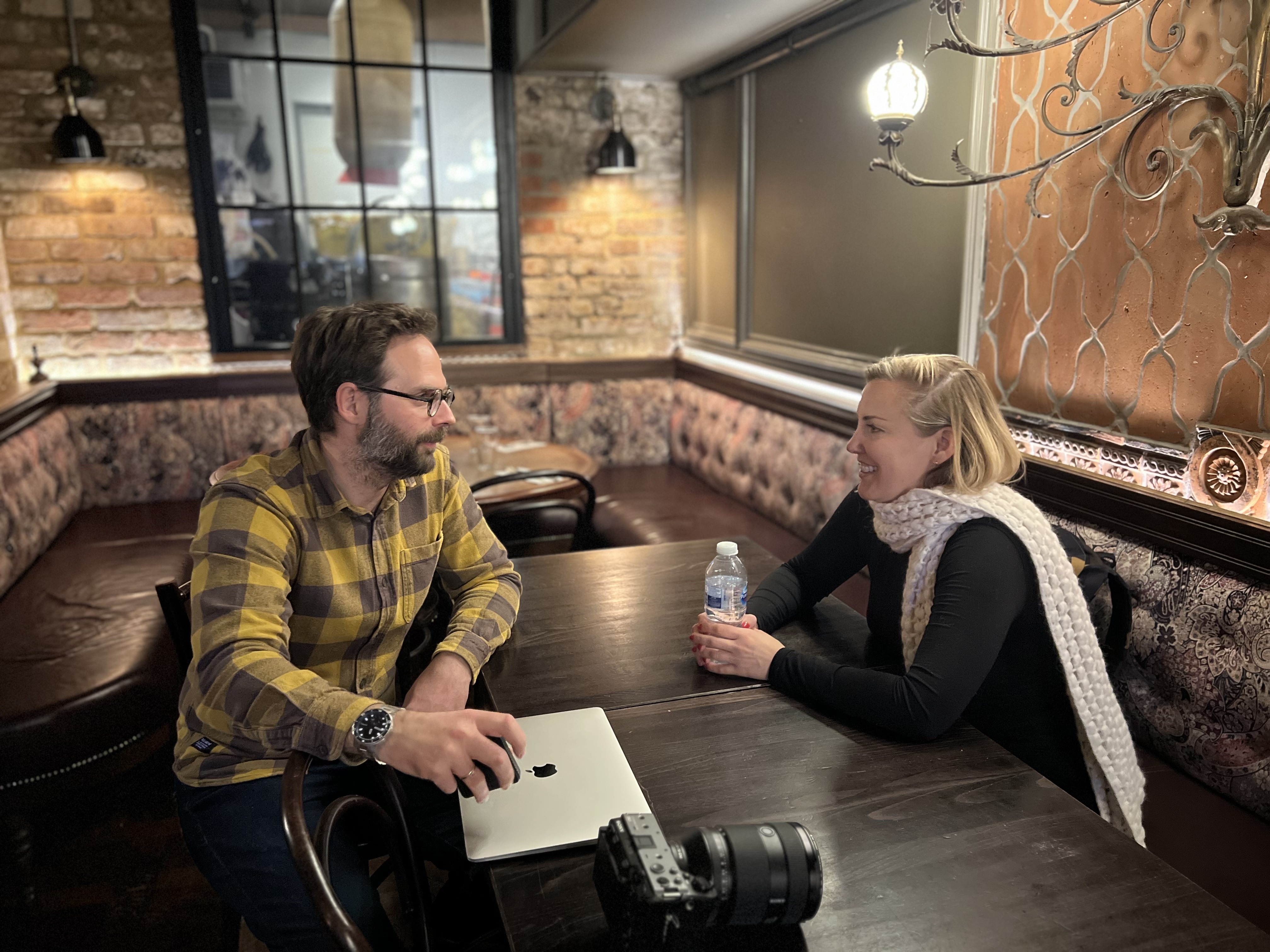 Petros Gioumpasis is the Director of Photography for the historical reenactments. We met when I did a brief work placement at The Financial Times in London after graduate school. Over the past several years, we've filmed all over: from Washington to London, and Weimar, Germany to Westport, Connecticut. He's an award-winning cinematographer with more than 15 years of experience working on documentaries and TV series throughout the UK and Europe. And he's currently a producer and video technical operator for The Financial Times in London. Petros holds a master’s degree in photojournalism from the University of Westminster. He's also a lot of fun to work with!
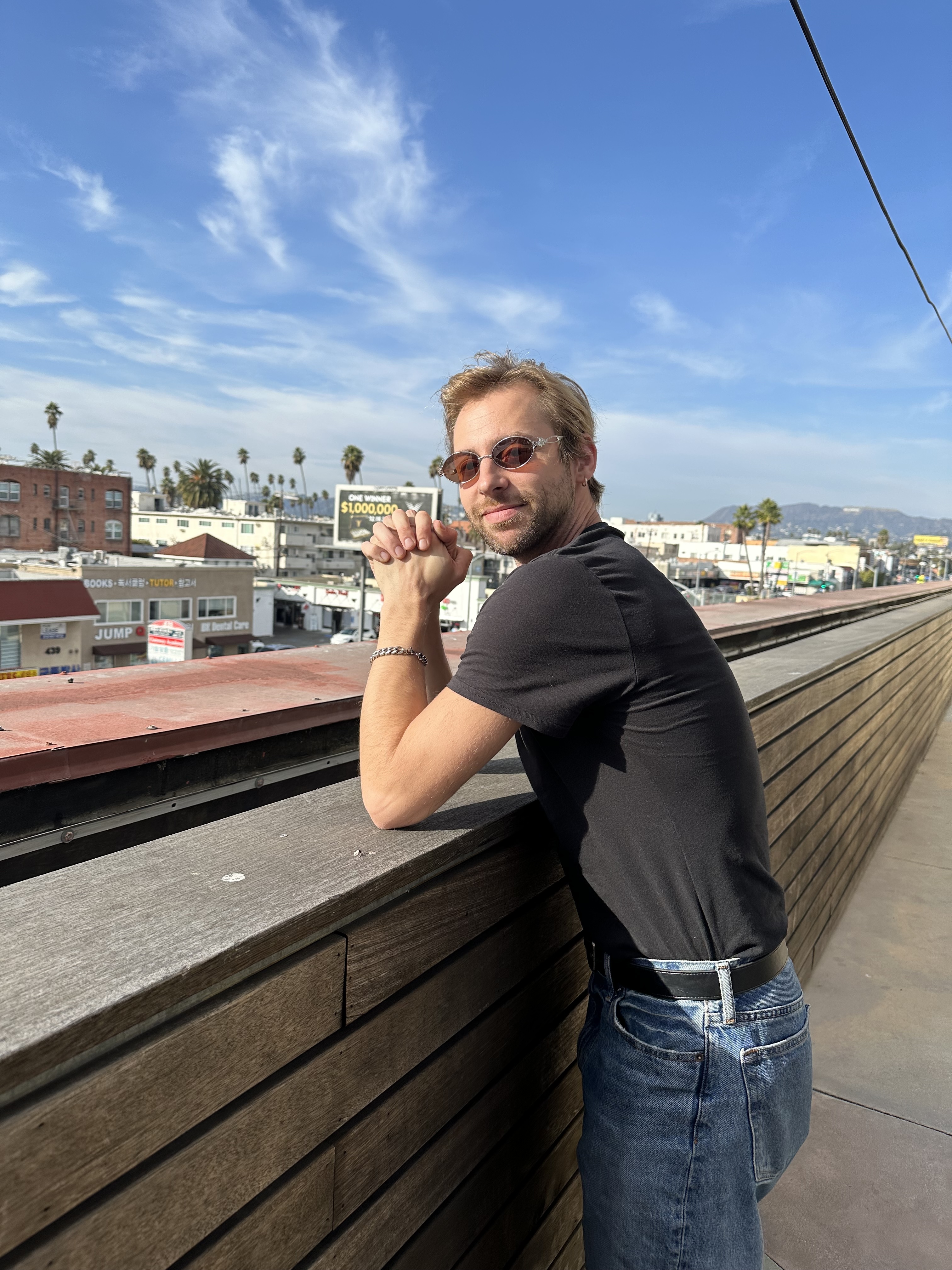 Zach Johnston is the Editor and Score Composer (with Matteo Roberts). Not only is he one of the most talented people I know, he also happens to be my brother and lifelong collaborator! His editing credits include PBS, Voice of America, the BBC, and many music videos. He co-scored the Oscar-nominated animated short, The Dam Keeper; the Emmy-nominated animated short, Namoo; and the Netflix Series: Oni: Thunder God’s Tale. Zach graduated from the Toronto Film School.


Incentives
- The Story
- Wishlist
- Updates
- The Team
- Community
Mission Statement
The Story
I'm thrilled to announce that we have reached our initial goal of $14,000, and we're now officially working toward our stretch goal of $20,000! The additional funds will allow us to license all the historical footage we need plus hire a sound designer. Thank you for your support!
Synopsis
From warning early and often about the threat Hitler posed, to secretly writing under the alias “John Dickson” to evade Nazi censors, to powerfully reporting on the liberation of the Buchenwald concentration camp, Schultz emerged as one of the most important foreign correspondents in U.S. history. Yet, until recently, little was known about her. After the war, Schultz faded into obscurity in Westport, Connecticut, struggling to adapt to the postwar world.
While the film illuminates the life of an extraordinary woman forgotten by history, at its heart, it is about journalism itself: what it means to do it well; the limits of its power; and the personal toll of bearing witness to evil.
This film has a distribution agreement with PBS Plus. All donations by U.S. citizens are tax-deductible via our 501(c)3 fiscal sponsor Women in Film & Video.
The Characters
The film centers on three key relationships in Schultz’s life:
Dorothy Thompson, the Philadelphia Public Ledger’s bureau chief, served as both a peer and rival. Their contrasting styles, initial assessments of Hitler, and navigation of the male-dominated world of journalism reflect broader tensions in the press corps.
Colonel Robert McCormick, editor-in-chief and CEO of The Chicago Tribune, a staunch “America First” conservative and isolationist, often clashed with Schultz’s reporting.
Why Now?
Amid growing attacks on press freedom and fears that U.S. democracy is unraveling, Sigrid Schultz's life offers a clear reminder that truth-telling is an essential defense against authoritarianism. What started five years ago as a project to give a remarkable woman reporter her due, has turned out to be, in 2025, a story of great modern relevance. It's about the fragility of democracy, the importance of an independent press, and having moral courage in times of fear.
In the archives, I uncovered a radio interview from 1969 in which Schultz was asked what we can learn from her experience covering Nazi Germany. Her response back then, which is in the final scene, is just as worthy of our attention today as it was back then.
Director's Statement
I first learned about Sigrid Schultz when I read Andrew Nagorski’s fascinating book, Hitlerland, about Americans living in Berlin during the Nazis’ rise to power. I was immediately struck by the Chicago Tribune correspondent whose feistiness, bravery, glamor, and dramatic encounters seemed plucked straight from a Hollywood movie.
Source: Wisconsin Historical Society
This was a woman who, unlike most other American reporters, had observed Berlin from WWI all the way through the outbreak of WWII; who had alerted the world early to the threats of Nazism; who had interviewed Hitler several times; who had cooked for Hitler’s deputy, Hermann Goering, to extract information; and who had been among the first reporters to cover the liberation of the Buchenwald concentration camp. Other American journalists said she was the most informed voice on Nazi Germany. And she had done it all at a time when foreign correspondence was primarily a man’s domain. How on earth had I not heard of this extraordinary female journalist? It turned out that, until recently, there were no biographies about Schultz, nor had she managed to finish her memoir before she died in 1980.
As a longtime journalist, including at Reuters, Deutsche Welle, and Voice of America, I knew that I was the one to tell Schultz’s story. By chance, I found out that most of her photos, writings, and memorabilia are at the Wisconsin Historical Society in my home state. Since 2020, I’ve spent countless hours in the archive and spoken with historians, authors, journalists, and those who knew her in her final years in Westport, Connecticut. Petros Gioumpasis, my director of photography, and I have also filmed reenactment scenes and Schultz's artifacts in Westport, and walked in Schultz's footsteps at the Buchenwald Memorial near Weimar, Germany.
Petros Gioumpasis filming at the gates of the Buchenwald Memorial
Your Contribution Will Help Us Tell This Story
I am proud to say that our film is almost finished. After five years of research and production, we now have a rough cut. However, licensing historical footage is very costly. We have a generous donor who will match every dollar raised in this campaign. Therefore, when we reach our goal of $14,000, we will be able to purchase the rights to most of the archival photos and videos in the film. If we reach our stretch goal of $20,000, we will be able to not only purchase all of the archival material, but add sound design as well — a critical element in bringing these historical scenes to life. All pledges by U.S. citizens are tax-deductible via our fiscal sponsor, Women in Film & Video.
Filming the reenactment of a masked ball in 1919, where Schultz launched her journalism career.
Our Outreach
We think it's critical to bring this work to public venues early next year to spark discussion about the role of journalism during politically turbulent times. These include film festivals, journalism schools, newsrooms, Holocaust Museums, and other venues dedicated to promoting democracy and press freedom. We're also excited to have a distribution agreement with PBS Plus to air EYES ON EVIL for Women's History Month in March 2027. We think it's important to keep learning from the past and will be immensely grateful for your support. Thank you for your interest in our project!
Wishlist
Use the WishList to Pledge cash and Loan items - or - Make a pledge by selecting an Incentive directly.
Sigrid Schultz Photos
Costs $5,000
My film draws heavily on photos of Sigrid Schultz from the Wisconsin Historical Society (more than 80 images).
Historical Footage
Costs $8,000
Your contribution will help me license historical footage from the Chicago Film Archive, German Federal Archive, AP, NARA, and more!
Westport Archive
Costs $1,000
The Westport Museum for History & Culture in Connecticut holds Sigrid Schultz artifacts and photos that we wish to license.
Cash Pledge
Costs $0
Direct link:
Share this update!
About This Team
A little bit about me and my team:
My name is Vanessa Johnston and I am the Director and Producer.
I'm a documentary filmmaker and video journalist based in Washington, DC. In 2022, I founded Plumline Films, a production company that specializes in history and current affairs documentaries. For nearly a decade I was a news producer for Reuters, covering the top stories coming out of the White House, Congress, and the Supreme Court. Most recently, I directed and produced the short film, BREAKING: From the Streets to the Olympics, which won the first Gold Telly Award for Voice of America. It also won a top award for Best Documentary on History & Society at the New York Film Festival. In 2022, I received the Documentary Seed Fund Grant Award from Women in Film & Video to develop my feature on Sigrid Schultz. I began my journalism career as a radio reporter at Deutsche Welle in Bonn, Germany. My work has also appeared on PBS, The Financial Times, and the BBC. I hold an M.A. in European History, Politics & Society from Columbia University.
Petros Gioumpasis is the Director of Photography for the historical reenactments. We met when I did a brief work placement at The Financial Times in London after graduate school. Over the past several years, we've filmed all over: from Washington to London, and Weimar, Germany to Westport, Connecticut. He's an award-winning cinematographer with more than 15 years of experience working on documentaries and TV series throughout the UK and Europe. And he's currently a producer and video technical operator for The Financial Times in London. Petros holds a master’s degree in photojournalism from the University of Westminster. He's also a lot of fun to work with!
Zach Johnston is the Editor and Score Composer (with Matteo Roberts). Not only is he one of the most talented people I know, he also happens to be my brother and lifelong collaborator! His editing credits include PBS, Voice of America, the BBC, and many music videos. He co-scored the Oscar-nominated animated short, The Dam Keeper; the Emmy-nominated animated short, Namoo; and the Netflix Series: Oni: Thunder God’s Tale. Zach graduated from the Toronto Film School.