FARMVILLE: FIRE IN A TAR PAPER SHACK
Alexandria, Virginia | Film Short
Documentary, History
Supporting FARMVILLE: FIRE IN A TAR PAPER SHACK preserves a vital Civil Rights story. In 1951, 16-year-old Barbara Johns and her classmates sparked a movement for equality that changed America. This film honors her legacy and the community’s courage to fight for justice—then and now.
FARMVILLE: FIRE IN A TAR PAPER SHACK
Alexandria, Virginia | Film Short
Documentary, History

1 Campaigns |
Green Light
This campaign raised $22,165 for production phase 2. Follow the filmmaker to receive future updates on this project.
47 supporters | followers
Enter the amount you would like to pledge
Supporting FARMVILLE: FIRE IN A TAR PAPER SHACK preserves a vital Civil Rights story. In 1951, 16-year-old Barbara Johns and her classmates sparked a movement for equality that changed America. This film honors her legacy and the community’s courage to fight for justice—then and now.
About The Project


- The Story
- Wishlist
- Updates
- The Team
- Community
Mission Statement
The Story
FARMVILLE: FIRE IN A TAR SHACK
A powerful, intimate journey into a buried chapter of the Civil Rights Movement.
At the height of Jim Crow, in a small town in Virginia, a 16-year-old girl sparked a rebellion that would help change the course of American history. When Barbara Johns led her classmates in a walkout to protest the deplorable conditions at her segregated school in Farmville, Virginia, it was more than a student protest—it was a seismic act of courage. That moment would eventually be folded into the landmark Brown v. Board of Education case before the U.S. Supreme Court.
But Brown was just the beginning—not the end.
As southern states weaponized the phrase “with all deliberate speed” to stall integration, the promise of Brown gave way to defiance. In Prince Edward County, resistance took an even darker turn. Rather than integrate, officials shut down public schools entirely. For five long years, Black students in Farmville were left without a public education—while white students attended segregated academies.
This is the full story of what happened and its aftermath.
FARMVILLE: FIRE IN A TAR SHACK reveals the extraordinary resilience of a community abandoned by its government but never broken in spirit. Through deeply personal interviews, rare archival footage, and the voices of those who lived through it, the film explores how families fought back—with determination, with dignity, and with an unshakable belief in their children’s right to learn.
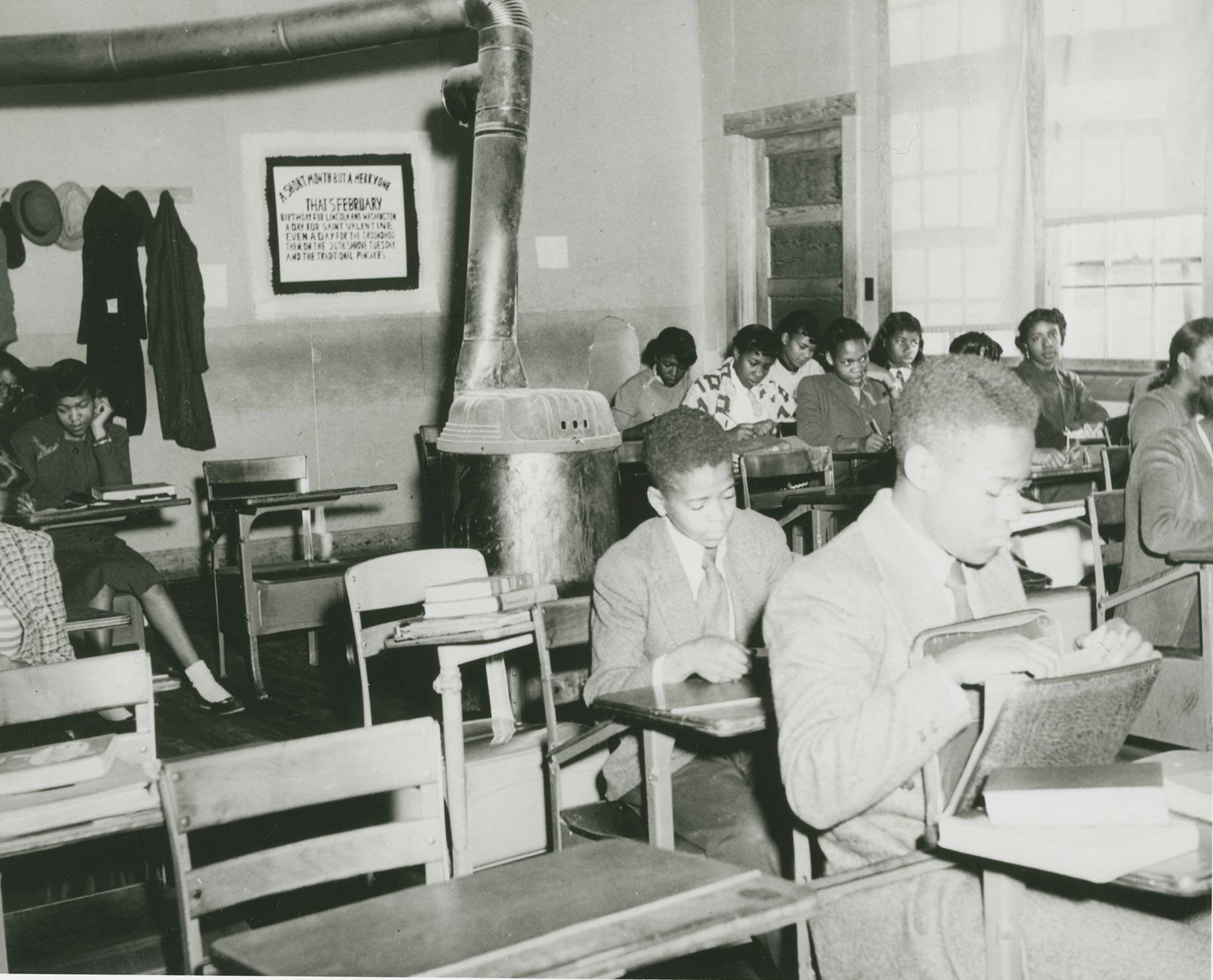
A Personal, Grounded Storytelling Approach
We’re not just recounting history—we’re giving it back to those who lived it. Our partnership with the Moton Museum ensures that the story is told with authenticity, respect, and access to firsthand accounts that are intimate and moving. These interviews go beyond historical testimony—they are deeply emotional journeys that shed light on a pivotal yet overlooked chapter of American history.
This is not a film told about people—it’s told by them.
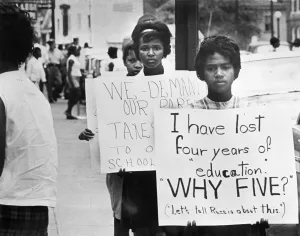
Creative Vision & Style
The film’s aesthetic mirrors its emotional weight:
- Archival photos, film, and audio ground us in the era.
- Minimal graphics and narration allow the voices of Farmville residents to lead.
- A carefully curated soundtrack featuring late 1950s–early 60s music evokes time and place.
- Historical context is provided sparingly by legal and academic voices, supporting rather than overshadowing the lived experience.
The Team Behind the Mission
Shannon Malone-deBenedictis (Co-Director/EP) brings decades of experience and a shelf of awards to the project, including a Primetime Emmy (2021) and a Daytime Emmy (2022) for her work with National Geographic and Netflix. Her passion for untold stories—especially in the Civil Rights space—was reignited while working on With All Deliberate Speed with Peter Gilbert. As a Virginia native, discovering Barbara Johns’ story for the first time was a revelation and a call to action.
Joining her is Leah Brown, Assistant Director of the Moton Museum, who serves as producer to ensure the project remains grounded in community and truth.
Together, they form a team uniquely positioned to tell this story with power and integrity.
Why Now? Why This Film?
The effects of Prince Edward County’s school closures still ripple through Farmville today. This film is both a reckoning and a restoration—bringing to light a story that has too long been left in the shadows.
We are nearing the finish line. With 80% of filming complete and foundational interviews captured, this final round of funding will allow us to:
- Complete key interviews
- Conduct additional archival research
- Finish editing a 10–15 minute short for use in festivals, digital release, and educational settings
This short will also serve as a proof-of-concept for a full-length feature film that expands the narrative and reaches broader audiences.
Help Us Bring This Story to Light
FARMVILLE: FIRE IN A TAR SHACK is more than a documentary. It’s a platform to honor Barbara Johns, elevate the voices of those affected, and inspire future generations to understand that civil rights history didn’t just happen in cities—it happened in tar shacks, small towns, and schoolhouses across America.
Help us finish this film—and help the world remember.
====================
More information can be found: https://www.padlincreative.com/farmville
Wishlist
Use the WishList to Pledge cash and Loan items - or - Make a pledge by selecting an Incentive directly.
Filming Interviews x 3
Costs $6,000
Additional interviews are needed with regional historians and relatives of the Farmville elders.
Post Production
Costs $12,000
Collaboration with an Emmy award winning editor, bringing the film to rough cut, fine cut, and online
Archivist
Costs $3,000
A seasoned archivist to pour through the VCU and Prince Edward County files, securing the materials necessary for the film
Travel & Materials
Costs $600
Travel to and from Alexandria to Farmville, Norfolk, and Richmond
Cash Pledge
Costs $0


Direct link:
Share this update!
About This Team
 Shannon Malone-deBenedictis: Executive Producer/Co-Director: Shannon Malone-deBenedictis is an Emmy-winning creative storyteller and a leading figure in film development and production spanning several genres, from nonfiction to lifestyle. With an extensive career as an editor, producer, and in-house development executive, she excels in taking a “10,000-foot” approach to a project —with a passion for diving into a subject & putting together creative and effective teams.
Her work has won numerous awards over the past two decades. She won a Primetime Emmy in 2021 for Best Documentary or Nonfiction Series for her work on Disney +/National Geographic series Secrets of the Whales. In 2022, she won a Daytime Emmy for Best Nature Series for her work on the Netflix series Penguin Town.
Over the years, she has worked on more than 50 documentary programs and series, ranging from historical docs like Secrets of the Arsenal to a wide range of nature documentaries, including Inside the Mind of a Cat and various SharkWeek films. Her past clients include Netflix, Disney+, National Geographic, WB-Discovery, BoClips, WebMD, and Sesame Street.
Her inspiration for Farmville: Fire in a Tar Paper Shack came from her work with Peter Gilbert on the 2004 Discovery Films documentary With All Deliberate Speed. She was shocked that despite growing up in Virginia, she had never heard of Barbara Johns or the Farmville student strike.
Malone-deBenedictis built her career in non-fiction film production at companies such as Red Rock Films, Wag TV, National Geographic, and Discovery Communications, with notable films such as Discovery Atlas and Planet Earth. She oversees a four-part conservation series about the Greater Yellowstone Ecosystem, a girls-empowerment social media launch for Rebel Girls, and a feature documentary about the baseball rivalry between Puerto Rico and the Dominican Republic.
Links to past projects:
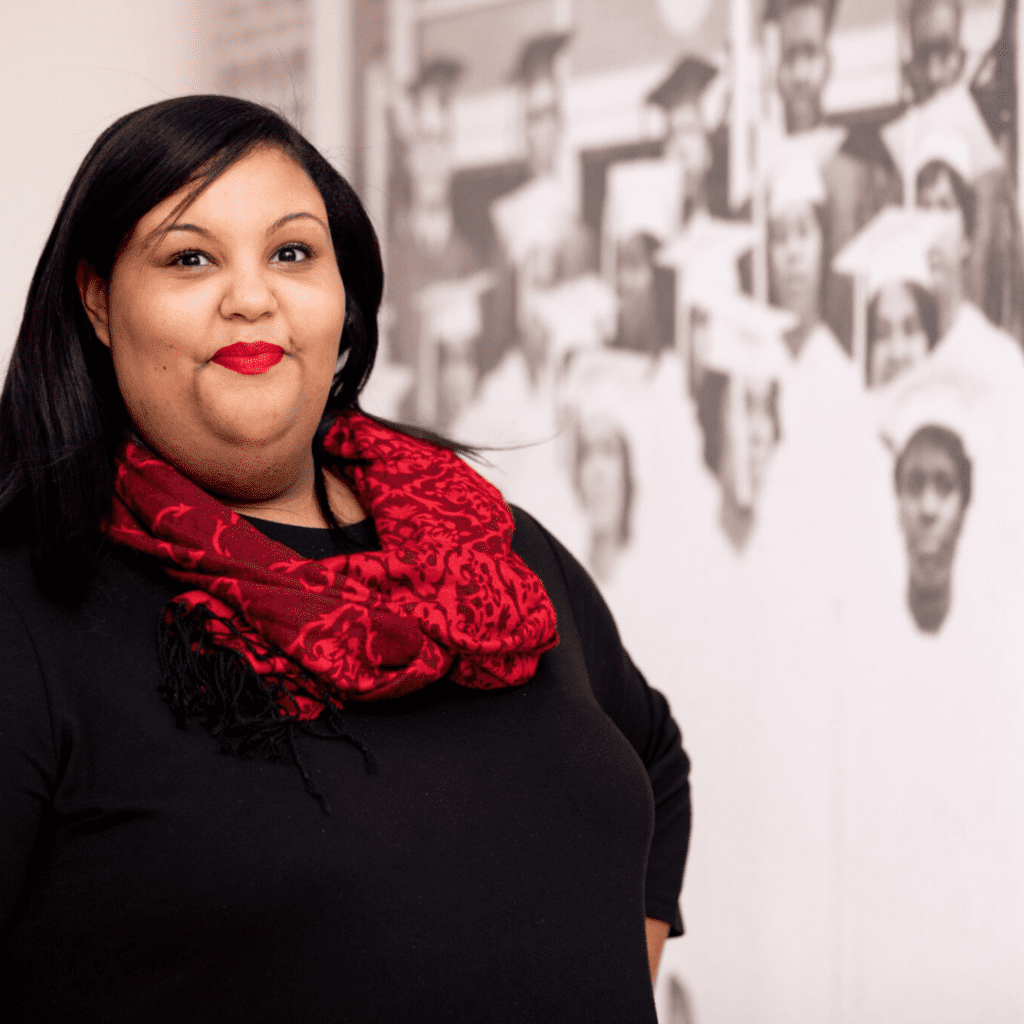 Leah Brown, Producer & Associate Director for Education and Collections at the Moton Museum: Leah Brown is the associate director for education and collections at the Robert Russa Moton Museum. In this role, she creates onsite and digital outreach programming, coordinates educational tours, plans the Moton Museum Teacher Institute, and manages the museum’s collection.
Brown joined Moton’s team in 2019 as assistant director for education, transitioning to associate director in 2022. Her love of history inspired her to choose museum education as a career that blends a love of learning about diverse topics with teaching. She specializes in American history with an emphasis on Virginia.
Prior to her appointment at Moton, Brown served as the digital outreach educator for the Virginia Museum of History and Culture, a museum educator at the U.S. Army Quartermaster Museum, and a senior tour counselor at the Virginia Tourism Corporation.
Brown attended North Carolina State University where she obtained a master’s in public history in 2014. She graduated in 2012 from the College of William and Mary with a bachelor’s in History with an Anthropology minor.
Charles Christiansen, Associate Producer: Charles Christiansen is a graduate of Iowa State University’s English program and a broad-based writer and researcher. Prior productions include the main pitch for Raging Bull Shark (2020). He is a firm believer in the power of historical education, and the value of the truth. Charles is a Virginia local who has lived in Fairfax County for the majority of his life.


Incentives
- The Story
- Wishlist
- Updates
- The Team
- Community
Mission Statement
The Story
FARMVILLE: FIRE IN A TAR SHACK
A powerful, intimate journey into a buried chapter of the Civil Rights Movement.
At the height of Jim Crow, in a small town in Virginia, a 16-year-old girl sparked a rebellion that would help change the course of American history. When Barbara Johns led her classmates in a walkout to protest the deplorable conditions at her segregated school in Farmville, Virginia, it was more than a student protest—it was a seismic act of courage. That moment would eventually be folded into the landmark Brown v. Board of Education case before the U.S. Supreme Court.
But Brown was just the beginning—not the end.
As southern states weaponized the phrase “with all deliberate speed” to stall integration, the promise of Brown gave way to defiance. In Prince Edward County, resistance took an even darker turn. Rather than integrate, officials shut down public schools entirely. For five long years, Black students in Farmville were left without a public education—while white students attended segregated academies.
This is the full story of what happened and its aftermath.
FARMVILLE: FIRE IN A TAR SHACK reveals the extraordinary resilience of a community abandoned by its government but never broken in spirit. Through deeply personal interviews, rare archival footage, and the voices of those who lived through it, the film explores how families fought back—with determination, with dignity, and with an unshakable belief in their children’s right to learn.
A Personal, Grounded Storytelling Approach
We’re not just recounting history—we’re giving it back to those who lived it. Our partnership with the Moton Museum ensures that the story is told with authenticity, respect, and access to firsthand accounts that are intimate and moving. These interviews go beyond historical testimony—they are deeply emotional journeys that shed light on a pivotal yet overlooked chapter of American history.
This is not a film told about people—it’s told by them.
Creative Vision & Style
The film’s aesthetic mirrors its emotional weight:
- Archival photos, film, and audio ground us in the era.
- Minimal graphics and narration allow the voices of Farmville residents to lead.
- A carefully curated soundtrack featuring late 1950s–early 60s music evokes time and place.
- Historical context is provided sparingly by legal and academic voices, supporting rather than overshadowing the lived experience.
The Team Behind the Mission
Shannon Malone-deBenedictis (Co-Director/EP) brings decades of experience and a shelf of awards to the project, including a Primetime Emmy (2021) and a Daytime Emmy (2022) for her work with National Geographic and Netflix. Her passion for untold stories—especially in the Civil Rights space—was reignited while working on With All Deliberate Speed with Peter Gilbert. As a Virginia native, discovering Barbara Johns’ story for the first time was a revelation and a call to action.
Joining her is Leah Brown, Assistant Director of the Moton Museum, who serves as producer to ensure the project remains grounded in community and truth.
Together, they form a team uniquely positioned to tell this story with power and integrity.
Why Now? Why This Film?
The effects of Prince Edward County’s school closures still ripple through Farmville today. This film is both a reckoning and a restoration—bringing to light a story that has too long been left in the shadows.
We are nearing the finish line. With 80% of filming complete and foundational interviews captured, this final round of funding will allow us to:
- Complete key interviews
- Conduct additional archival research
- Finish editing a 10–15 minute short for use in festivals, digital release, and educational settings
This short will also serve as a proof-of-concept for a full-length feature film that expands the narrative and reaches broader audiences.
Help Us Bring This Story to Light
FARMVILLE: FIRE IN A TAR SHACK is more than a documentary. It’s a platform to honor Barbara Johns, elevate the voices of those affected, and inspire future generations to understand that civil rights history didn’t just happen in cities—it happened in tar shacks, small towns, and schoolhouses across America.
Help us finish this film—and help the world remember.
====================
More information can be found: https://www.padlincreative.com/farmville
Wishlist
Use the WishList to Pledge cash and Loan items - or - Make a pledge by selecting an Incentive directly.
Filming Interviews x 3
Costs $6,000
Additional interviews are needed with regional historians and relatives of the Farmville elders.
Post Production
Costs $12,000
Collaboration with an Emmy award winning editor, bringing the film to rough cut, fine cut, and online
Archivist
Costs $3,000
A seasoned archivist to pour through the VCU and Prince Edward County files, securing the materials necessary for the film
Travel & Materials
Costs $600
Travel to and from Alexandria to Farmville, Norfolk, and Richmond
Cash Pledge
Costs $0
Direct link:
Share this update!
About This Team
Shannon Malone-deBenedictis: Executive Producer/Co-Director: Shannon Malone-deBenedictis is an Emmy-winning creative storyteller and a leading figure in film development and production spanning several genres, from nonfiction to lifestyle. With an extensive career as an editor, producer, and in-house development executive, she excels in taking a “10,000-foot” approach to a project —with a passion for diving into a subject & putting together creative and effective teams.
Her work has won numerous awards over the past two decades. She won a Primetime Emmy in 2021 for Best Documentary or Nonfiction Series for her work on Disney +/National Geographic series Secrets of the Whales. In 2022, she won a Daytime Emmy for Best Nature Series for her work on the Netflix series Penguin Town.
Over the years, she has worked on more than 50 documentary programs and series, ranging from historical docs like Secrets of the Arsenal to a wide range of nature documentaries, including Inside the Mind of a Cat and various SharkWeek films. Her past clients include Netflix, Disney+, National Geographic, WB-Discovery, BoClips, WebMD, and Sesame Street.
Her inspiration for Farmville: Fire in a Tar Paper Shack came from her work with Peter Gilbert on the 2004 Discovery Films documentary With All Deliberate Speed. She was shocked that despite growing up in Virginia, she had never heard of Barbara Johns or the Farmville student strike.
Malone-deBenedictis built her career in non-fiction film production at companies such as Red Rock Films, Wag TV, National Geographic, and Discovery Communications, with notable films such as Discovery Atlas and Planet Earth. She oversees a four-part conservation series about the Greater Yellowstone Ecosystem, a girls-empowerment social media launch for Rebel Girls, and a feature documentary about the baseball rivalry between Puerto Rico and the Dominican Republic.
Links to past projects:
Leah Brown, Producer & Associate Director for Education and Collections at the Moton Museum: Leah Brown is the associate director for education and collections at the Robert Russa Moton Museum. In this role, she creates onsite and digital outreach programming, coordinates educational tours, plans the Moton Museum Teacher Institute, and manages the museum’s collection.
Brown joined Moton’s team in 2019 as assistant director for education, transitioning to associate director in 2022. Her love of history inspired her to choose museum education as a career that blends a love of learning about diverse topics with teaching. She specializes in American history with an emphasis on Virginia.
Prior to her appointment at Moton, Brown served as the digital outreach educator for the Virginia Museum of History and Culture, a museum educator at the U.S. Army Quartermaster Museum, and a senior tour counselor at the Virginia Tourism Corporation.
Brown attended North Carolina State University where she obtained a master’s in public history in 2014. She graduated in 2012 from the College of William and Mary with a bachelor’s in History with an Anthropology minor.
Charles Christiansen, Associate Producer: Charles Christiansen is a graduate of Iowa State University’s English program and a broad-based writer and researcher. Prior productions include the main pitch for Raging Bull Shark (2020). He is a firm believer in the power of historical education, and the value of the truth. Charles is a Virginia local who has lived in Fairfax County for the majority of his life.