I'd Rather Die
Clarksburg, Maryland | Film Short
Drama, Romance
Decades after her aunt interviewed a community of migrant workers, Kerry inherits the reels. In them, she discovers that somewhere between researcher and subject, a love story was unfolding. I'd Rather Die is a film about looking closely as a loving act.
I'd Rather Die
Clarksburg, Maryland | Film Short
Drama, Romance

1 Campaigns | New York, United States
45 supporters | followers
Enter the amount you would like to pledge
$10,255
Goal: $16,500 for production
Decades after her aunt interviewed a community of migrant workers, Kerry inherits the reels. In them, she discovers that somewhere between researcher and subject, a love story was unfolding. I'd Rather Die is a film about looking closely as a loving act.
About The Project


- The Story
- Wishlist
- Updates
- The Team
- Community
Mission Statement
The Story
If someone leaves behind the evidence, does that give us the right to know?
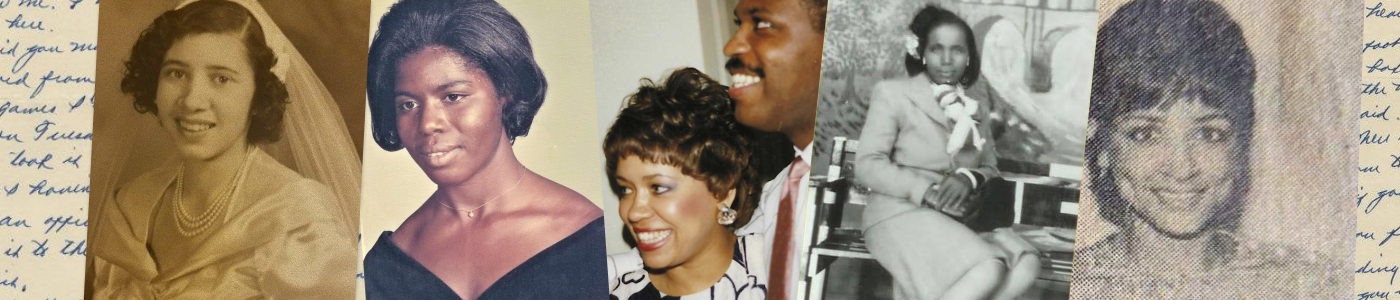
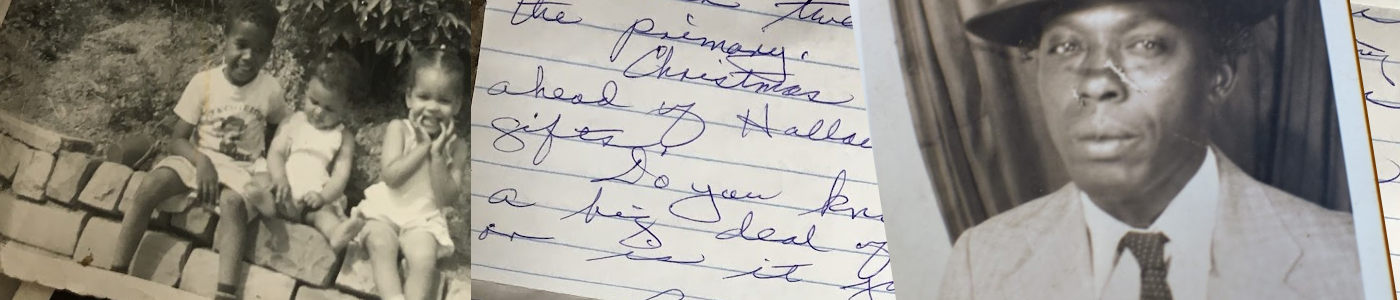
In the present day, a hungry young researcher, Kerry, inherits a dozen boxes from her aunt Alice: damaged photographs, unlabeled 8mm reels, field recordings, and old clothes cut into the patchwork of a quilt. Alice, now in her seventies, is a retired ethnographer and practiced keeper of histories, including her own.
“Take what you want,” she tells Kerry. “I need this crap gone.” Kerry takes her at her word.
As Kerry begins restoring and digitizing the materials, she discovers an extraordinary record of Alice’s life in the early 1980s. Then a young Black postdoc, Alice was conducting ethnographic fieldwork with Central American migrant communities in rural Maryland. Her camera moves through fields, kitchens, and community gatherings, recording the texture of everyday life. But reel after reel, a recurring character emerges: Julia, a migrant laborer, magnetic performer, and a vital interlocutor in Alice’s research.
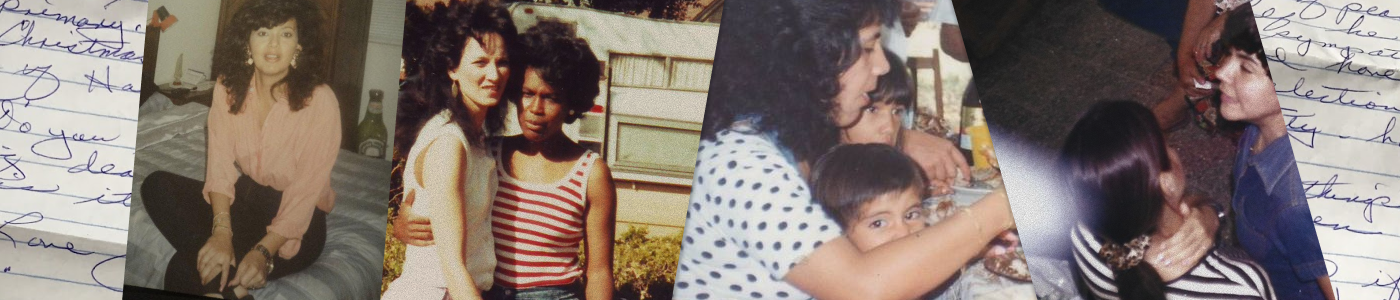
Gradually, the archive changes shape. Julia moves from informant to collaborator, sometimes taking Alice’s place behind the camera. Frame by frame, Alice’s observational footage becomes increasingly personal. Observation, attraction, trust, and authorship bleed into one another.
Now, decades later, Kerry returns to Alice with what she has found and reconstructed. She and Alice grapple with what it means to inherit a history its maker chose to keep private.
WHY THIS FILM
There’s a certain look to how we capture the people we love. I’m picturing a hard launch on Instagram: a silhouetted profile, a hand on a thigh, the back of someone’s head. Before we’re ready to name a relationship, sometimes the gaze gives us away. Looking closely can be a loving act. I’d Rather Die begins with that idea, that decades later, Kerry can understand something about Alice simply by noticing how insistently, tenderly her camera returns to one woman.
But I’m also manifesting this discovery for myself. I come from a family of smart, stubborn, fascinating women whom I love enormously—and who do not always surrender their stories easily! I want to know who they were before they became my mothers, aunts, and elders. I want to imagine them freer than the worlds they inherited allowed them to be. And as a queer woman, I’m thinking about my own archive, too: the love stories I hope to leave behind, and the life I might have lived had I been born into a time when living that truth required more courage than I possessed.
That question of freedom extends beyond my family. I am making this film at a moment when the treatment of migrants in this country genuinely haunts me. Julia is a migrant laborer, but I do not want migration to be the totalizing fact of her character. Alice’s camera encounters a worker, an artist, an intellectual partner, a show-off, a woman in love. I believe deeply in Black and Brown solidarity, and I’m interested in the imperfect, intimate work of trying to know one another across differences in race, nationality, class, and power.
And then there is the quilt. Made from Julia’s flannel, khaki, and denim work clothes, it is the physical evidence of what Alice could not bring herself to say: these are the pieces of Julia she allowed herself to keep. My mother, Lorraine Kearney, a quilter herself, will craft the quilt for the film (against her will!). That feels essential to me. A fictional artifact of one woman’s love will be made by another woman I love.
THE TIMELINE
August - October 2026: Pre-production
Casting, hiring, crew, location scouts, and additional fundraising.
November 2026: Principal photography
Four days of filming on location in Clarksburg, Maryland.
December 2026: First cut
A first attempt at stitching digital and analog together cohesively.
January-April 2027: Polishing
Color, sound design and mix, composition.
May 2027: Launch
Send it, submit it, and share it.
THE BUDGET
There's no easy way to finance short films. So we're asking directly: help us tell this story right.
We're excited to share we've already secured $8,500 thanks to Columbia University's Robert Gore Rifkind Queer Production Grant. Now, we need your help to fundraise an additional $16,500 to actualize our vision and shoot on location in Clarksburg, MD.
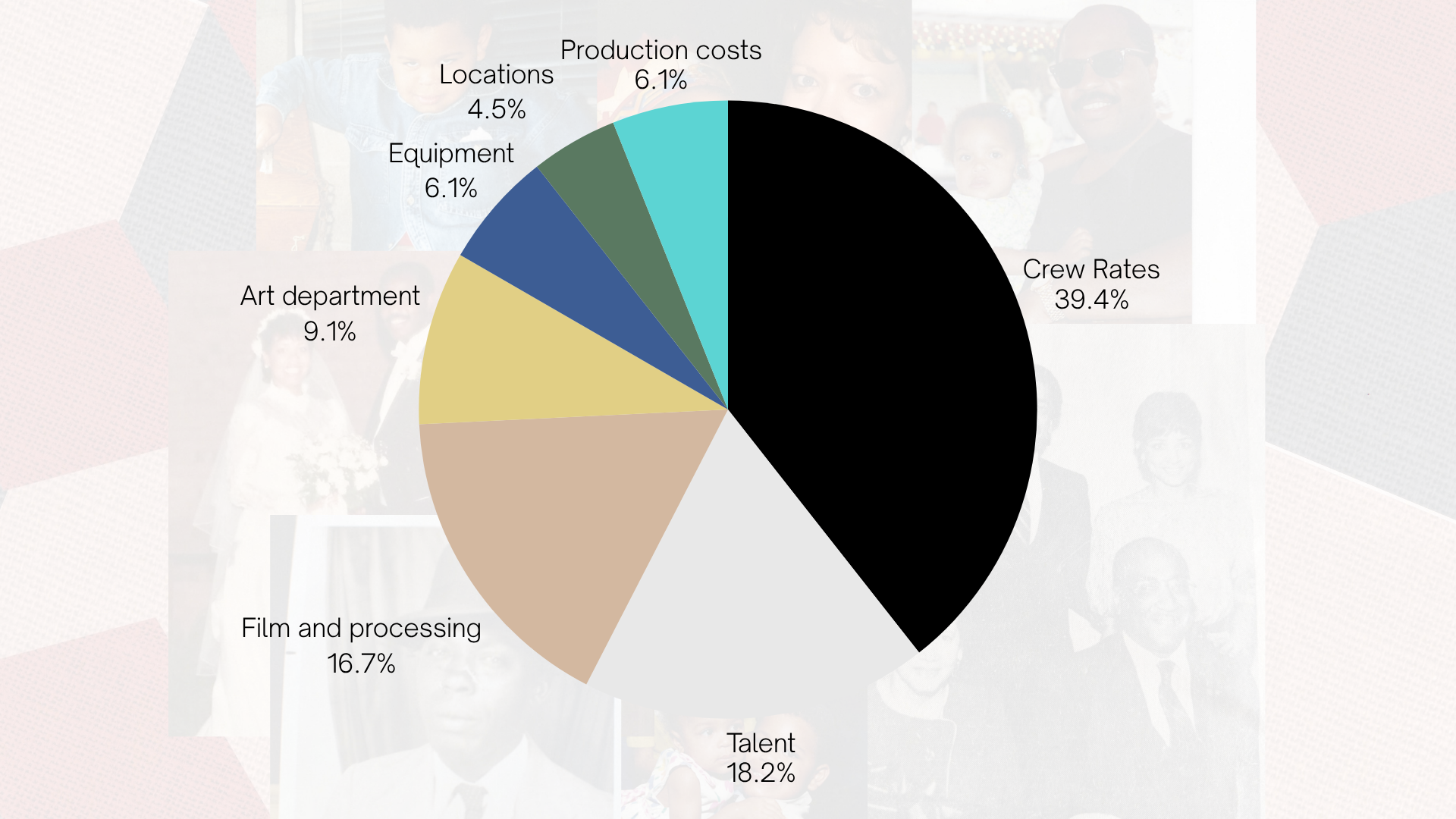
Your contributions will go directly towards compensation for our cast and crew, equipment rentals, hot meals, transportation and accommodation, production design, post-production, and festival submission fees.
Seed & Spark requires that we raise at least 80% of our goal for the project to be funded. We must reach this goal in 30 days, or we won't receive any donations.
If we exceed our goal, every additional dollar goes towards paying more people, towards our generous non-profit location partners, and towards the post-production process. Nothing gets wasted.
STRETCH GOALS
Stretch Goal #1: Taking Care of Our People ($18,000)
The reality of independent filmmaking on a student budget is that the people making the film offer their labor and expertise for a lot less than they deserve because they believe in the work. If we reach this goal, we'll be able to give a little more back to the people who are giving so much of themselves to this film.
Stretch Goal #2: Keeping It on Film ($20,000)
I’d Rather Die is a personal film about documentation and the things we leave behind. Film itself is part of that language. This goal would allow us to shoot the bulk of the film on analog formats, rather than reserving film stock exclusively for the archival material. It would bring the texture of the past into the present and make the medium itself part of the story.
PASS IT ON
Even if you can't make a pledge, you can still help this story find its audience.
Follow along at @katcaptured. Like, comment on, and share our posts. Every repost helps the film travel.
Tell someone. Think of the person who keeps old photographs in a drawer and tell them about this project.
Reach out. If you have a story to share, a quilt to donate, or want to get involved in some other way, email us at [email protected].
We look forward to keeping in touch with you!
Love,
Kat + Alex + Crew
Wishlist
Use the WishList to Pledge cash and Loan items - or - Make a pledge by selecting an Incentive directly.
Crew Rates
Costs $6,500
Even with a tight budget and a lot of favors, we want to give folks something for their labor. The more we raise, the more we can offer.
Talent
Costs $3,000
We want to hire a cast, and a band, with real ties to these communities and this story. And, we want to pay them!
Film Stock and Processing Fees
Costs $2,750
For our research footage, we'll shoot on 16mm and 8mm film, bringing some verity and texture to the film's world.
The Quilt, Wardrobe, and Production Design
Costs $1,500
Help us build a lived-in 1985 wardrobe and design the quilt at the heart of the story, crafted by Lorraine Kearney (Kat's mom!).
Equipment rentals
Costs $1,000
Help us get the cinema lenses, camera support gear, and lighting needed to realize the film's visual language.
Locations
Costs $750
Help support our location fees, including a donation towards the generous folks at Red Wiggler Care Farm, our hosts for our barn party.
The crucial and boring miscellaneous costs
Costs $1,000
Insurance, workers comp, permits, security deposits, location scouts, and some contingency cash for those things that inevitably come up.


Direct link:
Share this update!
About This Team
Kat Kearney is a Maryland-born, Harlem-based writer, director, and videographer who is profoundly curious about kinship, community, and desire. Drawing from an academic foundation in anthropology, a fascination with movement and dance, and a background in social development and design, she crafts narrative and non-fiction work that explores the human beauty and terrestrial magic that persists Despite It All. Across mediums, she's committed to a collaborative practice centered on improvisation, inclusion, and play. I’d Rather Die serves as Kat's her thesis film for Columbia University's Film MFA Program.
Alex Hawthorne (Producer) is a New York City-based producer and writer from South Louisiana. He is drawn to stories rooted in place and community: work that merges social commentary with emotional depth, and that makes space for identities and dilemmas rarely centered on screen. He has a particular affinity for horror, documentary, and formally ambitious narratives. He works closely with writers and directors to develop and shape projects from the ground up, and brings a grounded perspective to producing: before film, Alex spent years in corporate recruitment across digital, technology, communications, and media roles. That background informs how he builds teams, manages processes, and finds the right people for the right rooms. He is currently pursuing his MFA in Creative Producing at Columbia University.
Caitlin Stevens (Producer) is a New York-based writer and producer originally from Texas. With a background in experiential marketing, event production and arthouse theater programming, she is drawn to projects that engage and immerse audiences, build community through fandom, and celebrate unique and diverse voices. Now a graduate of the MFA Creative Producing program at Columbia, she aims to marry her previous career experience with creative development – allowing her to access the “making” side of things rather than the marketing and exhibition side – and strives to tell cross-genre stories grounded in real human experience with characters that work to heal and grow through humor and connection.
Gaby Sosa (Casting director) is an emerging Salvadoran-American filmmaker building a career at the intersection of independent film, entertainment business, and law, with a particular interest in culturally specific, emotionally provocative stories.
Incentives
- The Story
- Wishlist
- Updates
- The Team
- Community
Mission Statement
The Story
If someone leaves behind the evidence, does that give us the right to know?
In the present day, a hungry young researcher, Kerry, inherits a dozen boxes from her aunt Alice: damaged photographs, unlabeled 8mm reels, field recordings, and old clothes cut into the patchwork of a quilt. Alice, now in her seventies, is a retired ethnographer and practiced keeper of histories, including her own.
“Take what you want,” she tells Kerry. “I need this crap gone.” Kerry takes her at her word.
As Kerry begins restoring and digitizing the materials, she discovers an extraordinary record of Alice’s life in the early 1980s. Then a young Black postdoc, Alice was conducting ethnographic fieldwork with Central American migrant communities in rural Maryland. Her camera moves through fields, kitchens, and community gatherings, recording the texture of everyday life. But reel after reel, a recurring character emerges: Julia, a migrant laborer, magnetic performer, and a vital interlocutor in Alice’s research.
Gradually, the archive changes shape. Julia moves from informant to collaborator, sometimes taking Alice’s place behind the camera. Frame by frame, Alice’s observational footage becomes increasingly personal. Observation, attraction, trust, and authorship bleed into one another.
Now, decades later, Kerry returns to Alice with what she has found and reconstructed. She and Alice grapple with what it means to inherit a history its maker chose to keep private.
WHY THIS FILM
There’s a certain look to how we capture the people we love. I’m picturing a hard launch on Instagram: a silhouetted profile, a hand on a thigh, the back of someone’s head. Before we’re ready to name a relationship, sometimes the gaze gives us away. Looking closely can be a loving act. I’d Rather Die begins with that idea, that decades later, Kerry can understand something about Alice simply by noticing how insistently, tenderly her camera returns to one woman.
But I’m also manifesting this discovery for myself. I come from a family of smart, stubborn, fascinating women whom I love enormously—and who do not always surrender their stories easily! I want to know who they were before they became my mothers, aunts, and elders. I want to imagine them freer than the worlds they inherited allowed them to be. And as a queer woman, I’m thinking about my own archive, too: the love stories I hope to leave behind, and the life I might have lived had I been born into a time when living that truth required more courage than I possessed.
That question of freedom extends beyond my family. I am making this film at a moment when the treatment of migrants in this country genuinely haunts me. Julia is a migrant laborer, but I do not want migration to be the totalizing fact of her character. Alice’s camera encounters a worker, an artist, an intellectual partner, a show-off, a woman in love. I believe deeply in Black and Brown solidarity, and I’m interested in the imperfect, intimate work of trying to know one another across differences in race, nationality, class, and power.
And then there is the quilt. Made from Julia’s flannel, khaki, and denim work clothes, it is the physical evidence of what Alice could not bring herself to say: these are the pieces of Julia she allowed herself to keep. My mother, Lorraine Kearney, a quilter herself, will craft the quilt for the film (against her will!). That feels essential to me. A fictional artifact of one woman’s love will be made by another woman I love.
THE TIMELINE
August - October 2026: Pre-production
Casting, hiring, crew, location scouts, and additional fundraising.
November 2026: Principal photography
Four days of filming on location in Clarksburg, Maryland.
December 2026: First cut
A first attempt at stitching digital and analog together cohesively.
January-April 2027: Polishing
Color, sound design and mix, composition.
May 2027: Launch
Send it, submit it, and share it.
THE BUDGET
There's no easy way to finance short films. So we're asking directly: help us tell this story right.
We're excited to share we've already secured $8,500 thanks to Columbia University's Robert Gore Rifkind Queer Production Grant. Now, we need your help to fundraise an additional $16,500 to actualize our vision and shoot on location in Clarksburg, MD.
Your contributions will go directly towards compensation for our cast and crew, equipment rentals, hot meals, transportation and accommodation, production design, post-production, and festival submission fees.
Seed & Spark requires that we raise at least 80% of our goal for the project to be funded. We must reach this goal in 30 days, or we won't receive any donations.
If we exceed our goal, every additional dollar goes towards paying more people, towards our generous non-profit location partners, and towards the post-production process. Nothing gets wasted.
STRETCH GOALS
Stretch Goal #1: Taking Care of Our People ($18,000)
The reality of independent filmmaking on a student budget is that the people making the film offer their labor and expertise for a lot less than they deserve because they believe in the work. If we reach this goal, we'll be able to give a little more back to the people who are giving so much of themselves to this film.
Stretch Goal #2: Keeping It on Film ($20,000)
I’d Rather Die is a personal film about documentation and the things we leave behind. Film itself is part of that language. This goal would allow us to shoot the bulk of the film on analog formats, rather than reserving film stock exclusively for the archival material. It would bring the texture of the past into the present and make the medium itself part of the story.
PASS IT ON
Even if you can't make a pledge, you can still help this story find its audience.
Follow along at @katcaptured. Like, comment on, and share our posts. Every repost helps the film travel.
Tell someone. Think of the person who keeps old photographs in a drawer and tell them about this project.
Reach out. If you have a story to share, a quilt to donate, or want to get involved in some other way, email us at [email protected].
We look forward to keeping in touch with you!
Love,
Kat + Alex + Crew
Wishlist
Use the WishList to Pledge cash and Loan items - or - Make a pledge by selecting an Incentive directly.
Crew Rates
Costs $6,500
Even with a tight budget and a lot of favors, we want to give folks something for their labor. The more we raise, the more we can offer.
Talent
Costs $3,000
We want to hire a cast, and a band, with real ties to these communities and this story. And, we want to pay them!
Film Stock and Processing Fees
Costs $2,750
For our research footage, we'll shoot on 16mm and 8mm film, bringing some verity and texture to the film's world.
The Quilt, Wardrobe, and Production Design
Costs $1,500
Help us build a lived-in 1985 wardrobe and design the quilt at the heart of the story, crafted by Lorraine Kearney (Kat's mom!).
Equipment rentals
Costs $1,000
Help us get the cinema lenses, camera support gear, and lighting needed to realize the film's visual language.
Locations
Costs $750
Help support our location fees, including a donation towards the generous folks at Red Wiggler Care Farm, our hosts for our barn party.
The crucial and boring miscellaneous costs
Costs $1,000
Insurance, workers comp, permits, security deposits, location scouts, and some contingency cash for those things that inevitably come up.
Direct link:
Share this update!
About This Team
Kat Kearney is a Maryland-born, Harlem-based writer, director, and videographer who is profoundly curious about kinship, community, and desire. Drawing from an academic foundation in anthropology, a fascination with movement and dance, and a background in social development and design, she crafts narrative and non-fiction work that explores the human beauty and terrestrial magic that persists Despite It All. Across mediums, she's committed to a collaborative practice centered on improvisation, inclusion, and play. I’d Rather Die serves as Kat's her thesis film for Columbia University's Film MFA Program.
Alex Hawthorne (Producer) is a New York City-based producer and writer from South Louisiana. He is drawn to stories rooted in place and community: work that merges social commentary with emotional depth, and that makes space for identities and dilemmas rarely centered on screen. He has a particular affinity for horror, documentary, and formally ambitious narratives. He works closely with writers and directors to develop and shape projects from the ground up, and brings a grounded perspective to producing: before film, Alex spent years in corporate recruitment across digital, technology, communications, and media roles. That background informs how he builds teams, manages processes, and finds the right people for the right rooms. He is currently pursuing his MFA in Creative Producing at Columbia University.
Caitlin Stevens (Producer) is a New York-based writer and producer originally from Texas. With a background in experiential marketing, event production and arthouse theater programming, she is drawn to projects that engage and immerse audiences, build community through fandom, and celebrate unique and diverse voices. Now a graduate of the MFA Creative Producing program at Columbia, she aims to marry her previous career experience with creative development – allowing her to access the “making” side of things rather than the marketing and exhibition side – and strives to tell cross-genre stories grounded in real human experience with characters that work to heal and grow through humor and connection.
Gaby Sosa (Casting director) is an emerging Salvadoran-American filmmaker building a career at the intersection of independent film, entertainment business, and law, with a particular interest in culturally specific, emotionally provocative stories.