Kissing Gaia
Quito, Ecuador | Film Short
Experimental
*** Go to WWW.KISSING-GAIA.COM *** to learn more about the film and the San Pedro re-wilding effort it has initiated. "Kissing Gaia" is a short film about the wild harvest and ecstatic consumption of a sacred psychedelic cactus. Shot in Ecuador under the influence of San Pedro.

Green Light
This campaign raised $13,324 for post-production. Follow the filmmaker to receive future updates on this project.
64 supporters | followers
Enter the amount you would like to pledge
*** Go to WWW.KISSING-GAIA.COM *** to learn more about the film and the San Pedro re-wilding effort it has initiated. "Kissing Gaia" is a short film about the wild harvest and ecstatic consumption of a sacred psychedelic cactus. Shot in Ecuador under the influence of San Pedro.
About The Project


- The Story
- Wishlist
- Updates
- The Team
- Community
Mission Statement
The Story
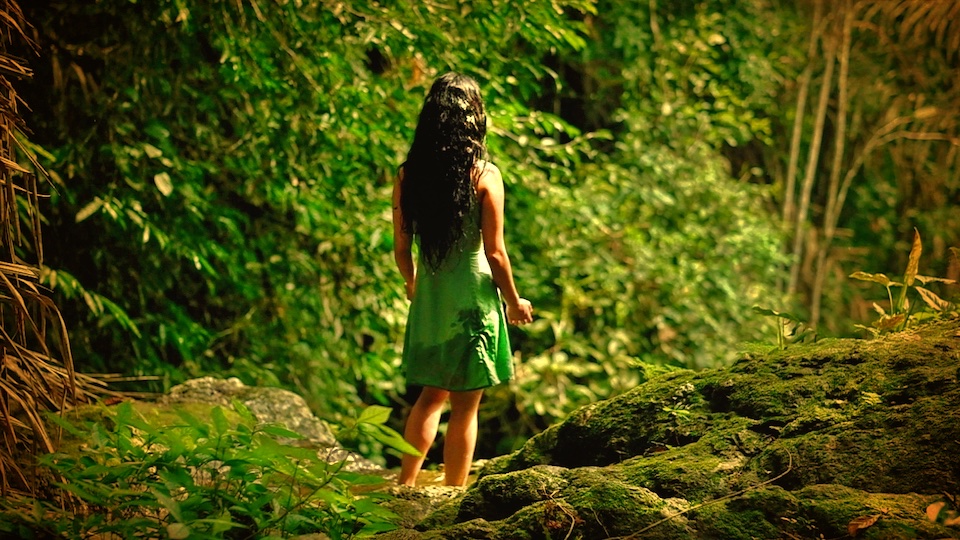
NEWS (FEBRUARY 2021)
The film has finally been finished and is now headed to the international film festival circuit. A private link to the film has been shared with all financial supporters. Thank you for being a part of this Quixotic project.
*Go to www.kissing-gaia.com for more information.
***
Backstory
Why are we slowly killing our planet? I believe there's a psychological reason at play. It has to do with a sense of separateness from the natural world. What is the opposite of this? What would it look like to experience genuine intimacy with the natural world?
This is what Kissing Gaia is about. It's based on a series of real-life intimate encounters with Gaia, dating back to 2002, that have taken place in Ecuador. The intimacy is triggered by a sacred cactus that grows wild in the mountains. The flesh of this cactus contains one of the most powerful psychedelic alkaloids on earth, called mescaline. When the flesh of this cactus is consumed by people, that sense of separateness dissolves. And something else takes its place.
Kissing Gaia was written and directed by Jerry Toth, starring Nabilia Ganem, with cinematography by Camilo Coba.
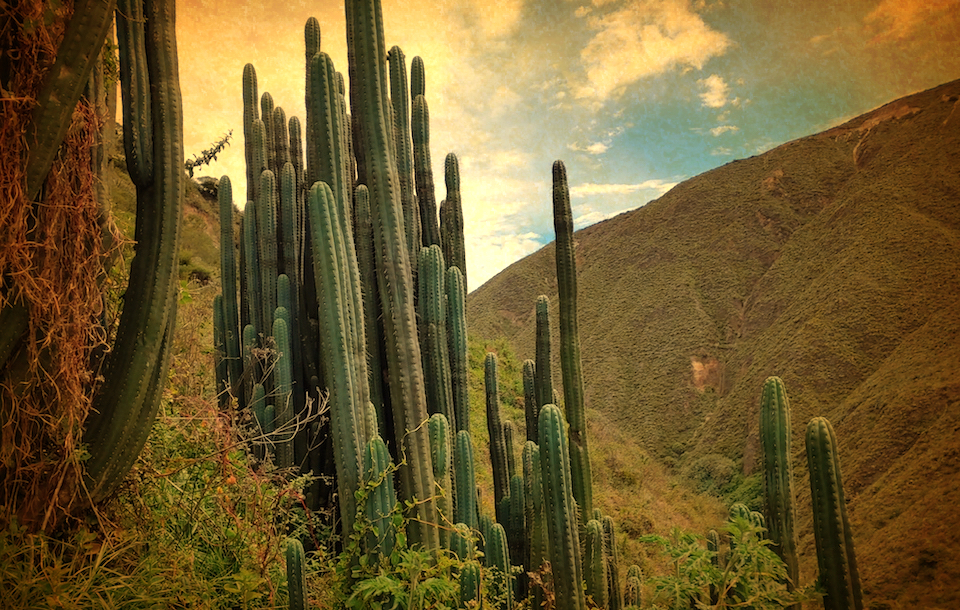
A sacred cactus
Ancient cultures called it Huachuma. The Spanish named it San Pedro. Botanists call it Echinopsis pachanoi. It is a cousin of Peyote, and most notably contains one of the psychoactive alkaloid known as mescaline.
The first time I came to Ecuador, in 2002, I was told about a valley where this cactus grows wild, and I was told how to harvest and prepare it myself. With no further information, I took a ten-hour bus ride, climbed to the top of a mountain, and found the cactus. I reverently cut off it's arm and hiked back down to a small shack I was renting in the forest below. As instructed, I peeled the flesh of the cactus and boiled it for many hours, reducing it to a concentrated green liquid. The next morning I woke up and drank it, alone. That's when everything started for me. You can read the full story in the article "DIY Mescaline: How to explore San Pedro without a guide," published in Medium last year.
After my first experience with San Pedro, I eventually moved to Ecuador. I have since gone back to this valley every couple of years to repeat the ritual. One of the outcomes of this ritual was the creation of an 1,700-acre rainforest preserve in Ecuador. This forest is also where I live for much of the year. The flesh of this cactus has fundamentally reoriented one human's relationship with the natural world. And there's a bunch of us out there.
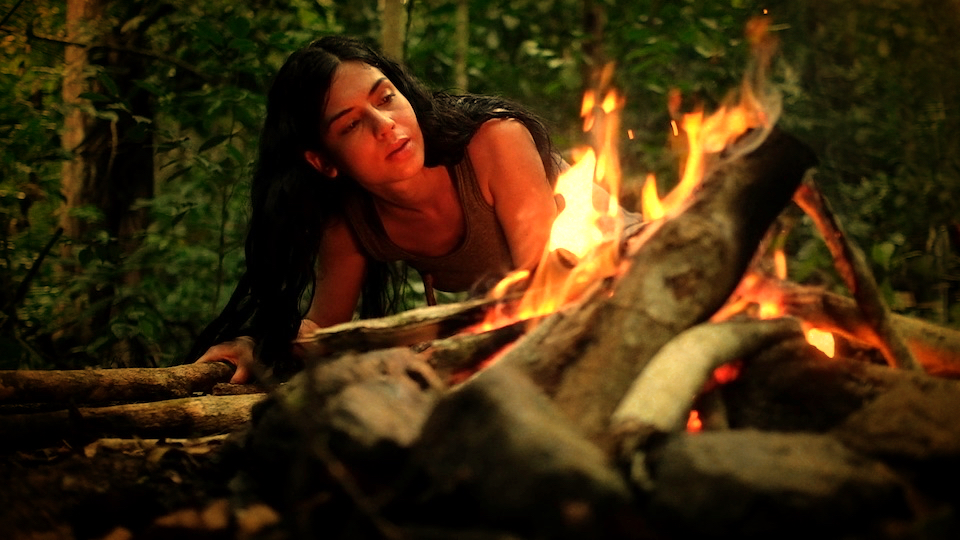
Abuse of the natural world
And yet, the planet continues to be pillaged. It is my belief that the root cause of this pattern, on a level even deeper than economics, is a fundamental sense of separation that most people feel from the natural world. This feeling of separation is actually an illusion. It is a scientific fact that human beings are just as much a part of nature as trees and rocks and other animals. How do we reawaken a sense of connection to our biosphere, on a visceral level?
I don’t think the answer is an intellectual one. The feeling of connection isn’t something that comes from the head. It comes from some other place. At the risk of putting a name to it, perhaps it could be called an underlying sense of awareness, or consciousness, or an internal compass. Plant medicine and other psychedelic substances aren’t the only ways to engage that internal compass. For many people, however, these tools are an extremely effective way to trigger a change in consciousness. It's not about thinking that we're inextricably a part of the whole thing. It's about knowing it, deeply and experientially.
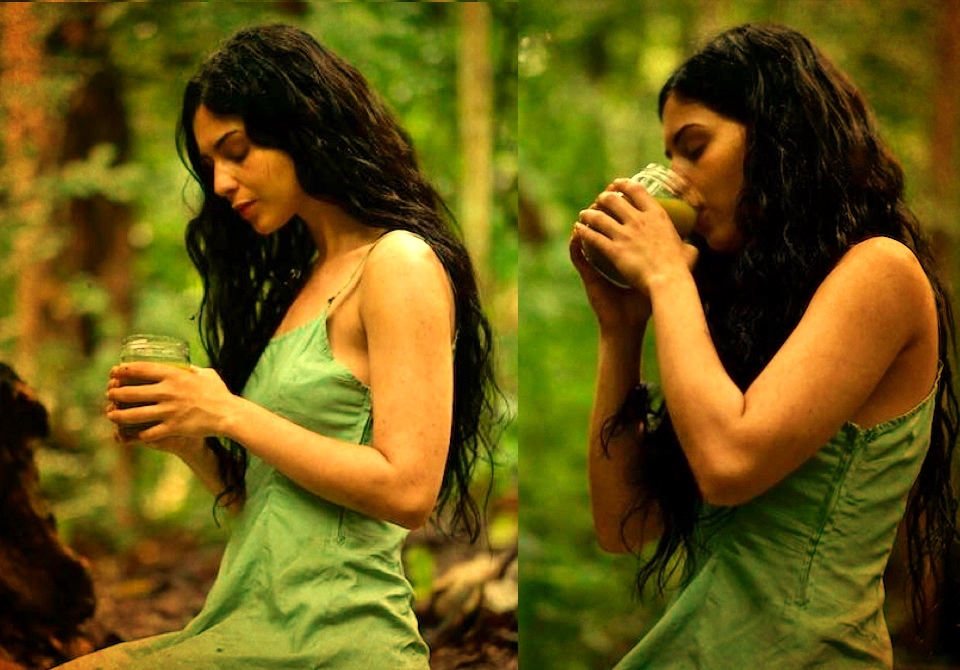
The Plot...and a new language for the conservation movement
After working as a professional conservationist for more than a decade by now, I have grown accustomed to speaking about nature in the terms that our society is most comfortable with—using data points that quantify things like species numbers, tons of carbon, percentages, etc. But I don’t think numbers like this tell the whole story. And in many cases, they do a poor job of inspiring action.
Kissing Gaia is our attempt at engaging the single most important issue of our time—the existential threat that life on earth currently faces—through a spiritual and even sensual lens. The main character, played beautifully by Nabilia Ganem, is a seeker. She leaves the city in search of a connection with herself and with the system of life that supports her existence. Perhaps she's also seeking a connection with that underlying force from which all life is ushered into being.
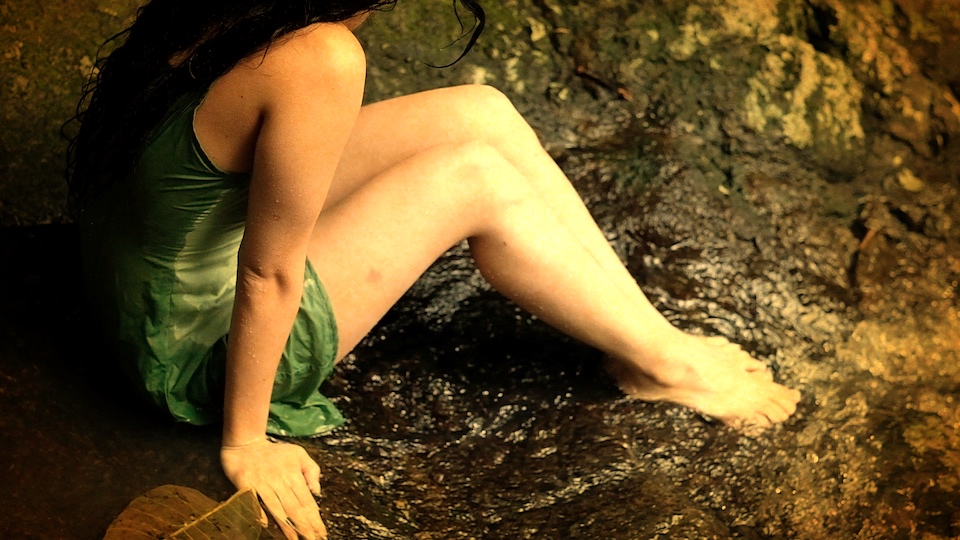
The ritual that this woman undertakes is a very close approximation of my own personal ritual that I’ve been practicing in Ecuador for the past seventeen years. She climbs to the top of a mountain to harvest an arm of cactus from a wild stand of San Pedro. Then she descends down into the forest to prepare the sacred brew alone. There are no human structures in this film. To sleep, she strings up a hammock between two massive trees. She drinks water directly from the stream. She boils the cactus over a fire of fallen tree branches. In the morning, she drinks the liquid. And then she is seduced.
Love in the Forest
Kissing Gaia is a celebration of beauty in all of its manifestations, which includes the beauty of the forest, water, trees, a human being. Elements of the natural world are treated as characters of equal standing with the human character. The beauty and vulnerability of all elements of nature are expressed with the restrained sensuality of a Wong Kar-wai romance film. In this case, the love story is about a human with the natural world.
Filming under the influence of San Pedro
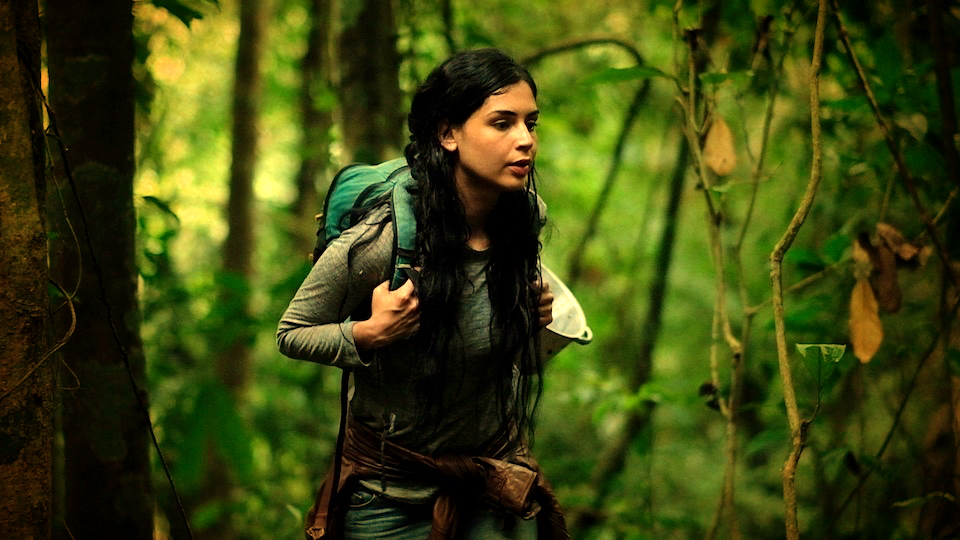
Nearly every person working on this film has consumed San Pedro in some context, and it has shaped our lives. So on the one hand, we're eager to share something of the power of this experience with other people. But we're also aware of the great responsibility that comes with this. From the beginning, we have committed ourselves to treating this plant, and the nature of this experience, with the respect and reverence that it demands. And we constantly remind ourselves of the neccessity of doing that.
With that said, it should be acknowledged that part of Kissing Gaia was filmed under the influence of San Pedro, literally. The film was shot sequentially. Nabilia's character harvested the cactus in the highlands. From there, we traveled down into the forest to prepare it. We spent most of the day filming the preparation process. Then we slept in the forest, woke up the next morning, and each of us consumed what was meant to be a microdose before we started filming. It turned out to be more. The line between fact and fiction was delightfully blurred.
Wait, so what’s the point of this again?
First of all, you’re still reading this? Thank you! For those who appreciate bullet-points, here it is:
- To help change the language of the global conservation movement. Currently it’s mostly limited to a data-driven scientific perspective or else a “white man’s burden” social perspective. Maybe it's time to insert...dare I say...spiritual consciousness into the equation.
- To be one of many voices in the growing psychedelic movement. The therapeutic and ceremonial use of psychedelics may be veering in the direction of just another commercial industry, in which consumers pay money in exchange for a spiritual experience, in a way that is sometimes divorced from any contact with the actual plants themselves and the preparation process involved. This film advocates the credo: know your plants personally, and DIY when you can.
- To make meaningful art.
Wishlist
Use the WishList to Pledge cash and Loan items - or - Make a pledge by selecting an Incentive directly.
Equipment
Costs $2,891
Deferred payments for all equipment rental and purchases (camera, lenses, easy rig, gimbal, etc.)
Cast & Crew
Costs $3,116
Deferred stipends and other costs for all of the cast and crew who worked on this film.
Logistics & Supplies
Costs $1,752
Everything from food and transport, casting space rental, props and wardrobe, etc. etc.
Post-Production
Costs $4,350
Video and sound editing, color correction, music licensing,
Film Festival Costs
Costs $800
We're eager to take this film on a world tour. This will at least cover the application fees.
Cash Pledge
Costs $0


Direct link:
Share this update!
About This Team

Nabilia Ganem - Lead Actor
Born and raised in Venezuela, of Lebanese ancestry, now living in Ecuador. An actor since she was twelve years old, Nabilia has appeared in over fifty commercials, three short films, and she plays the lead role in a feature film that is currently in post-production. If you follow her on Instragram, you see the persona of a fashion model. Beneath that external veneer, she is a woman on a profoundly intense and dedicated spiritual path. Watching her work on this film was amazing, because she effectively lived the journey that her character went on. She visibly experienced a transcendent state that went beyond the role she was playing, and the camera was merely there to capture it on film. You can find her on Instagram at @nabiliaganem, where she has amassed a lively following.

Camilo Coba - Director of Photography
Camilo has worked as the Director of Photography on five feature films and forty short films. Overall, he has directed, written, and edited over seventy audiovisual works, including one feature film and eight short films. He studied cinematography at the Universidad del Cine (F.U.C) in Buenos Aires and later finished at the Universidad San Francisco de Quito in Ecuador. He also has an intimate personal relationship with Wachuma, which he credits with playing a profoundly important role in his life. You can follow him on Instagram at @olimac10c.

Jerry Toth – Writer and Director
Jerry was born and raised in Chicago but has lived primarily in South America since 2001, and has resided in Ecuador since 2006. His own experiences with Wachuma, dating back seventeen years, inspired him to help create a nonprofit conservation foundation and an 1,700-acre rainforest preserve in Ecuador. He is also an avid cacao farmer and the co-founder of an Ecuadorian chocolate company called To’ak. His work has been featured in National Geographic, Vice Magazine, Forbes, L.A. Times, among others. For more background on his relationship to Echinopsis pachanoi, check out “DIY Mescaline: How to explore San Pedro without a guide.”
Complete List of Cast & Crew
Writer & Director: Jerry Toth
The Woman: Nabilia Ganem
Director of Photography: Camilo Coba
Assistant Director: Claudia Hidalgo
Photographer: Nicolás Riofrio
Focus Puller: Pablo Secaira
Casting Director: Julia Silva
Makeup Artist: Lilu Ramos
Wardrobe Stylist: Lila Penagos
Editor: Pablo Hurtado
Sound Engineer: Gonzalo Rivas
Color Correction: Jota Salazar
Current Team
Incentives
- The Story
- Wishlist
- Updates
- The Team
- Community
Mission Statement
The Story
NEWS (FEBRUARY 2021)
The film has finally been finished and is now headed to the international film festival circuit. A private link to the film has been shared with all financial supporters. Thank you for being a part of this Quixotic project.
*Go to www.kissing-gaia.com for more information.
***
Backstory
Why are we slowly killing our planet? I believe there's a psychological reason at play. It has to do with a sense of separateness from the natural world. What is the opposite of this? What would it look like to experience genuine intimacy with the natural world?
This is what Kissing Gaia is about. It's based on a series of real-life intimate encounters with Gaia, dating back to 2002, that have taken place in Ecuador. The intimacy is triggered by a sacred cactus that grows wild in the mountains. The flesh of this cactus contains one of the most powerful psychedelic alkaloids on earth, called mescaline. When the flesh of this cactus is consumed by people, that sense of separateness dissolves. And something else takes its place.
Kissing Gaia was written and directed by Jerry Toth, starring Nabilia Ganem, with cinematography by Camilo Coba.
A sacred cactus
Ancient cultures called it Huachuma. The Spanish named it San Pedro. Botanists call it Echinopsis pachanoi. It is a cousin of Peyote, and most notably contains one of the psychoactive alkaloid known as mescaline.
The first time I came to Ecuador, in 2002, I was told about a valley where this cactus grows wild, and I was told how to harvest and prepare it myself. With no further information, I took a ten-hour bus ride, climbed to the top of a mountain, and found the cactus. I reverently cut off it's arm and hiked back down to a small shack I was renting in the forest below. As instructed, I peeled the flesh of the cactus and boiled it for many hours, reducing it to a concentrated green liquid. The next morning I woke up and drank it, alone. That's when everything started for me. You can read the full story in the article "DIY Mescaline: How to explore San Pedro without a guide," published in Medium last year.
After my first experience with San Pedro, I eventually moved to Ecuador. I have since gone back to this valley every couple of years to repeat the ritual. One of the outcomes of this ritual was the creation of an 1,700-acre rainforest preserve in Ecuador. This forest is also where I live for much of the year. The flesh of this cactus has fundamentally reoriented one human's relationship with the natural world. And there's a bunch of us out there.
Abuse of the natural world
And yet, the planet continues to be pillaged. It is my belief that the root cause of this pattern, on a level even deeper than economics, is a fundamental sense of separation that most people feel from the natural world. This feeling of separation is actually an illusion. It is a scientific fact that human beings are just as much a part of nature as trees and rocks and other animals. How do we reawaken a sense of connection to our biosphere, on a visceral level?
I don’t think the answer is an intellectual one. The feeling of connection isn’t something that comes from the head. It comes from some other place. At the risk of putting a name to it, perhaps it could be called an underlying sense of awareness, or consciousness, or an internal compass. Plant medicine and other psychedelic substances aren’t the only ways to engage that internal compass. For many people, however, these tools are an extremely effective way to trigger a change in consciousness. It's not about thinking that we're inextricably a part of the whole thing. It's about knowing it, deeply and experientially.
The Plot...and a new language for the conservation movement
After working as a professional conservationist for more than a decade by now, I have grown accustomed to speaking about nature in the terms that our society is most comfortable with—using data points that quantify things like species numbers, tons of carbon, percentages, etc. But I don’t think numbers like this tell the whole story. And in many cases, they do a poor job of inspiring action.
Kissing Gaia is our attempt at engaging the single most important issue of our time—the existential threat that life on earth currently faces—through a spiritual and even sensual lens. The main character, played beautifully by Nabilia Ganem, is a seeker. She leaves the city in search of a connection with herself and with the system of life that supports her existence. Perhaps she's also seeking a connection with that underlying force from which all life is ushered into being.
The ritual that this woman undertakes is a very close approximation of my own personal ritual that I’ve been practicing in Ecuador for the past seventeen years. She climbs to the top of a mountain to harvest an arm of cactus from a wild stand of San Pedro. Then she descends down into the forest to prepare the sacred brew alone. There are no human structures in this film. To sleep, she strings up a hammock between two massive trees. She drinks water directly from the stream. She boils the cactus over a fire of fallen tree branches. In the morning, she drinks the liquid. And then she is seduced.
Love in the Forest
Kissing Gaia is a celebration of beauty in all of its manifestations, which includes the beauty of the forest, water, trees, a human being. Elements of the natural world are treated as characters of equal standing with the human character. The beauty and vulnerability of all elements of nature are expressed with the restrained sensuality of a Wong Kar-wai romance film. In this case, the love story is about a human with the natural world.
Filming under the influence of San Pedro
Nearly every person working on this film has consumed San Pedro in some context, and it has shaped our lives. So on the one hand, we're eager to share something of the power of this experience with other people. But we're also aware of the great responsibility that comes with this. From the beginning, we have committed ourselves to treating this plant, and the nature of this experience, with the respect and reverence that it demands. And we constantly remind ourselves of the neccessity of doing that.
With that said, it should be acknowledged that part of Kissing Gaia was filmed under the influence of San Pedro, literally. The film was shot sequentially. Nabilia's character harvested the cactus in the highlands. From there, we traveled down into the forest to prepare it. We spent most of the day filming the preparation process. Then we slept in the forest, woke up the next morning, and each of us consumed what was meant to be a microdose before we started filming. It turned out to be more. The line between fact and fiction was delightfully blurred.
Wait, so what’s the point of this again?
First of all, you’re still reading this? Thank you! For those who appreciate bullet-points, here it is:
- To help change the language of the global conservation movement. Currently it’s mostly limited to a data-driven scientific perspective or else a “white man’s burden” social perspective. Maybe it's time to insert...dare I say...spiritual consciousness into the equation.
- To be one of many voices in the growing psychedelic movement. The therapeutic and ceremonial use of psychedelics may be veering in the direction of just another commercial industry, in which consumers pay money in exchange for a spiritual experience, in a way that is sometimes divorced from any contact with the actual plants themselves and the preparation process involved. This film advocates the credo: know your plants personally, and DIY when you can.
- To make meaningful art.
Wishlist
Use the WishList to Pledge cash and Loan items - or - Make a pledge by selecting an Incentive directly.
Equipment
Costs $2,891
Deferred payments for all equipment rental and purchases (camera, lenses, easy rig, gimbal, etc.)
Cast & Crew
Costs $3,116
Deferred stipends and other costs for all of the cast and crew who worked on this film.
Logistics & Supplies
Costs $1,752
Everything from food and transport, casting space rental, props and wardrobe, etc. etc.
Post-Production
Costs $4,350
Video and sound editing, color correction, music licensing,
Film Festival Costs
Costs $800
We're eager to take this film on a world tour. This will at least cover the application fees.
Cash Pledge
Costs $0
Direct link:
Share this update!
About This Team
Nabilia Ganem - Lead Actor
Born and raised in Venezuela, of Lebanese ancestry, now living in Ecuador. An actor since she was twelve years old, Nabilia has appeared in over fifty commercials, three short films, and she plays the lead role in a feature film that is currently in post-production. If you follow her on Instragram, you see the persona of a fashion model. Beneath that external veneer, she is a woman on a profoundly intense and dedicated spiritual path. Watching her work on this film was amazing, because she effectively lived the journey that her character went on. She visibly experienced a transcendent state that went beyond the role she was playing, and the camera was merely there to capture it on film. You can find her on Instagram at @nabiliaganem, where she has amassed a lively following.
Camilo Coba - Director of Photography
Camilo has worked as the Director of Photography on five feature films and forty short films. Overall, he has directed, written, and edited over seventy audiovisual works, including one feature film and eight short films. He studied cinematography at the Universidad del Cine (F.U.C) in Buenos Aires and later finished at the Universidad San Francisco de Quito in Ecuador. He also has an intimate personal relationship with Wachuma, which he credits with playing a profoundly important role in his life. You can follow him on Instagram at @olimac10c.
Jerry Toth – Writer and Director
Jerry was born and raised in Chicago but has lived primarily in South America since 2001, and has resided in Ecuador since 2006. His own experiences with Wachuma, dating back seventeen years, inspired him to help create a nonprofit conservation foundation and an 1,700-acre rainforest preserve in Ecuador. He is also an avid cacao farmer and the co-founder of an Ecuadorian chocolate company called To’ak. His work has been featured in National Geographic, Vice Magazine, Forbes, L.A. Times, among others. For more background on his relationship to Echinopsis pachanoi, check out “DIY Mescaline: How to explore San Pedro without a guide.”
Complete List of Cast & Crew
Writer & Director: Jerry Toth
The Woman: Nabilia Ganem
Director of Photography: Camilo Coba
Assistant Director: Claudia Hidalgo
Photographer: Nicolás Riofrio
Focus Puller: Pablo Secaira
Casting Director: Julia Silva
Makeup Artist: Lilu Ramos
Wardrobe Stylist: Lila Penagos
Editor: Pablo Hurtado
Sound Engineer: Gonzalo Rivas
Color Correction: Jota Salazar