Love & Death
Atlanta, Georgia | Film Short
Film-Noir, Fantasy
Classic American cinema, viewed through the lens of film noir, is one of my favorite cinematic styles. However, African Americans were often relegated to roles like maids or doormen, so I've taken this iconic style & created a story with African American leads set during the golden age of film noir.
Love & Death
Atlanta, Georgia | Film Short
Film-Noir, Fantasy

0 Campaigns | Georgia, United States
Classic American cinema, viewed through the lens of film noir, is one of my favorite cinematic styles. However, African Americans were often relegated to roles like maids or doormen, so I've taken this iconic style & created a story with African American leads set during the golden age of film noir.
About The Project


- The Story
- Wishlist
- Updates
- The Team
- Community
Mission Statement
The Story
 HZ.png) Love & Death is a proud 2025 Grant Recipient from The Puffin Foundation, LTD!
Love & Death is a proud 2025 Grant Recipient from The Puffin Foundation, LTD!
Love & Death also won "Best Noir Script" from NYIFA in 2026!
%20LOG.png) CHARLIE GOOLSWORTH, a 1950s Harlem gangster & jazz club owner gets a visit from the Ancestors in this film noir. The Primary Ancestor is the “detective prototype” from the film noir genre, but he’s holding Charlie spiritually accountable for his many many crimes.
CHARLIE GOOLSWORTH, a 1950s Harlem gangster & jazz club owner gets a visit from the Ancestors in this film noir. The Primary Ancestor is the “detective prototype” from the film noir genre, but he’s holding Charlie spiritually accountable for his many many crimes.
%20copy.png) CLASSIC AMERICAN CINEMA told through the lens of lights & shadows in the form of film noir is one of my favorite cinematic styles or genres even, for those that classify it as such...but there was no presence of African-Americans except for cooks or doormen primarily, so I’ve taken one of my favorite cinematic styles and developed a tale with African-American leads based during this classic period of American film noir.
CLASSIC AMERICAN CINEMA told through the lens of lights & shadows in the form of film noir is one of my favorite cinematic styles or genres even, for those that classify it as such...but there was no presence of African-Americans except for cooks or doormen primarily, so I’ve taken one of my favorite cinematic styles and developed a tale with African-American leads based during this classic period of American film noir.
 SHOT.png)
VISUAL MEDIUM FOR CONVEYING THE STORY will be consistent with the methodology of films from this classic era of American cinema known as film noir, which were lensed using black and white film stock. Film noir is known for its low-key, black and white photography, which is inspired by German Expressionism and the chiaroscuro lighting of Renaissance art. For those not familiar, chiaroscuro is just a fancy term that means "light and dark" in Italian which refers to the use of light and dark in art to create a sense of volume and mass. Light and shadows are key storytelling devices in classic film noirs and part of the fabric of the story. Shooting on film can capture more details in shadows and highlights without losing information. The 35mm film format adds artistic and aesthetic richness to the story as well and assists with marrying our production to this classic style.
-7.jpg)
FORMAT: Featurette
LENGTH: 30 Minutes
GENRE: Film Noir / Fantasy
Our end goal after the featurette is made is to deliver to film festivals and pitch the film for development into either a feature film or serving as a pilot episode for a Black film noir anthology, and ultimately landing distribution of the film to a streaming platform to reach a global audience.
 SYN.png)
HARLEM, NEW YORK (Circa 1950) is the home of Mr. Charlie Goolsworth. He's an African-American man in his 40s reputed as a Harlem gangster, and a hit jazz club owner where many jazz giants come to play at the eponymous club, “CHARLIE'S.”
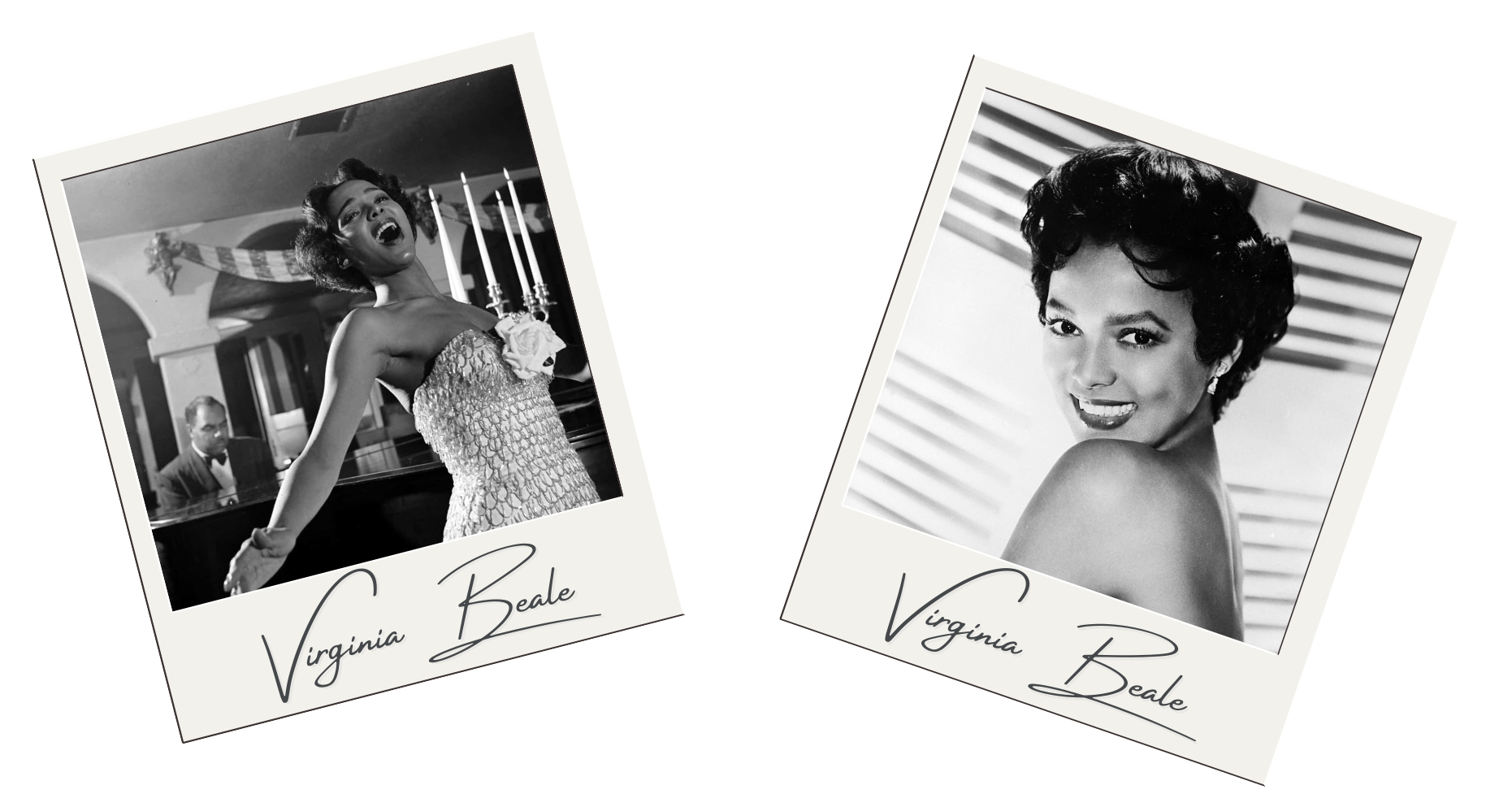
.png) Charlie enjoys an elegant evening with his eternal love interest, Ms. Virginia Beale. She’s a world renowned jazz singer, a stunningly gorgeous dame, and America’s most eligible bachelorette. They’re having the time of their lives in the backseat of Charlie’s 1950 Lincoln Cosmopolitan, but there’s something odd about Charlie’s new driver and he wears a strange triglyph tribal scar on his face.
Charlie enjoys an elegant evening with his eternal love interest, Ms. Virginia Beale. She’s a world renowned jazz singer, a stunningly gorgeous dame, and America’s most eligible bachelorette. They’re having the time of their lives in the backseat of Charlie’s 1950 Lincoln Cosmopolitan, but there’s something odd about Charlie’s new driver and he wears a strange triglyph tribal scar on his face.
 They arrive at CHARLIE'S as Duke Ellington’s band entertains the club. The crowd parts like the Red Sea for the Black Moses of the streets. Charlie floats inside [INSERT double-dolly shot AKA The Spike Lee Shot ]. The people of Harlem show their adoration for their street saint.
Charlie considers leaving Harlem in a conversation with Virginia where he finds cowrie shells in his jacket pocket, but Virginia doesn’t seem surprised. Charlie ignores it for the moment, but the evening gets more eery. A new bar back has a tribal scar on his face identical to the driver, but it doesn’t register with Charlie just yet.
.png)
Charlie heads to his office after cleaning out a register and as he’s stashing the loot in the safe, he finds more cowrie shells. Confusion deepens and when he turns around a 6'-3” African warrior stands in his office. He resembles an African-Futuristic version of Shaka Zulu. Charlie realizes that he was the mysterious driver and he's known as The Primary Ancestor.
Through a futuristic storytelling device in the palm of his hands, The Primary Ancestor shows Charlie some of the crimes he’s committed. The Charlie Goolsworth Show is an unsettling revelation for Charlie to witness his crimes from a “God’s eye” view.
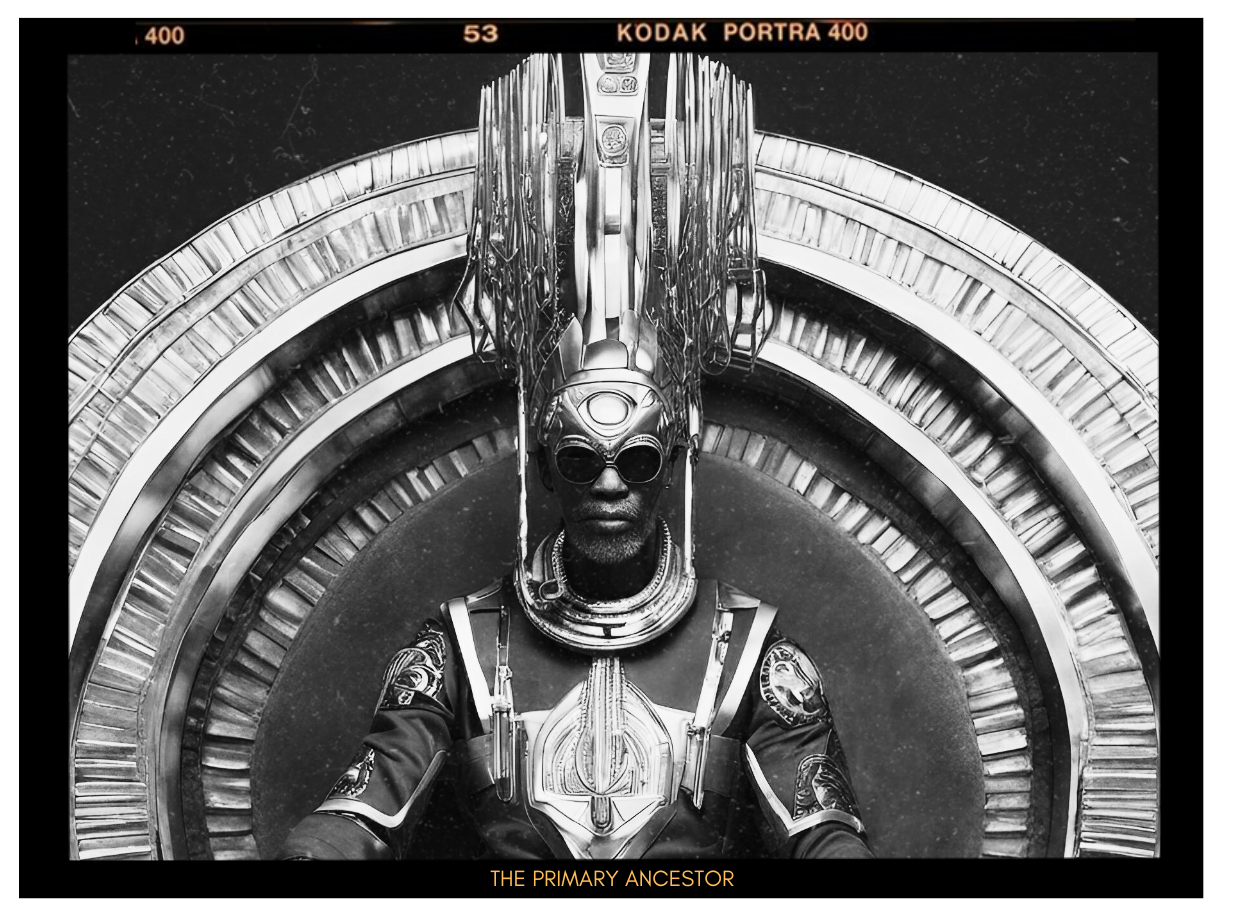 Charlie questions his mortality, but learns he’s very much alive in what appears to be a waking nightmare. It’s revealed that The Primary Ancestor is the “detective prototype” from the film noir genre, but he’s holding Charlie “spiritually” accountable for his many many crimes.
Charlie tries to evade accountability, denying any wrongdoing hiding under the veil of his urban utilitarianism as though his crimes were to help Harlem.
When Charlie goes back inside his nightclub, it’s empty—but filled with fog and chiaroscuro lighting—with several backlit African-Futuristic ancestors hauntingly approaching.
Charlie runs like hell!
His heart is broken when he finds out that Virginia is one of the Ancestors from another bloodline, but he continues to beat feet. The Ancestors chase Charlie through Harlem trying to get him to atone but he keeps running eventually hitting a literal brick wall.
Love, regret, redemption...
Charlie stops running.
He calmly lights a cigarette.
He’s known love.
He now knows regret.
Charlie delivers one final line to his love, Virginia. “See you in the next lifetime, doll.”
Then he charges at the Ancestors to receive his atonement.
...Charlie now knows redemption.
FILMIC INSPIRATION for Love & Death (even though it's an original scripted story) was found in The Public Enemy by William A. Wellman (1931), Larceny by George Sherman (1948), and Black Caesar by Larry Cohen (1973). There will be Hitchcockian elements as well in the film.
.png)

-2.png)

MILES DAVIS composed and scored the French film by Louis Malle (1958) titled "Ascenseur Pour L'echafaud" (Elevator to the Gallows) in a one session recording. Inspired by this sound along with horn of Blue Mitchell, we have enlisted two time Grammy Award winning musician and trumpeter Keyon Harrold to score the film. There will also be undertones of Fela Kuti during the Ancestor scenes. No pressure on Mr. Harrold to score it in a single recording session however...
 copy 2.png)
.png) THE PRODUCTION BUDGET is being raised on this campaign to begin production, and below you can find the full breakdown. Production value can increase the budget, but since this is a period piece and shot on film this has increased the budget for production. As noted, we won a grant from The Puffin Foundation and we've applied to tons more as we need all the financial support we can in order to give film the production value it deserves.
THE PRODUCTION BUDGET is being raised on this campaign to begin production, and below you can find the full breakdown. Production value can increase the budget, but since this is a period piece and shot on film this has increased the budget for production. As noted, we won a grant from The Puffin Foundation and we've applied to tons more as we need all the financial support we can in order to give film the production value it deserves.
-2.png)
PLEASE FOLLOW & SHARE
Sharing our campaign on your social media is as helpful as a donation. And doing BOTH goes a long way to helping bring LOVE & DEATH to life!
THANK YOU SO MUCH FOR CONSIDERING OUR PROJECT
.png)
Wishlist
Use the WishList to Pledge cash and Loan items - or - Make a pledge by selecting an Incentive directly.
Camera & Lighting Equipment
Costs $21,125
To achieve the visual style and tone of our film, we will be renting out specific equipment and gear.
Wardrobe & Costumes
Costs $10,925
Period films have high costs for wardrobe and we'd like our film to be true to 1950s Harlem. There's also scenes from Predynastic Egypt.
Set Design & Art
Costs $17,750
Props, set dressing, art for 1950s Harlem
Locations
Costs $9,400
Location scouting, management, and shooting on location
Vintage Bank
Costs $3,000
Vintage bank with vault needed for bank heist scene


Direct link:
Share this update!
About This Team
%20DIR%20copy.png)
CHRIS M. RUTLEDGE Writer | Director | Executive Producer
An origin story beginning in Chicago, Chris is an award-winning writer/director whose work has premiered at film festivals in Los Angeles, Atlanta, New York, Miami, Las Vegas, and globally in Nigeria, Paris, and London. His latest film "Date Nights" earned a five star rating. “A Highly Skilled & Emotionally Resonant Work That Elevates The Short Film Genre.” Short Films Matter (Rated ★★★★★)
%20MUS.png) KEYON HARROLD Music Composer
KEYON HARROLD Music Composer
An origin story beginning in St. Louis, Keyon is a two time Grammy Award winning musician, a jazz trumpeter, composer, and vocalist. He has composed or performed music for the films The Photograph, Miles Ahead, and Date Nights. Keyon has also provided instrumentation for recordings by JAY-Z, Beyoncé, 50 Cent, Anthony Hamilton, Gregory Porter, Mac Miller, Mary J. Blige and Maxwell.
Current Team
Incentives
- The Story
- Wishlist
- Updates
- The Team
- Community
Mission Statement
The Story
Love & Death is a proud 2025 Grant Recipient from The Puffin Foundation, LTD!
Love & Death also won "Best Noir Script" from NYIFA in 2026!
CHARLIE GOOLSWORTH, a 1950s Harlem gangster & jazz club owner gets a visit from the Ancestors in this film noir. The Primary Ancestor is the “detective prototype” from the film noir genre, but he’s holding Charlie spiritually accountable for his many many crimes.
CLASSIC AMERICAN CINEMA told through the lens of lights & shadows in the form of film noir is one of my favorite cinematic styles or genres even, for those that classify it as such...but there was no presence of African-Americans except for cooks or doormen primarily, so I’ve taken one of my favorite cinematic styles and developed a tale with African-American leads based during this classic period of American film noir.
VISUAL MEDIUM FOR CONVEYING THE STORY will be consistent with the methodology of films from this classic era of American cinema known as film noir, which were lensed using black and white film stock. Film noir is known for its low-key, black and white photography, which is inspired by German Expressionism and the chiaroscuro lighting of Renaissance art. For those not familiar, chiaroscuro is just a fancy term that means "light and dark" in Italian which refers to the use of light and dark in art to create a sense of volume and mass. Light and shadows are key storytelling devices in classic film noirs and part of the fabric of the story. Shooting on film can capture more details in shadows and highlights without losing information. The 35mm film format adds artistic and aesthetic richness to the story as well and assists with marrying our production to this classic style.
FORMAT: Featurette
LENGTH: 30 Minutes
GENRE: Film Noir / Fantasy
Our end goal after the featurette is made is to deliver to film festivals and pitch the film for development into either a feature film or serving as a pilot episode for a Black film noir anthology, and ultimately landing distribution of the film to a streaming platform to reach a global audience.
HARLEM, NEW YORK (Circa 1950) is the home of Mr. Charlie Goolsworth. He's an African-American man in his 40s reputed as a Harlem gangster, and a hit jazz club owner where many jazz giants come to play at the eponymous club, “CHARLIE'S.”
Charlie enjoys an elegant evening with his eternal love interest, Ms. Virginia Beale. She’s a world renowned jazz singer, a stunningly gorgeous dame, and America’s most eligible bachelorette. They’re having the time of their lives in the backseat of Charlie’s 1950 Lincoln Cosmopolitan, but there’s something odd about Charlie’s new driver and he wears a strange triglyph tribal scar on his face.
They arrive at CHARLIE'S as Duke Ellington’s band entertains the club. The crowd parts like the Red Sea for the Black Moses of the streets. Charlie floats inside [INSERT double-dolly shot AKA The Spike Lee Shot ]. The people of Harlem show their adoration for their street saint.
Charlie considers leaving Harlem in a conversation with Virginia where he finds cowrie shells in his jacket pocket, but Virginia doesn’t seem surprised. Charlie ignores it for the moment, but the evening gets more eery. A new bar back has a tribal scar on his face identical to the driver, but it doesn’t register with Charlie just yet.
Charlie heads to his office after cleaning out a register and as he’s stashing the loot in the safe, he finds more cowrie shells. Confusion deepens and when he turns around a 6'-3” African warrior stands in his office. He resembles an African-Futuristic version of Shaka Zulu. Charlie realizes that he was the mysterious driver and he's known as The Primary Ancestor.
Through a futuristic storytelling device in the palm of his hands, The Primary Ancestor shows Charlie some of the crimes he’s committed. The Charlie Goolsworth Show is an unsettling revelation for Charlie to witness his crimes from a “God’s eye” view.
Charlie questions his mortality, but learns he’s very much alive in what appears to be a waking nightmare. It’s revealed that The Primary Ancestor is the “detective prototype” from the film noir genre, but he’s holding Charlie “spiritually” accountable for his many many crimes.
Charlie tries to evade accountability, denying any wrongdoing hiding under the veil of his urban utilitarianism as though his crimes were to help Harlem.
When Charlie goes back inside his nightclub, it’s empty—but filled with fog and chiaroscuro lighting—with several backlit African-Futuristic ancestors hauntingly approaching.
Charlie runs like hell!
His heart is broken when he finds out that Virginia is one of the Ancestors from another bloodline, but he continues to beat feet. The Ancestors chase Charlie through Harlem trying to get him to atone but he keeps running eventually hitting a literal brick wall.
Love, regret, redemption...
Charlie stops running.
He calmly lights a cigarette.
He’s known love.
He now knows regret.
Charlie delivers one final line to his love, Virginia. “See you in the next lifetime, doll.”
Then he charges at the Ancestors to receive his atonement.
...Charlie now knows redemption.
FILMIC INSPIRATION for Love & Death (even though it's an original scripted story) was found in The Public Enemy by William A. Wellman (1931), Larceny by George Sherman (1948), and Black Caesar by Larry Cohen (1973). There will be Hitchcockian elements as well in the film.
MILES DAVIS composed and scored the French film by Louis Malle (1958) titled "Ascenseur Pour L'echafaud" (Elevator to the Gallows) in a one session recording. Inspired by this sound along with horn of Blue Mitchell, we have enlisted two time Grammy Award winning musician and trumpeter Keyon Harrold to score the film. There will also be undertones of Fela Kuti during the Ancestor scenes. No pressure on Mr. Harrold to score it in a single recording session however...
THE PRODUCTION BUDGET is being raised on this campaign to begin production, and below you can find the full breakdown. Production value can increase the budget, but since this is a period piece and shot on film this has increased the budget for production. As noted, we won a grant from The Puffin Foundation and we've applied to tons more as we need all the financial support we can in order to give film the production value it deserves.
PLEASE FOLLOW & SHARE
Sharing our campaign on your social media is as helpful as a donation. And doing BOTH goes a long way to helping bring LOVE & DEATH to life!
THANK YOU SO MUCH FOR CONSIDERING OUR PROJECT
Wishlist
Use the WishList to Pledge cash and Loan items - or - Make a pledge by selecting an Incentive directly.
Camera & Lighting Equipment
Costs $21,125
To achieve the visual style and tone of our film, we will be renting out specific equipment and gear.
Wardrobe & Costumes
Costs $10,925
Period films have high costs for wardrobe and we'd like our film to be true to 1950s Harlem. There's also scenes from Predynastic Egypt.
Set Design & Art
Costs $17,750
Props, set dressing, art for 1950s Harlem
Locations
Costs $9,400
Location scouting, management, and shooting on location
Vintage Bank
Costs $3,000
Vintage bank with vault needed for bank heist scene
Direct link:
Share this update!
About This Team
CHRIS M. RUTLEDGE Writer | Director | Executive Producer
An origin story beginning in Chicago, Chris is an award-winning writer/director whose work has premiered at film festivals in Los Angeles, Atlanta, New York, Miami, Las Vegas, and globally in Nigeria, Paris, and London. His latest film "Date Nights" earned a five star rating. “A Highly Skilled & Emotionally Resonant Work That Elevates The Short Film Genre.” Short Films Matter (Rated ★★★★★)
KEYON HARROLD Music Composer
An origin story beginning in St. Louis, Keyon is a two time Grammy Award winning musician, a jazz trumpeter, composer, and vocalist. He has composed or performed music for the films The Photograph, Miles Ahead, and Date Nights. Keyon has also provided instrumentation for recordings by JAY-Z, Beyoncé, 50 Cent, Anthony Hamilton, Gregory Porter, Mac Miller, Mary J. Blige and Maxwell.