Missed
Los Angeles, California | Film Short
Comedy, Drama
After a miscarriage, June experiences hallucinations of a wacky sentient version of her non-viable fetus who helps her through the grieving process.
Missed
Los Angeles, California | Film Short
Comedy, Drama

1 Campaigns | California, United States
Green Light
This campaign raised $24,910 for production. Follow the filmmaker to receive future updates on this project.
169 supporters | followers
Enter the amount you would like to pledge
After a miscarriage, June experiences hallucinations of a wacky sentient version of her non-viable fetus who helps her through the grieving process.
About The Project


- The Story
- Wishlist
- Updates
- The Team
- Community
Mission Statement
The Story
I thought of Missed in the middle of a miscarriage. I was sitting in bed wearing an adult diaper in a state of physical and emotional pain like nothing I had ever felt. My free pregnancy app was pinging me with notifications announcing the formation of my fetus' vital organs, likening in size to a kumquat. It would’ve been the right time to start buying maternity clothes. But in reality, like the other millions of people who have miscarriages a year, the fetus hadn't developed past 6 weeks. I couldn’t have done anything differently — this was just a random bout of bad luck.

After a miscarriage, doctors and friends and strangers promptly inundate you with stats that are supposed to make you feel better. So many women go through this, 1 in 4 in fact. 20% of pregnancies end in a miscarriage! That's 23 million every year! Or 44 pregnancy losses each minute! Beyonce had one! Instead of making you feel less alone, the reductive data sideshow of it all seems to minimize the pain women are allowed to feel. The note behind the note is always "Get over it."
After my miscarriage, the thing that helped me the most, the one interaction that allowed me to briefly leave the depressive, dissociative state I was in, was a friend of a friend confessing that after her own miscarriage, she wept for weeks. Just that simple disclosure that she had also been in pain made me feel like it was okay that I was, too. Nothing had to be minimized. It was okay just to be.
There's no established way of dealing with a miscarriage. No ritual. Which makes it incredibly confusing and painful. For such a pervasive experience, the lack of art addressing it is surprising and sad. I wish I had had something like Missed when I was going through my miscarriage. Something that didn't reduce my experience into a statistic. Something that would make me feel like I didn't have to just get over it. I can't help but feel I'm not alone in wanting something like this to exist in the world.

June Adams is a 35-year-old woman who has just learned that she's had a "missed miscarriage" (a particular form of hell when your body hasn't miscarried naturally despite a nonviable fetus). Her doctor presents three options: 1. Get a dilation and curettage (the same procedure as an abortion), 2. Take a set of abortion pills, or 3. Wait for the miscarriage to happen naturally. Wracked with self-pity, anger, and grief, she leaves the doctor's office, not ready to make a final decision on the next steps.
June gets into her car in the hospital parking lot, gearing up for the meltdown of a lifetime, only to find a moving, talking puppet, Daisy, all buckled up in the backseat. Daisy has orange felt skin, a big pink nose, and blue hair made from yarn that is knotted into two messy pigtails. Think of a mix between a little girl and a little monster. She talks way too loudly and is way too chipper for June right now.

June, convinced she's going crazy, barely makes it home trying to drown out the manic ramblings of this demon clearly here to torment her. She soon finds out, after nearly committing herself to the psych ward, that Daisy is harmless. A clumsy, goofy little thing who just wants chicken fingers and soda.
At first, Daisy acts almost childlike, letting June be a version of the mother she thinks she is on her way to becoming. But Daisy shifts seamlessly into a caretaker, an interlocutor for June's own thoughts. She helps June navigate the stages of grief and, in the process, deal with the logistics of inducing a miscarriage. Throughout the film, Daisy seemingly helps June get through it.

But it's not that easy. Not even the most perfect, magical manifestation of exactly what you think you need after a miscarriage can rush the process. The film ends when Daisy shifts once more, this time into a realistic and honest confidant, allowing June the space and freedom to sit in her grief. It's going to take time, and that's okay. She's allowed.
When we see June next, rising from a painkiller-induced sleep, Daisy is nowhere to be found. Her work here is done. She took June, hand-in-tiny felt-hand along for a ride into acceptance. Finally, June is able to let go and just be.


Do you feel like you are constantly being inundated with stories about how women’s reproductive rights are being systematically erased? Same. It’s happening right before our eyes but while women’s bodies are discussed as if they are a piece of legislation, women every damn day are experiencing real, tangible loss and pain.
Make art out of pain, they say. So we did. With miscarriages as common as they are, why are they usually only alluded to with vague signifiers (a woman sobbing in the maternity ward; a family taking down the nursery)? Now is the time to reclaim these stories. Now is the time to put a face to a woman experiencing this loss, instead of referring to HER as a statistic. 20% of women go through this but each story is its own individual experience, each one demanding to be protected and told. Women deserve to see their lived experiences in entertainment and they deserve to talk about it the way they want to, the way it actually happened.

Puppets aren’t cheap!!! (Not even kidding, check out Big Bird’s salary) Any amount of donation will help to make this film a reality. Rest assured we are being as savvy as can be, but still need money in order to secure a few things. These include:
- Paying our cast & crew
- Building our puppet
- Securing locations
- Renting gear
- Bringing the puppet to life
- Post production
- Festival submissions
We're happy to share a more detailed budget breakdown if that helps dictate what you're open to donating. Email us at: [email protected]. If you aren’t able to donate, just sharing this link or story with your friends, family or community to help get the word out would mean the world to us. We're also seeking additional grants and welcome any in-kind donations for locations, food, art, props, and costumes.
An important note: Seed & Spark only releases funds if we reach 80% of our goal. If we don’t reach 80%, we don’t get anything and all donations are reverted back to you amazing people. Every dollar donated will help us reach our end goal of getting this important story told.
Wishlist
Use the WishList to Pledge cash and Loan items - or - Make a pledge by selecting an Incentive directly.
Equipment Rentals
Costs $4,300
Cameras, lights, and various additional gear that we need to shoot Missed.
Paying our Crew
Costs $6,600
No one should work for free. This will go directly to our ACs, AD, Grip, PA, gaffer, sound op, script supe, hair & makeup artist and more.
Paying our cast
Costs $4,398
This item will go directly into the pockets of our amazing cast (and puppeteer!).
Post Production
Costs $5,300
We want to do some really cool visual effects in post which costs $. This bucket would go directly into the post-production of our film.
Festival Submissions
Costs $1,000
Did you know it costs money to submit to festivals? Fun, right? This will go into that ensuring our film has legs once we're done with it.
Locations
Costs $2,000
To bring this short to life, we need to film in various places including a doctor's office set. This will go to that!
Catering, vans, props, oh my
Costs $1,162
This is for various production items including crafty, transportation, props, permits, etc.
Cash Pledge
Costs $0


Direct link:
Share this update!
About This Team
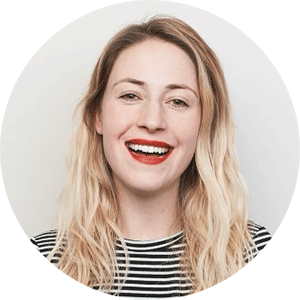
Director, co-writer: Nell Riley is a creative producer and director with a passion for storytelling and creating cutting edge, thoughtful content. She is currently working at Netflix on the Creative Marketing team helping promote some of the world’s best television. When she’s not working, she’s writing - she has several projects in the works with her writing partner (who also happens to be her younger brother). Nell’s passion for making and consuming content started well before she can remember. Her earliest role was in a short where she plays a little girl reading a banned book (The Lorax, still one of her faves). Prior to starting her career in entertainment, she lived in Thailand teaching English and eating (and sweating) her way through Bangkok. Her wide array of experiences create a unique perspective and voice that Nell puts into everything she creates.
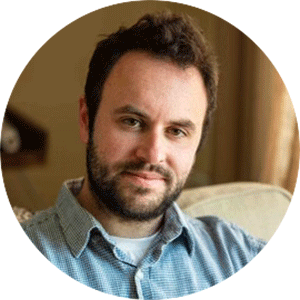 Co-writer: Gus Riley is a writer, actor, and designer based in Los Angeles. After receiving his degree in drama, he moved to Chicago where he focused primarily on playwriting, sketch comedy, and improv. Gus continues to write stageplays, prose poetry, and short stories, but has recently moved on to feature scripts, original pilots, and short films.
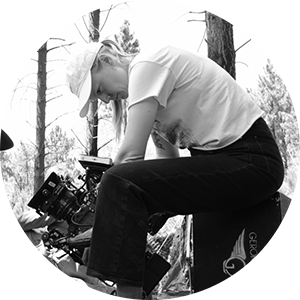 Director of Photography: Brennan Full has shot feature films, documentaries, music videos, and commercials around the country. Her commercial clients include VRBO, Huggies, Purina, and many more. In 2018, she shot Sati Kaur’s short film “Blood and Glory” which was accepted into festivals nationwide, including the Tribeca Film Festival. In 2022, Brennan signed on to shoot Steven Pierce’s feature debut Herd starring Corbin Bernsen, Timothy V. Murphy, and Ellen Adair. The film is premiering at Frightfest London. Most recently, Brennan was accepted into the ASC’s Vision Mentorship program where she was paired with cinematographer Jaron Presant, ASC (Poker Face, Mr. Corman, Rampage).
 Producer: Katherine Anne Koury is a screenwriter, creative producer and content strategist. After starting her career at CAA, she worked at Refinery29 to develop original series for digital and streaming. She went on to become Associate Director of Development at Hearst and later Associate Director of Content and Strategy at Meredith Corporation. She's also a Co-Founder of Panic Panties, a new line of pre-packaged undies for women on-the-go. She’s an emphatic storyteller at heart. Ask her what she did this weekend and chances are that she’ll regale you with hyperbolic sagas about otherwise mundane errands. Her screenwriting portrays cheeky commentary about the female millennial experience. Her original pilot Work Wives was a finalist for the 2022 Humanitas David and Lynn Angell Comedy Award. She’s a graduate of the UCLA Professional Program in Television Writing and has a dual BA in English and Television, Radio and Film from Syracuse University's Newhouse School of Communications.
 Producer: Michael Brown is a director, creative producer, editor, and writer in New York City. With a multi-disciplinary background in art direction, video production, copywriting, visual effects, and social media, his work has appeared across several mediums, from billboards (Netflix’s Sunset Marquee) to phone screens (Amazon, Maybelline, Condé Nast). With a near-fatal case of curiosity (sorry to the cat!) in almost every aspect of production and a deep commitment to storytelling, he is trying to redefine “Jack of all trades” as a positive to equalize creative communication on set. He would also like to own a cat one day.
Current Team
Incentives
- The Story
- Wishlist
- Updates
- The Team
- Community
Mission Statement
The Story
I thought of Missed in the middle of a miscarriage. I was sitting in bed wearing an adult diaper in a state of physical and emotional pain like nothing I had ever felt. My free pregnancy app was pinging me with notifications announcing the formation of my fetus' vital organs, likening in size to a kumquat. It would’ve been the right time to start buying maternity clothes. But in reality, like the other millions of people who have miscarriages a year, the fetus hadn't developed past 6 weeks. I couldn’t have done anything differently — this was just a random bout of bad luck.
After a miscarriage, doctors and friends and strangers promptly inundate you with stats that are supposed to make you feel better. So many women go through this, 1 in 4 in fact. 20% of pregnancies end in a miscarriage! That's 23 million every year! Or 44 pregnancy losses each minute! Beyonce had one! Instead of making you feel less alone, the reductive data sideshow of it all seems to minimize the pain women are allowed to feel. The note behind the note is always "Get over it."
After my miscarriage, the thing that helped me the most, the one interaction that allowed me to briefly leave the depressive, dissociative state I was in, was a friend of a friend confessing that after her own miscarriage, she wept for weeks. Just that simple disclosure that she had also been in pain made me feel like it was okay that I was, too. Nothing had to be minimized. It was okay just to be.
There's no established way of dealing with a miscarriage. No ritual. Which makes it incredibly confusing and painful. For such a pervasive experience, the lack of art addressing it is surprising and sad. I wish I had had something like Missed when I was going through my miscarriage. Something that didn't reduce my experience into a statistic. Something that would make me feel like I didn't have to just get over it. I can't help but feel I'm not alone in wanting something like this to exist in the world.
June Adams is a 35-year-old woman who has just learned that she's had a "missed miscarriage" (a particular form of hell when your body hasn't miscarried naturally despite a nonviable fetus). Her doctor presents three options: 1. Get a dilation and curettage (the same procedure as an abortion), 2. Take a set of abortion pills, or 3. Wait for the miscarriage to happen naturally. Wracked with self-pity, anger, and grief, she leaves the doctor's office, not ready to make a final decision on the next steps.
June gets into her car in the hospital parking lot, gearing up for the meltdown of a lifetime, only to find a moving, talking puppet, Daisy, all buckled up in the backseat. Daisy has orange felt skin, a big pink nose, and blue hair made from yarn that is knotted into two messy pigtails. Think of a mix between a little girl and a little monster. She talks way too loudly and is way too chipper for June right now.
June, convinced she's going crazy, barely makes it home trying to drown out the manic ramblings of this demon clearly here to torment her. She soon finds out, after nearly committing herself to the psych ward, that Daisy is harmless. A clumsy, goofy little thing who just wants chicken fingers and soda.
At first, Daisy acts almost childlike, letting June be a version of the mother she thinks she is on her way to becoming. But Daisy shifts seamlessly into a caretaker, an interlocutor for June's own thoughts. She helps June navigate the stages of grief and, in the process, deal with the logistics of inducing a miscarriage. Throughout the film, Daisy seemingly helps June get through it.
But it's not that easy. Not even the most perfect, magical manifestation of exactly what you think you need after a miscarriage can rush the process. The film ends when Daisy shifts once more, this time into a realistic and honest confidant, allowing June the space and freedom to sit in her grief. It's going to take time, and that's okay. She's allowed.
When we see June next, rising from a painkiller-induced sleep, Daisy is nowhere to be found. Her work here is done. She took June, hand-in-tiny felt-hand along for a ride into acceptance. Finally, June is able to let go and just be.
Do you feel like you are constantly being inundated with stories about how women’s reproductive rights are being systematically erased? Same. It’s happening right before our eyes but while women’s bodies are discussed as if they are a piece of legislation, women every damn day are experiencing real, tangible loss and pain.
Make art out of pain, they say. So we did. With miscarriages as common as they are, why are they usually only alluded to with vague signifiers (a woman sobbing in the maternity ward; a family taking down the nursery)? Now is the time to reclaim these stories. Now is the time to put a face to a woman experiencing this loss, instead of referring to HER as a statistic. 20% of women go through this but each story is its own individual experience, each one demanding to be protected and told. Women deserve to see their lived experiences in entertainment and they deserve to talk about it the way they want to, the way it actually happened.
Puppets aren’t cheap!!! (Not even kidding, check out Big Bird’s salary) Any amount of donation will help to make this film a reality. Rest assured we are being as savvy as can be, but still need money in order to secure a few things. These include:
- Paying our cast & crew
- Building our puppet
- Securing locations
- Renting gear
- Bringing the puppet to life
- Post production
- Festival submissions
We're happy to share a more detailed budget breakdown if that helps dictate what you're open to donating. Email us at: [email protected]. If you aren’t able to donate, just sharing this link or story with your friends, family or community to help get the word out would mean the world to us. We're also seeking additional grants and welcome any in-kind donations for locations, food, art, props, and costumes.
An important note: Seed & Spark only releases funds if we reach 80% of our goal. If we don’t reach 80%, we don’t get anything and all donations are reverted back to you amazing people. Every dollar donated will help us reach our end goal of getting this important story told.
Wishlist
Use the WishList to Pledge cash and Loan items - or - Make a pledge by selecting an Incentive directly.
Equipment Rentals
Costs $4,300
Cameras, lights, and various additional gear that we need to shoot Missed.
Paying our Crew
Costs $6,600
No one should work for free. This will go directly to our ACs, AD, Grip, PA, gaffer, sound op, script supe, hair & makeup artist and more.
Paying our cast
Costs $4,398
This item will go directly into the pockets of our amazing cast (and puppeteer!).
Post Production
Costs $5,300
We want to do some really cool visual effects in post which costs $. This bucket would go directly into the post-production of our film.
Festival Submissions
Costs $1,000
Did you know it costs money to submit to festivals? Fun, right? This will go into that ensuring our film has legs once we're done with it.
Locations
Costs $2,000
To bring this short to life, we need to film in various places including a doctor's office set. This will go to that!
Catering, vans, props, oh my
Costs $1,162
This is for various production items including crafty, transportation, props, permits, etc.
Cash Pledge
Costs $0
Direct link:
Share this update!
About This Team
Director, co-writer: Nell Riley is a creative producer and director with a passion for storytelling and creating cutting edge, thoughtful content. She is currently working at Netflix on the Creative Marketing team helping promote some of the world’s best television. When she’s not working, she’s writing - she has several projects in the works with her writing partner (who also happens to be her younger brother). Nell’s passion for making and consuming content started well before she can remember. Her earliest role was in a short where she plays a little girl reading a banned book (The Lorax, still one of her faves). Prior to starting her career in entertainment, she lived in Thailand teaching English and eating (and sweating) her way through Bangkok. Her wide array of experiences create a unique perspective and voice that Nell puts into everything she creates.
Co-writer: Gus Riley is a writer, actor, and designer based in Los Angeles. After receiving his degree in drama, he moved to Chicago where he focused primarily on playwriting, sketch comedy, and improv. Gus continues to write stageplays, prose poetry, and short stories, but has recently moved on to feature scripts, original pilots, and short films.
Director of Photography: Brennan Full has shot feature films, documentaries, music videos, and commercials around the country. Her commercial clients include VRBO, Huggies, Purina, and many more. In 2018, she shot Sati Kaur’s short film “Blood and Glory” which was accepted into festivals nationwide, including the Tribeca Film Festival. In 2022, Brennan signed on to shoot Steven Pierce’s feature debut Herd starring Corbin Bernsen, Timothy V. Murphy, and Ellen Adair. The film is premiering at Frightfest London. Most recently, Brennan was accepted into the ASC’s Vision Mentorship program where she was paired with cinematographer Jaron Presant, ASC (Poker Face, Mr. Corman, Rampage).
Producer: Katherine Anne Koury is a screenwriter, creative producer and content strategist. After starting her career at CAA, she worked at Refinery29 to develop original series for digital and streaming. She went on to become Associate Director of Development at Hearst and later Associate Director of Content and Strategy at Meredith Corporation. She's also a Co-Founder of Panic Panties, a new line of pre-packaged undies for women on-the-go. She’s an emphatic storyteller at heart. Ask her what she did this weekend and chances are that she’ll regale you with hyperbolic sagas about otherwise mundane errands. Her screenwriting portrays cheeky commentary about the female millennial experience. Her original pilot Work Wives was a finalist for the 2022 Humanitas David and Lynn Angell Comedy Award. She’s a graduate of the UCLA Professional Program in Television Writing and has a dual BA in English and Television, Radio and Film from Syracuse University's Newhouse School of Communications.
Producer: Michael Brown is a director, creative producer, editor, and writer in New York City. With a multi-disciplinary background in art direction, video production, copywriting, visual effects, and social media, his work has appeared across several mediums, from billboards (Netflix’s Sunset Marquee) to phone screens (Amazon, Maybelline, Condé Nast). With a near-fatal case of curiosity (sorry to the cat!) in almost every aspect of production and a deep commitment to storytelling, he is trying to redefine “Jack of all trades” as a positive to equalize creative communication on set. He would also like to own a cat one day.