MOKO
Bridgetown, Barbados | Film Short
Drama, LGBTQ
As she wrestles with her first true spark of attraction, 15-year-old Zaria must face the ghosts that haunt her—both metaphorical and literal. Help us bring this Bajan coming-of-age story to life and give voice to those who are often left unseen.

Green Light
This campaign raised $15,800 for pre-production. Follow the filmmaker to receive future updates on this project.
105 supporters | followers
Enter the amount you would like to pledge
As she wrestles with her first true spark of attraction, 15-year-old Zaria must face the ghosts that haunt her—both metaphorical and literal. Help us bring this Bajan coming-of-age story to life and give voice to those who are often left unseen.
About The Project


- The Story
- Wishlist
- Updates
- The Team
- Community
Mission Statement
The Story
How can you follow your heart when your soul does not yet feel ready?
Rich in surreal imagery and suffused with magical realism, MOKO is coming-of-age drama that tackles one Bajan teenager’s journey of desire and grief as she comes to terms with who she is all while battling ghosts—both literal and figurative.
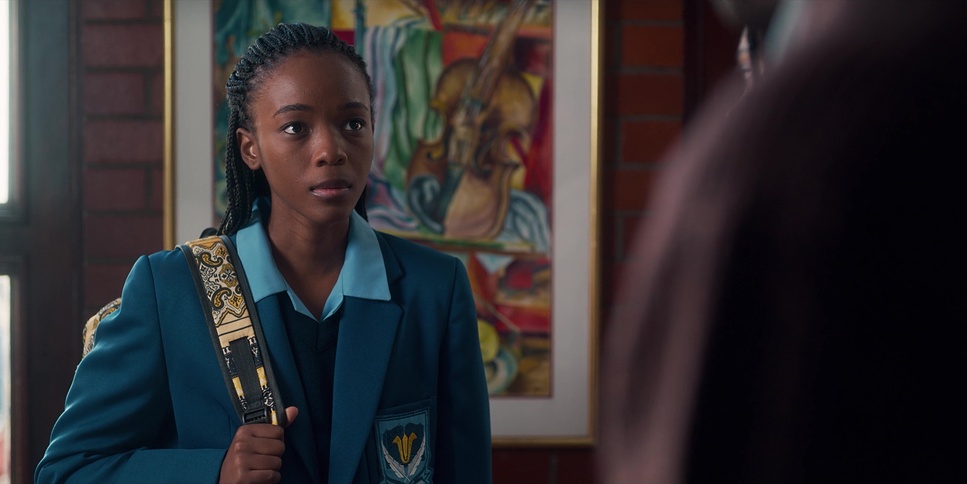 Blood and Water, 1x01 (2020)
Thrown into the middle of a school day, we watch quiet Zaria, a bright 15 year old, buckle under the weight, expectation, and conformity of her educational environment. These pressures disappear whenever she catches sight of Thea, a fellow classmate who seems unperturbed by the thoughts or judgements of those around her.
Zaria’s crush is complicated by the shame she harbors of her non-heternormative feelings. This is externalized by the literal haunting of Zaria by her mother’s ghost, who rejected Zaria’s feelings when the young girl confessed them to her whilst she was still alive.
_Mati Diop.jpg) Atlantics (2019) dir. Mati Diop
Atlantics (2019) dir. Mati Diop
When Zaria discovers Thea is moving away, she is heartbroken. When Thea urges her to come to an upcoming field trip, Zaria knows she must find a way to go.
Tasked with finding the money for the trip, Zaria turns to her Aunty Pat. When Pat challenges Zaria about her sudden interest in going on the field trip, Zaria retreats, hiding within herself.
Simultaneously, the hauntings grow more persistent, plaguing both Zaria’s waking and slumbering moments.
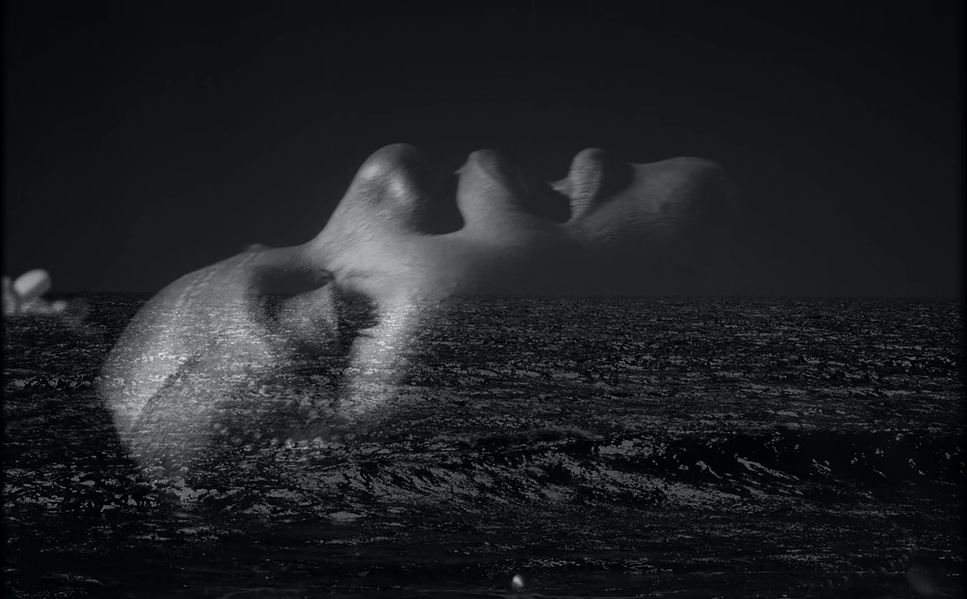 Mami Wata (2025) dir. CJ Obasi
After a particularly jarring dream, Zaria seeks comfort to combat the deep sense of foreboding she feels in Aunty Pat . She quickly grows frustrated when Pat pushes her to be honest about who she is and what it is that she wants, giving no easy answers.
The next morning, Zaria is on the verge of giving it all up when Pat shows up and gives her the money for the field trip. This act emboldens Zaria, who rushes to get to the field trip on time.
Once there, Zaria and Thea run off but the tables turn when it is Thea who runs away from their reality.
But Zaria isn't left alone for long.
It is now, when she chooses to be brave, that her mother's ghost, surrounded by their ancestors, manifests for the final time. At this moment, Zaria realizes the truth. They are not here to judge her. They are standing as proud witnesses to their legacy: Zaria.
With a wordless song, they imbue her with their strength, with their wisdom and power. Her mother stands at the front, apology in her eyes and a warm blessing in her smile.
Zaria receives it with open arms, having reconciled who she is and what she feels within herself.
With that, her mother’s ghost finds true peace and is able to let go.
Ascended, Zaria stands in her truth.
.jpg) Benjamin Benmoyal
Benjamin Benmoyal
MOKO is a story that needs to be told now. Barbados and the wider Caribbean are themselves reckoning with their identities. This film is not interested in easy answers. It asks the audience to consider a future that does not live in the past but still honors those who have come before.
There is a rising wave of Caribbean storytellers bringing our stories to the world’s stage. Queer stories cannot be left out because people of all identities are part of our communities too. We are important threads that make the tapestry of the islands so rich and strong in culture.
This story is inspired by the countless stories just like it that unfold every day in Barbados, the Caribbean, and around the world. Told through a unique lens and with a specific cultural voice.
Our director was just named as one of the rising voices in Caribbean cinema. As the New Wave of Caribbean Cinema gains steam, MOKO is a story that deserves to lead the charge and crest the horizon.
We’re inviting you to help make that a reality.
Barbados has been a central theme of my films at Columbia. We are a small country, with less than 300,000 people, but our culture is rich, our history long. MOKO is an extension of this work, tackling a topic often relegated to the shadows in Caribbean storytelling: that of queerness.
The Moko Jumbie is a towering figure in Caribbean folklore. He is a guide, a protector, and a harbinger—most often of change. I found the tall stiltmen—its colloquial term—frightening as a child. As I grew older, that fear turned to fascination. Now, they evoke a familiar comfort.
Maybe it is pure coincidence that this mirrors my own reckoning with queerness. Or maybe, my ancestors—my own Mokos—knew better, and laid out a path for me to follow. I just had to take that first step. I imbued this journey into Zaria, our lead character.
This film doesn’t give answers. It is meant as a meditation, a reckoning. How does one break generational cycles? How do you accept your true self when the world wants someone different?
Our team is approaching this production with care—investing in local and diasporic talent, and honoring the environments we’re filming in. We hope to invite audiences into this world, and to inspire queer youth to speak their own truths when they are ready.

MOKO exists between two spaces: the physical world of Barbados, and a spiritual world shaped by ancestry, memory, and fear. Both are anchored in the tangible history engraved into our casts' faces, embodied by the movement of their bodies, enriched by the lyrical speech of their tongues.
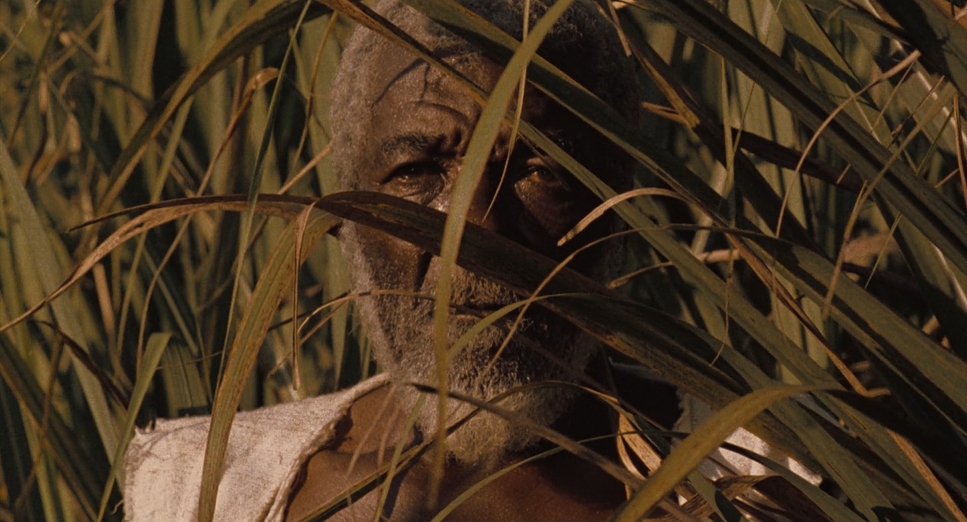
Sankofa (1993) dir. Haile Gerima
Set against the landscapes of Barbados—its coastlines, fields, and communities—the film captures a grounded, lived-in reality. But layered within it is something else: visions, spirits, and ancestral presences that blur the line between what is real and what is felt.
At the center of this is the Moko Jumbie, a figure in Caribbean folklore known as a protector, healer, and guide.
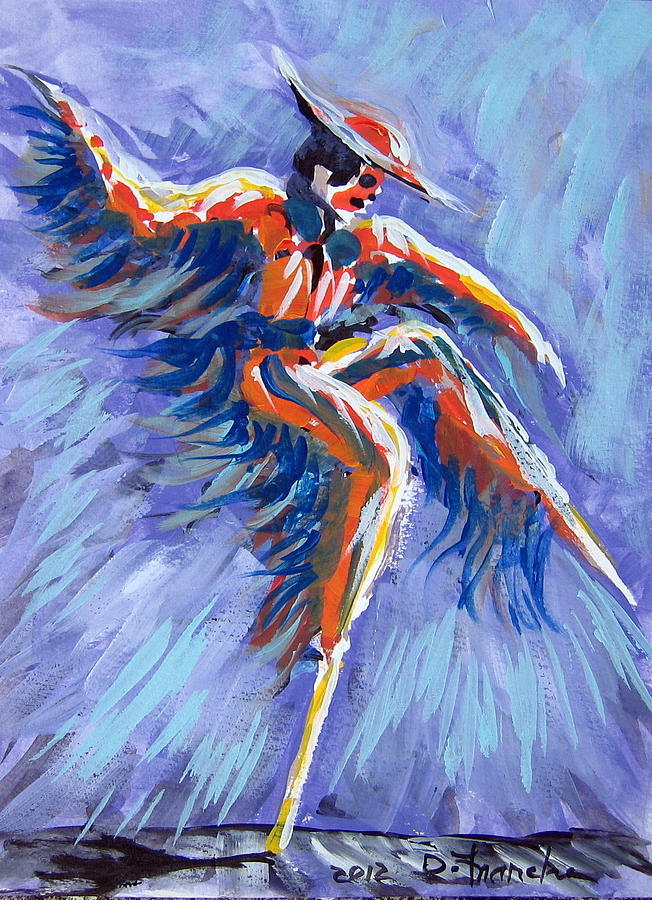
Red Moko Jumbie by David Francke
In MOKO, these spirits are not just myth—they are emotional truth. They represent the weight of inheritance, the fear of being seen, and ultimately, the possibility of transformation.
Visually, the film moves between:
- Intimate, naturalistic moments
- Dreamlike sequences filled with movement, sound, and ritual
- A world where the unseen becomes impossible to ignore
This is not just a setting—it is a presence.
_Khalik Allah (6).jpg)
Black Mother (2018) dir. Khalik Allah
This is an ambitious production and we are committed to doing it right. This campaign represents around 30% of our overall budget, covering critical parts of our financing.
We need to hit at least 80% to be green-lit!
We are raising $15,000 to help support:
- Feeding our cast and crew
- Renting camera and lighting equipment
- Creating authentic costumes rooted in Caribbean culture
- Paying our cast—especially local Bajan performers
- Covering travel, lodging, and production logistics
- Completing post-production (editing, sound, music)
Our Stretch Goal is $20,000!
We have secured primary funding through Columbia University's Katharina Otto Bernstein Mentorship Grant, allowing us to move forward into principal production—we shoot in Barbados in June 2026—but we still have a gap to close to fully realize this vision.
Your support directly impacts the quality, care, and integrity of this film.
This project is built on:
- Investing in local and diasporic talent
- Respecting the land, history, and culture of Barbados
- Creating a safe, collaborative production environment
- Telling a story that is both specific and universal
We are not just making a film.
We are building something with intention.

Your support means more than just funding.
It means belief, visibility.
It means this story gets to exist.
This film is about finding your voice. About stepping into something unknown.
About becoming who you were always meant to be.
We can’t do that alone. There are so many ways to support Moko:
- Donate — every contribution brings us closer.
- Share — with your friends, community, and networks.
- Follow — @mokofilmbb and stay connected throughout the journey.
- Spread the word — this matters more than you think!

Wishlist
Use the WishList to Pledge cash and Loan items - or - Make a pledge by selecting an Incentive directly.
Food
Costs $3,000
Keeping our cast and crew fed ensures energy, morale, and a safe, supported set during long shoot days.
Wardrobe
Costs $2,500
Costumes bring authenticity to character and Caribbean folklore, from everyday wear to the Moko Jumbie.
Camera Equipment
Costs $2,750
Quality camera gear helps capture Barbados’ landscapes with cinematic depth and visual care.
Cast
Costs $3,000
Paying our actors, especially local Bajan talent supports both the film and the community it represents.
Crew
Costs $2,000
We want to support our hardworking crew, ensuring fair pay to the skilled team needed to bring Moko to life with care and precision.
Props
Costs $500
Props help us ground Zaria’s life in Barbados, details like coins, food, and personal items make her world feel real and lived-in.
Lighting Gear
Costs $1,250
With Barbados’ shifting natural light, lighting gear lets us have some control especially for night scenes and Zaria’s dreamlike visions.
Cash Pledge
Costs $0


Direct link:
Share this update!
About This Team
Mary Cecilia Walker - Writer & Director
Mary Cecilia Walker is a Bajan Filmmaker and Playwright based in New York City. Currently pursuing her Master’s in Film at Columbia University, she won the Best Student Director award at the Barbados Independent Film Festival for her debut short, The Roads We Travel (2025). She was recently named among a New Wave of Caribbean Cinema.
She is a proud recipient of the Bobby Kashif Cox Memorial Screenwriting Scholarship, the Kurt P. Tauber Film Fellowship, the Diverso Fellowship, and the Royal Court’s Caribbean Writing for Performance Fellowship. Recent festivals include the Black Harvest Film Festival, the Caribbean Film Festival, and the CaribbeanTales Film Festival.
Nadine Jose - Lead Producer
Nadine Jose is a Filipino Writer and Producer based in New York City and New Jersey. Currently at Columbia University, she is pursuing her Masters in Film, with a concentration in Creative Producing. Nadine is a recipient of the Peters-Futtner Scholarship, and the Film Fellowship Scholarship.
Passionate about supporting and telling stories that center characters and communities rarely depicted on screen, Nadine has produced over a dozen short films both locally in New York and across the United States.
Ryan Wilfred - Executive Producer
Ryan Wilfred is a dynamic Executive Producer, Director, and Writer based between Barbados and London, working across the Caribbean and its global diaspora. With over 15 years of experience, his career spans television, documentary, feature film, commercial media, and live broadcast. A proud graduate of the London Film School (MA in Film, Directing).
As Founder and Executive Producer of West India Cinema Corporation, Ryan brings together a team of seasoned producers, directors, and cinematographers who merge cultural authenticity with artistic excellence. Distinguished by his people-centered leadership style, Ryan brings ambitious creative visions to fruition within complex and professional production environments.
Kevin ‘GK’ Frederick - Director of Photography
Kevin ‘GK’ Frederick is a cinematographer and descendant of Antigua & Barbuda. His first love for storytelling is rooted in childhood memories of listening to his grandmother and family share tales of nostalgia, lived experiences, and Caribbean folklore. His formative years cultivated a deep sensitivity to color, rhythm, composition, and natural light.
What began as curiosity has evolved into a commitment to emotionally dense and culturally resonant storytelling. Above all, GK is attuned to what he calls the soul of an image—the intangible essence that resonates beyond what is visible. He continues to seek projects that allow him to explore humanity, culture, and his personal identity through the lens.
Current Team
Incentives
- The Story
- Wishlist
- Updates
- The Team
- Community
Mission Statement
The Story
How can you follow your heart when your soul does not yet feel ready?
Rich in surreal imagery and suffused with magical realism, MOKO is coming-of-age drama that tackles one Bajan teenager’s journey of desire and grief as she comes to terms with who she is all while battling ghosts—both literal and figurative.
Blood and Water, 1x01 (2020)
Thrown into the middle of a school day, we watch quiet Zaria, a bright 15 year old, buckle under the weight, expectation, and conformity of her educational environment. These pressures disappear whenever she catches sight of Thea, a fellow classmate who seems unperturbed by the thoughts or judgements of those around her.
Zaria’s crush is complicated by the shame she harbors of her non-heternormative feelings. This is externalized by the literal haunting of Zaria by her mother’s ghost, who rejected Zaria’s feelings when the young girl confessed them to her whilst she was still alive.
Atlantics (2019) dir. Mati Diop
When Zaria discovers Thea is moving away, she is heartbroken. When Thea urges her to come to an upcoming field trip, Zaria knows she must find a way to go.
Tasked with finding the money for the trip, Zaria turns to her Aunty Pat. When Pat challenges Zaria about her sudden interest in going on the field trip, Zaria retreats, hiding within herself.
Simultaneously, the hauntings grow more persistent, plaguing both Zaria’s waking and slumbering moments.
Mami Wata (2025) dir. CJ Obasi
After a particularly jarring dream, Zaria seeks comfort to combat the deep sense of foreboding she feels in Aunty Pat . She quickly grows frustrated when Pat pushes her to be honest about who she is and what it is that she wants, giving no easy answers.
The next morning, Zaria is on the verge of giving it all up when Pat shows up and gives her the money for the field trip. This act emboldens Zaria, who rushes to get to the field trip on time.
Once there, Zaria and Thea run off but the tables turn when it is Thea who runs away from their reality.
But Zaria isn't left alone for long.
It is now, when she chooses to be brave, that her mother's ghost, surrounded by their ancestors, manifests for the final time. At this moment, Zaria realizes the truth. They are not here to judge her. They are standing as proud witnesses to their legacy: Zaria.
With a wordless song, they imbue her with their strength, with their wisdom and power. Her mother stands at the front, apology in her eyes and a warm blessing in her smile.
Zaria receives it with open arms, having reconciled who she is and what she feels within herself.
With that, her mother’s ghost finds true peace and is able to let go.
Ascended, Zaria stands in her truth.
Benjamin Benmoyal
MOKO is a story that needs to be told now. Barbados and the wider Caribbean are themselves reckoning with their identities. This film is not interested in easy answers. It asks the audience to consider a future that does not live in the past but still honors those who have come before.
There is a rising wave of Caribbean storytellers bringing our stories to the world’s stage. Queer stories cannot be left out because people of all identities are part of our communities too. We are important threads that make the tapestry of the islands so rich and strong in culture.
This story is inspired by the countless stories just like it that unfold every day in Barbados, the Caribbean, and around the world. Told through a unique lens and with a specific cultural voice.
Our director was just named as one of the rising voices in Caribbean cinema. As the New Wave of Caribbean Cinema gains steam, MOKO is a story that deserves to lead the charge and crest the horizon.
We’re inviting you to help make that a reality.
Barbados has been a central theme of my films at Columbia. We are a small country, with less than 300,000 people, but our culture is rich, our history long. MOKO is an extension of this work, tackling a topic often relegated to the shadows in Caribbean storytelling: that of queerness.
The Moko Jumbie is a towering figure in Caribbean folklore. He is a guide, a protector, and a harbinger—most often of change. I found the tall stiltmen—its colloquial term—frightening as a child. As I grew older, that fear turned to fascination. Now, they evoke a familiar comfort.
Maybe it is pure coincidence that this mirrors my own reckoning with queerness. Or maybe, my ancestors—my own Mokos—knew better, and laid out a path for me to follow. I just had to take that first step. I imbued this journey into Zaria, our lead character.
This film doesn’t give answers. It is meant as a meditation, a reckoning. How does one break generational cycles? How do you accept your true self when the world wants someone different?
Our team is approaching this production with care—investing in local and diasporic talent, and honoring the environments we’re filming in. We hope to invite audiences into this world, and to inspire queer youth to speak their own truths when they are ready.
MOKO exists between two spaces: the physical world of Barbados, and a spiritual world shaped by ancestry, memory, and fear. Both are anchored in the tangible history engraved into our casts' faces, embodied by the movement of their bodies, enriched by the lyrical speech of their tongues.
Sankofa (1993) dir. Haile Gerima
Set against the landscapes of Barbados—its coastlines, fields, and communities—the film captures a grounded, lived-in reality. But layered within it is something else: visions, spirits, and ancestral presences that blur the line between what is real and what is felt.
At the center of this is the Moko Jumbie, a figure in Caribbean folklore known as a protector, healer, and guide.
Red Moko Jumbie by David Francke
In MOKO, these spirits are not just myth—they are emotional truth. They represent the weight of inheritance, the fear of being seen, and ultimately, the possibility of transformation.
Visually, the film moves between:
- Intimate, naturalistic moments
- Dreamlike sequences filled with movement, sound, and ritual
- A world where the unseen becomes impossible to ignore
This is not just a setting—it is a presence.
Black Mother (2018) dir. Khalik Allah
This is an ambitious production and we are committed to doing it right. This campaign represents around 30% of our overall budget, covering critical parts of our financing.
We need to hit at least 80% to be green-lit!
We are raising $15,000 to help support:
- Feeding our cast and crew
- Renting camera and lighting equipment
- Creating authentic costumes rooted in Caribbean culture
- Paying our cast—especially local Bajan performers
- Covering travel, lodging, and production logistics
- Completing post-production (editing, sound, music)
Our Stretch Goal is $20,000!
We have secured primary funding through Columbia University's Katharina Otto Bernstein Mentorship Grant, allowing us to move forward into principal production—we shoot in Barbados in June 2026—but we still have a gap to close to fully realize this vision.
Your support directly impacts the quality, care, and integrity of this film.
This project is built on:
- Investing in local and diasporic talent
- Respecting the land, history, and culture of Barbados
- Creating a safe, collaborative production environment
- Telling a story that is both specific and universal
We are not just making a film.
We are building something with intention.
Your support means more than just funding.
It means belief, visibility.
It means this story gets to exist.
This film is about finding your voice. About stepping into something unknown.
About becoming who you were always meant to be.
We can’t do that alone. There are so many ways to support Moko:
- Donate — every contribution brings us closer.
- Share — with your friends, community, and networks.
- Follow — @mokofilmbb and stay connected throughout the journey.
- Spread the word — this matters more than you think!
Wishlist
Use the WishList to Pledge cash and Loan items - or - Make a pledge by selecting an Incentive directly.
Food
Costs $3,000
Keeping our cast and crew fed ensures energy, morale, and a safe, supported set during long shoot days.
Wardrobe
Costs $2,500
Costumes bring authenticity to character and Caribbean folklore, from everyday wear to the Moko Jumbie.
Camera Equipment
Costs $2,750
Quality camera gear helps capture Barbados’ landscapes with cinematic depth and visual care.
Cast
Costs $3,000
Paying our actors, especially local Bajan talent supports both the film and the community it represents.
Crew
Costs $2,000
We want to support our hardworking crew, ensuring fair pay to the skilled team needed to bring Moko to life with care and precision.
Props
Costs $500
Props help us ground Zaria’s life in Barbados, details like coins, food, and personal items make her world feel real and lived-in.
Lighting Gear
Costs $1,250
With Barbados’ shifting natural light, lighting gear lets us have some control especially for night scenes and Zaria’s dreamlike visions.
Cash Pledge
Costs $0
Direct link:
Share this update!
About This Team
Mary Cecilia Walker - Writer & Director
Mary Cecilia Walker is a Bajan Filmmaker and Playwright based in New York City. Currently pursuing her Master’s in Film at Columbia University, she won the Best Student Director award at the Barbados Independent Film Festival for her debut short, The Roads We Travel (2025). She was recently named among a New Wave of Caribbean Cinema.
She is a proud recipient of the Bobby Kashif Cox Memorial Screenwriting Scholarship, the Kurt P. Tauber Film Fellowship, the Diverso Fellowship, and the Royal Court’s Caribbean Writing for Performance Fellowship. Recent festivals include the Black Harvest Film Festival, the Caribbean Film Festival, and the CaribbeanTales Film Festival.
Nadine Jose - Lead Producer
Nadine Jose is a Filipino Writer and Producer based in New York City and New Jersey. Currently at Columbia University, she is pursuing her Masters in Film, with a concentration in Creative Producing. Nadine is a recipient of the Peters-Futtner Scholarship, and the Film Fellowship Scholarship.
Passionate about supporting and telling stories that center characters and communities rarely depicted on screen, Nadine has produced over a dozen short films both locally in New York and across the United States.
Ryan Wilfred - Executive Producer
Ryan Wilfred is a dynamic Executive Producer, Director, and Writer based between Barbados and London, working across the Caribbean and its global diaspora. With over 15 years of experience, his career spans television, documentary, feature film, commercial media, and live broadcast. A proud graduate of the London Film School (MA in Film, Directing).
As Founder and Executive Producer of West India Cinema Corporation, Ryan brings together a team of seasoned producers, directors, and cinematographers who merge cultural authenticity with artistic excellence. Distinguished by his people-centered leadership style, Ryan brings ambitious creative visions to fruition within complex and professional production environments.
Kevin ‘GK’ Frederick - Director of Photography
Kevin ‘GK’ Frederick is a cinematographer and descendant of Antigua & Barbuda. His first love for storytelling is rooted in childhood memories of listening to his grandmother and family share tales of nostalgia, lived experiences, and Caribbean folklore. His formative years cultivated a deep sensitivity to color, rhythm, composition, and natural light.
What began as curiosity has evolved into a commitment to emotionally dense and culturally resonant storytelling. Above all, GK is attuned to what he calls the soul of an image—the intangible essence that resonates beyond what is visible. He continues to seek projects that allow him to explore humanity, culture, and his personal identity through the lens.