Pushing The Rock
Torrington, Connecticut | Film Feature
Documentary, Music
Pushing the Rock blends music, history, and human stories to reveal the roots of systemic racism—and the courage to resist it. From the Tuskegee Airmen to today, this urgent film inspires action and keeps the truth alive.
Pushing The Rock
Torrington, Connecticut | Film Feature
Documentary, Music

1 Campaigns | Connecticut, United States
Green Light
This campaign raised $6,675 for production. Follow the filmmaker to receive future updates on this project.
47 supporters | followers
Enter the amount you would like to pledge
Pushing the Rock blends music, history, and human stories to reveal the roots of systemic racism—and the courage to resist it. From the Tuskegee Airmen to today, this urgent film inspires action and keeps the truth alive.
About The Project


- The Story
- Wishlist
- Updates
- The Team
- Community
Mission Statement
The Story
Pushing the Rock: A story of American heroes fighting systemic racism
Pushing the Rock is a musical documentary about the people who’ve fought systemic racism in America—and how their courage still matters today. Combining historians, musicians, and primary source truth-tellers, we illuminate the past and reflect it into the present.
It's not a lecture.
It’s not a history quiz.
It’s historical rhythm.
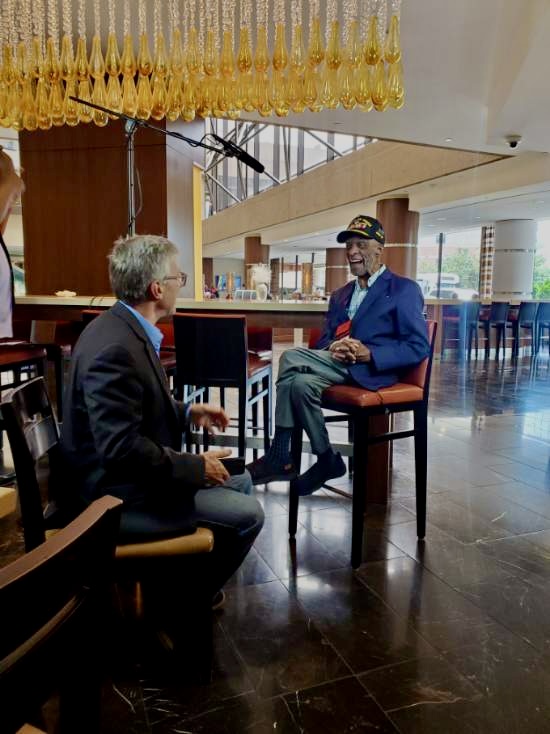 Interviewing Brigadier General Enoch Woodhouse II, J.D., at the Tuskegee Airmen National Convention in Arlington, VA, Sep 13, 2024. Gen. Woodhouse shared that in his many interviews, this one was unique because all we wanted to talk about was his experiences with systemic racism—"the biggest problem we face in America."
You’ll meet:
- Brigadier General Enoch Woodhouse, one of the last Tuskegee Airmen (above)
- Civil rights icons like Homer Plessy and Ida B. Wells (through archival storytelling)
- Leading historians Dr. Manisha Sinha, Dr. Kathy Bullock, and Dr. Louis A. DeCaro Jr.
- Musicians including Súle Greg Wilson (far below), Jubilo Choir, and Dave Brubeck and Louis Armstrong
- Every day people whose actions shaped history, but who rarely make the textbooks
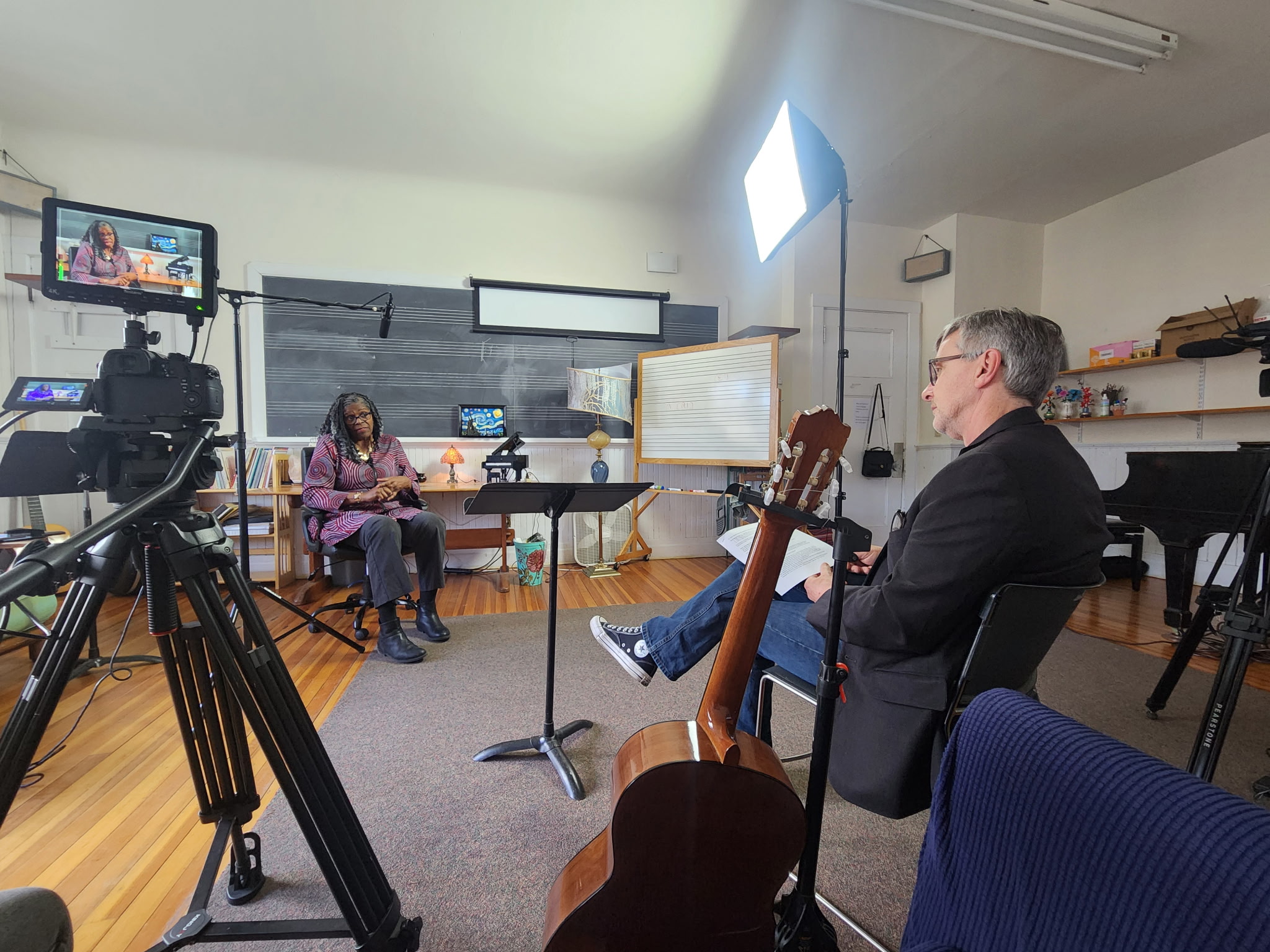
Interviewing Dr. Kathy Bullock, a music historian, in May 2025, Dr. Bullock shared the healing, inspirational, and resiliency power of music, followed by the story of her great grandmother, Amelia, an enslaved woman with a particularly difficult story.
Why This Story, Why Now
History is rhyming like crazy right now. The patterns of systemic hate have stayed the same for generations—and the playbook never changes. At a time when diversity, equity, and inclusion are under attack and hard truths are being scrubbed from classrooms, it’s critical for Americans “in the middle” to recognize the signs and understand the roots.
This film explores what enabled systemic racism in the past—and shows how those same forces operate today. We’re making it now because the stakes couldn’t be higher. If we don’t tell the truth about our history, we risk repeating it yet again.
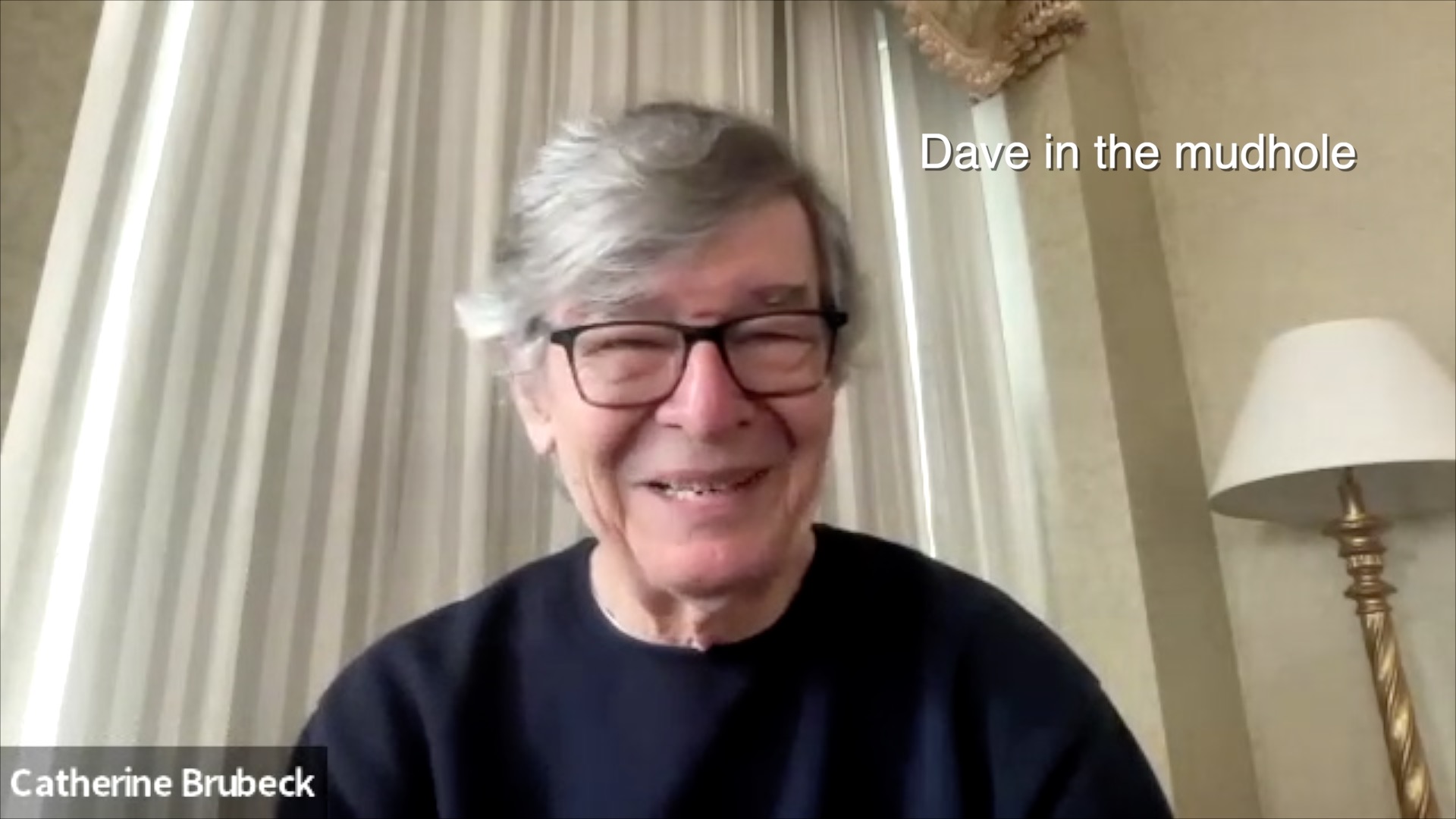
Darius Brubeck, MPhil, Professor of music, jazz pianist, on a Zoom interview during a US tour, telling the story of when his dad formed the first integrated band in the US Army, during WWII. When the Tuskegee Airmen were fighting to get into the sky, the Wolfpack Band was breaking barriers in a mudhole.
Why Us
The John Brown Project is a nonprofit media organization dedicated to telling the truth about American history in ways that connect with audiences. Our first film, His Truth Is Marching On, won state and national awards for its innovative storytelling using scholarship, music, and plainspoken narrative.
I’m Dan Morrison—by day, I'm an award-winning journalist covering residential construction. I teach complicated topics to a non-college-educated audience. By night, I'm an abolitionist filmmaker. I grew up in a working-class town not far from John Brown’s birthplace, and I’ve spent my career making complex information accessible and unforgettable. Our small but determined team includes artists, educators, and historians who believe truth-telling is our civic duty.
Despite the collapse of diversity, equity, and inclusion-focused arts funding, we’ve pushed ahead, finding ways to make the project happen and slashing our optimal $200,000 budget vision into a lean, $20,000 project without losing the heart or soul.
The hill just got steeper, and we’re pushing harder.
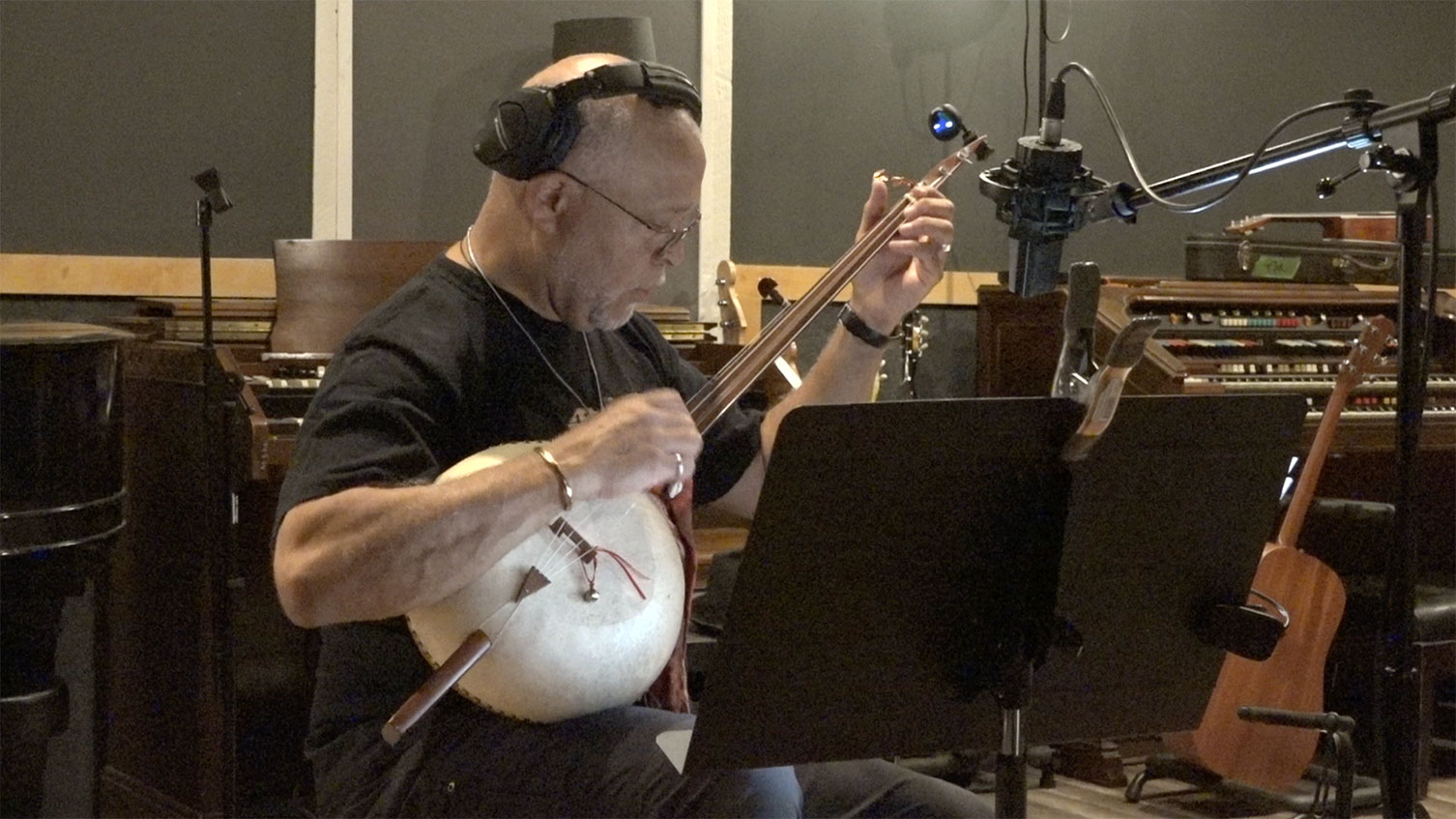
Súle Greg Wilson plays "John Henry" in a studio in Tempe, AZ. John Henry was written during the brief period of Reconstruction when Black songwriters were (finally) free to sing and write about powerful Black Americans. Unfortunately, Reconstruction was murdered by the KKK and other white supremacists.
The Method – How We Tell the Story
We use music as more than a soundtrack—it’s a storytelling device.
- The origin of Jim Crow is a song appropriated from African Americans and used as a minstrel show, spreading hate. We explore the song as it may have sounded before that.
- An archival Brubeck and Armstrong song, "Remember Who You Are," accompanies living testimony from a Tuskegee Airman on the topic of American systemic racism.
- A new original song, "The Ballad of Mr. Plessy," chronicles the buildup to Plessy v. Ferguson ("When you see me standing strong, makes you feel that you done wrong, get back now, Plessy boy, GET BACK...")
According to science, music sparks the limbic system; it makes people feel the truth before they rationalize it away. Layered with dramatizations (like the one below), approachable experts, folksy narration, and clear infographics, the film speaks to both the head and the heart.
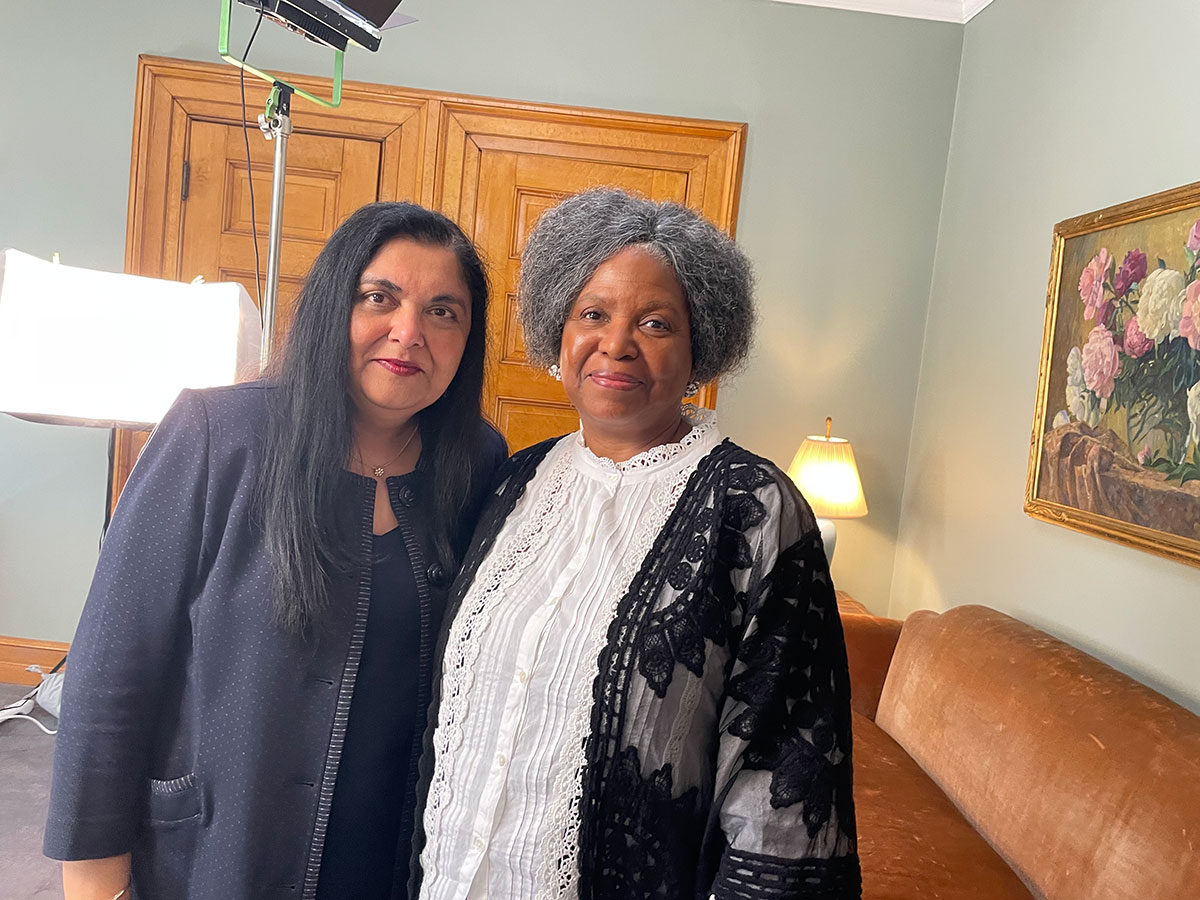
Ida B. Wells filming session. Dr. Manisha Sinha provides historical context as actor Effie Mwando reads an editorial from Ida B. Wells' book "Southern Horrors: Lynch Law in the South."
Where We Are Now & How You Can Push the Rock
We’re deep in post-production and want to cross the finish line strong. We've strategically broken the film into three parts, so the series is more affordable to produce. We need a couple of filming trips to the NY/CT area, which we can do in our spare time with a limited budget. We would LIKE to do two additional filming trips: The Deep South and the Mid-Atlantic. We also want to pay the production staff who have been working for free because they believe in the project. Realistically, they have donated more than $10,000 in production time. There are also music licensing fees to pay, as well as marketing and PR expenses that will be critical after the film is complete.
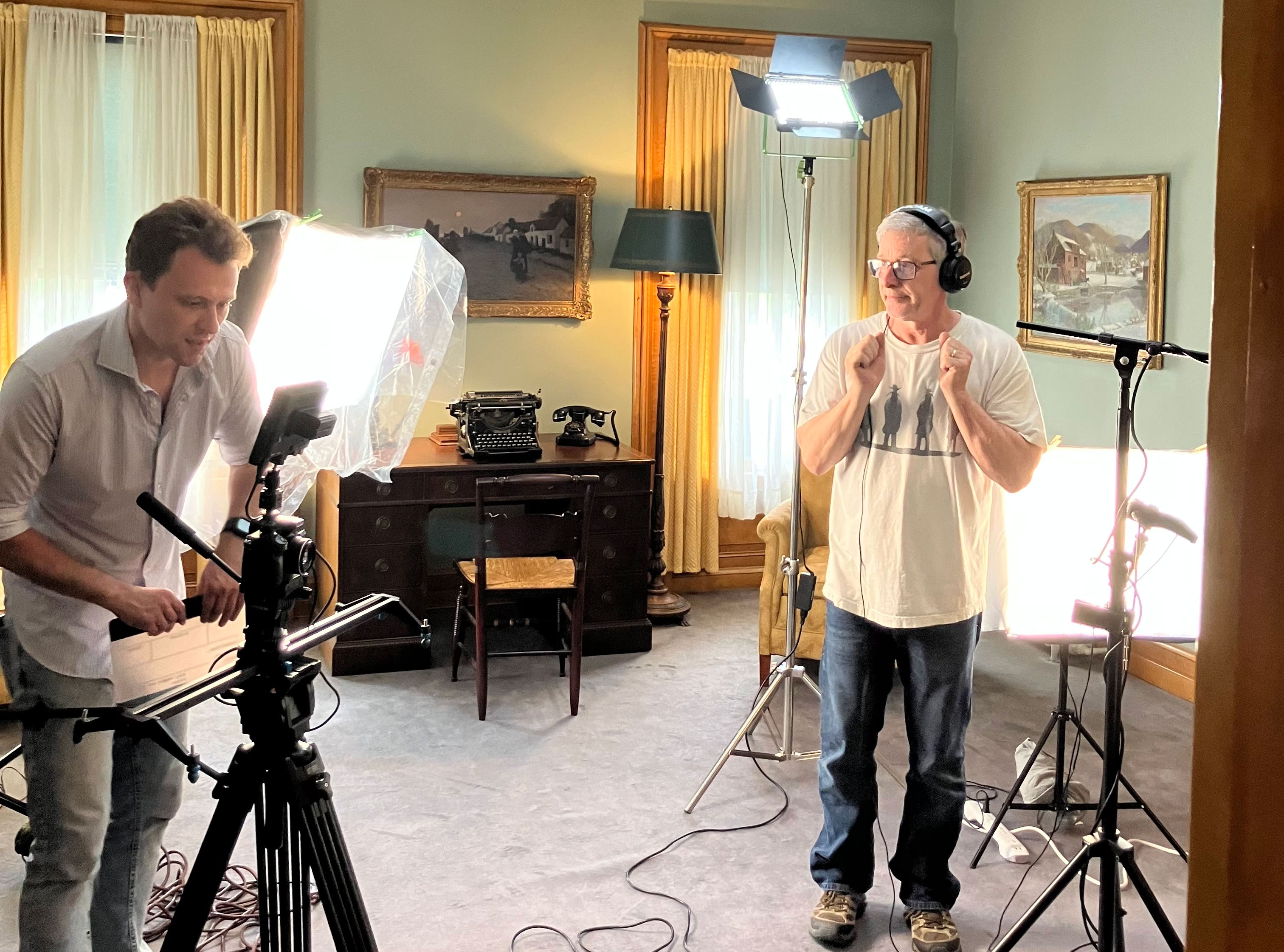
(some of) The crew: Shane Scully, director of photography (left) and Dan Morrison, executive producer (right) at a filming session of an Ida B. Wells dramatization featuring Effie Mwando (actor) and Dr. Manisha Sinha (historian). Dan seems pretty happy with how the afternoon is unfolding. Shane said it is the most fun he has ever had shooting video.
Funds raised will go toward:
- Pay the crew: professional post-production editing and finishing
- Music licensing for historical and original tracks
- Deep South Trip: Interview the youngest Freedom Rider at the Mississippi Civil Rights Museum, Homer Plessy's grave, and the train yard in New Orleans
- Mid Atlantic trip: National Museum of African American History, Harper's Ferry, WV, John Brown's hideout in Fredrick, MD, John Henry's Tunnel in VA
We’re launching this campaign to bring the community into the process—because it is too important to do alone, and we speak louder together.
Stretch Goals – If We Go Beyond 100%
- Hire an Animator: original animation sequences, including an animated timeline of people pushing a rock. We cannot film Mr Armstrong or Mr. Brubeck, so we would like to animate them.
- Distribution: Enter the film in 50 film festivals, create a package for school screenings, and create private screening links on our website.
- Marketing: Boost trailer and film clips on YouTube and Meta, hire a PR firm for project work, and collaborate with our nonprofit network on grassroots and guerrilla marketing efforts.

Our previous film was showcased in the Black History Film Festivals of Washington, DC, and Atlanta, GA, the Ridgefield Independent Film Festival, and the Tiny Abolitionist Film Festival (our own creation). It was also the recipient of State and National history awards.
Your voice is bigger when added to ours
Join our chorus in telling a story that matters today, tomorrow, and yesterday.
- Back the campaign at any level and be part of the "Pushing-the-Rock" community.
- Share this campaign with your networks.
- Follow the John Brown Project on Bluesky, YouTube, Instagram, and Facebook.
Wishlist
Use the WishList to Pledge cash and Loan items - or - Make a pledge by selecting an Incentive directly.
Post Production Budget
Costs $6,000
It is crucial to pay professional artists for their work. Much of the production was done with volunteers, but we want to finish strong.
Cash Pledge
Costs $0


Direct link:
Share this update!
About This Team
THE PRODUCTION TEAM:
Daniel Morrison, executive producer (below)
By day, Dan is a digital media journalist who has won several national editorial awards in the past decade. For the past twenty years, he has run trade journals for construction professionals, leading and launching some of North America's most important residential construction media brands.
By night, he is an abolitionist filmmaker. His first film, His Truth is Marching On, was featured in the 2024 Black History Film Festivals in Washington, DC, and Atlanta, GA. It was also honored with a 2024 Award of Excellence in the Leadership in History Awards of the American Association of State and Local History and a 2023 Award of Merit from the Connecticut League of History Organizations for its unique history-telling approach.
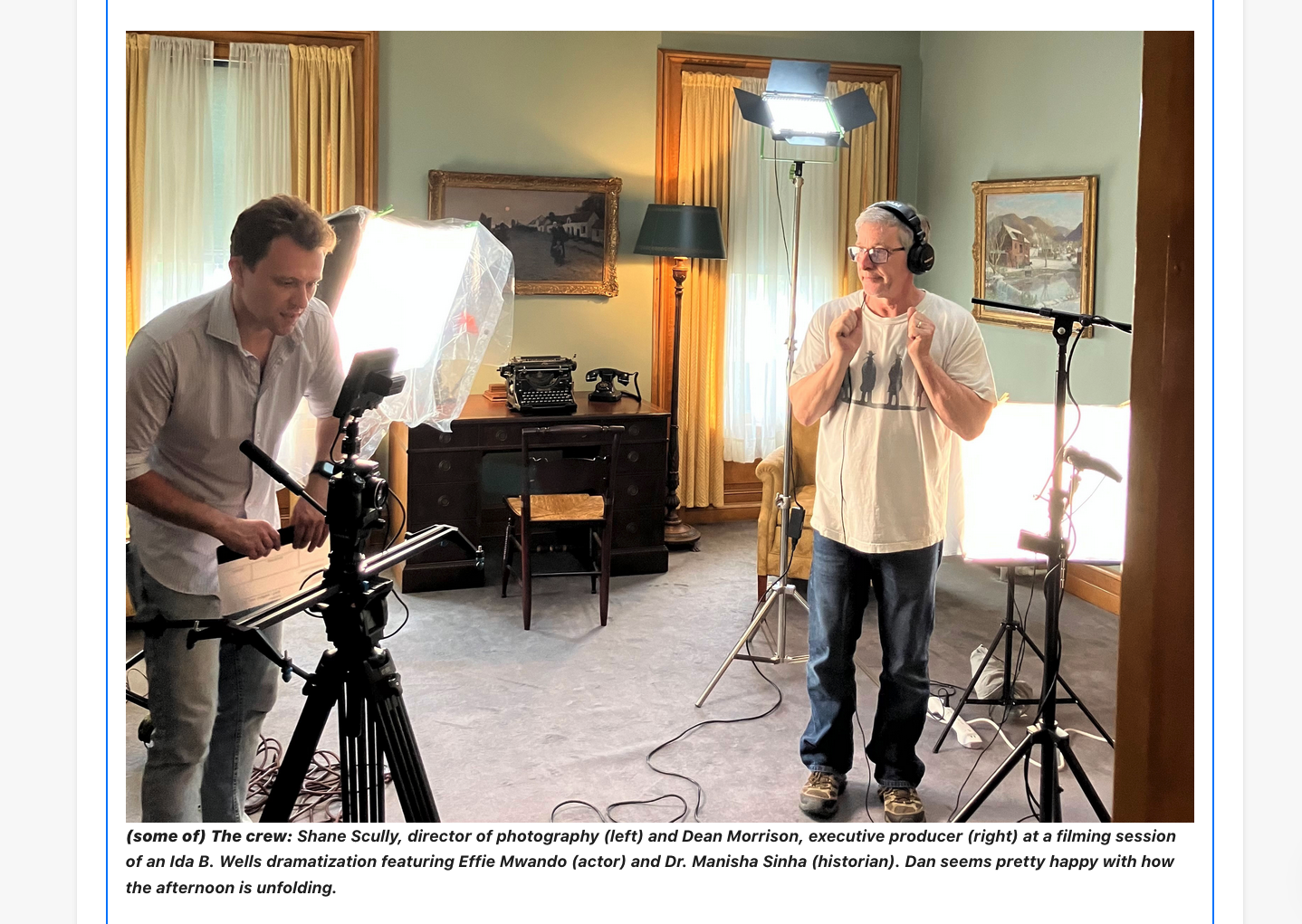 Shane Scully, director of photography (above)
A Connecticut School of Broadcasting graduate, Shane is an all-around multimedia producer: lights, camera, audio, and distribution. He is the Director of Photography for the John Brown Project and produces the remote segments for CT Views, a community access TV show in Northwest Connecticut. In addition to visual media production, Shane is a hip-hop rap artist with a successful YouTube channel.
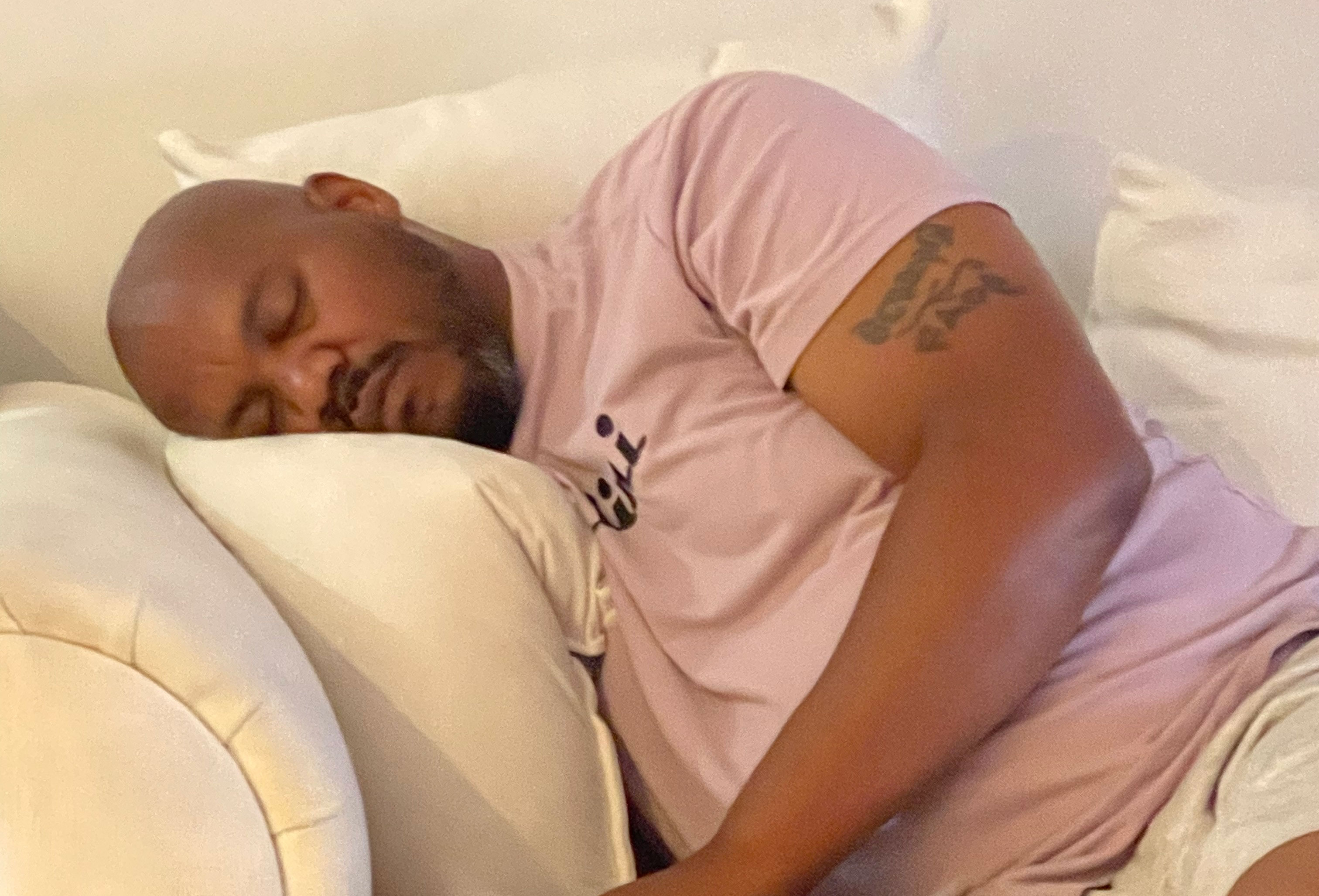 Kareem Holbrook, producer (above)
Kareem is a professional drone pilot in Torrington, Connecticut, and was one of the first drone pilots to be certified by the FAA in Ossining, NY, in 2014. His landscape and drone photography are displayed in the Phelps Memorial Hospital in Sleepy Hollow, New York, in Westchester magazine, and the Ossining Recreation Museum. He is a former co-host, associate producer, audio/studio engineer, and Drone operator on a local public access program, CT Views, a show on air for over 30 years.
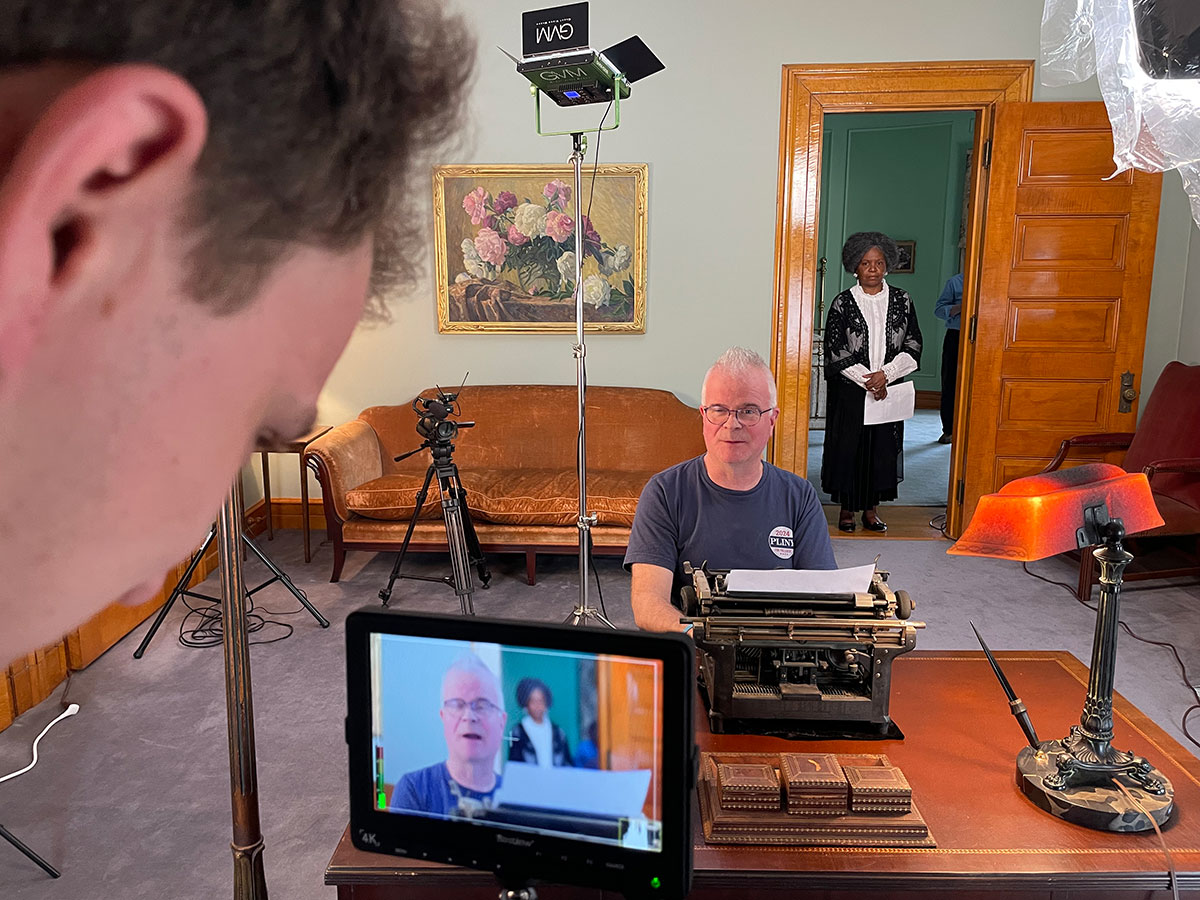 John Forster, production coordinator (seated above)
Mr. Forster is the administrative wizard behind the production team. His day job as resource coordinator for production operations at ESPN puts professionalism front and center in our administrative operations.
THE EXPERTS: rock stars and folk heroes
- Dr. Louis A. DeCaro, Jr. (retired) most prolific John Brown biographer
- Dr. Manisha Sinha, Draper Chair of History, University of Connecticut
- Dr. Kathy Bullock, Professor Emerita of Music, Berea College
- Brig. Gen. Enoch Woodhouse, A living Tuskegee Airman
- Dan Brubeck, Jazz drummer, son of Dave
- Darius Brubeck, Retired Professor of Music, University of KwaZulu-Natal, pianist, composer, another son of Dave
- Sule Greg Wilson, music historian, storyteller, shaman
- Dave Brubeck Quartet featuring Louis Armstrong
- Jubilo Choir, Berea, Kentucky
Current Team
Incentives
- The Story
- Wishlist
- Updates
- The Team
- Community
Mission Statement
The Story
Pushing the Rock: A story of American heroes fighting systemic racism
Pushing the Rock is a musical documentary about the people who’ve fought systemic racism in America—and how their courage still matters today. Combining historians, musicians, and primary source truth-tellers, we illuminate the past and reflect it into the present.
It's not a lecture.
It’s not a history quiz.
It’s historical rhythm.
Interviewing Brigadier General Enoch Woodhouse II, J.D., at the Tuskegee Airmen National Convention in Arlington, VA, Sep 13, 2024. Gen. Woodhouse shared that in his many interviews, this one was unique because all we wanted to talk about was his experiences with systemic racism—"the biggest problem we face in America."
You’ll meet:
- Brigadier General Enoch Woodhouse, one of the last Tuskegee Airmen (above)
- Civil rights icons like Homer Plessy and Ida B. Wells (through archival storytelling)
- Leading historians Dr. Manisha Sinha, Dr. Kathy Bullock, and Dr. Louis A. DeCaro Jr.
- Musicians including Súle Greg Wilson (far below), Jubilo Choir, and Dave Brubeck and Louis Armstrong
- Every day people whose actions shaped history, but who rarely make the textbooks
Interviewing Dr. Kathy Bullock, a music historian, in May 2025, Dr. Bullock shared the healing, inspirational, and resiliency power of music, followed by the story of her great grandmother, Amelia, an enslaved woman with a particularly difficult story.
Why This Story, Why Now
History is rhyming like crazy right now. The patterns of systemic hate have stayed the same for generations—and the playbook never changes. At a time when diversity, equity, and inclusion are under attack and hard truths are being scrubbed from classrooms, it’s critical for Americans “in the middle” to recognize the signs and understand the roots.
This film explores what enabled systemic racism in the past—and shows how those same forces operate today. We’re making it now because the stakes couldn’t be higher. If we don’t tell the truth about our history, we risk repeating it yet again.
Darius Brubeck, MPhil, Professor of music, jazz pianist, on a Zoom interview during a US tour, telling the story of when his dad formed the first integrated band in the US Army, during WWII. When the Tuskegee Airmen were fighting to get into the sky, the Wolfpack Band was breaking barriers in a mudhole.
Why Us
The John Brown Project is a nonprofit media organization dedicated to telling the truth about American history in ways that connect with audiences. Our first film, His Truth Is Marching On, won state and national awards for its innovative storytelling using scholarship, music, and plainspoken narrative.
I’m Dan Morrison—by day, I'm an award-winning journalist covering residential construction. I teach complicated topics to a non-college-educated audience. By night, I'm an abolitionist filmmaker. I grew up in a working-class town not far from John Brown’s birthplace, and I’ve spent my career making complex information accessible and unforgettable. Our small but determined team includes artists, educators, and historians who believe truth-telling is our civic duty.
Despite the collapse of diversity, equity, and inclusion-focused arts funding, we’ve pushed ahead, finding ways to make the project happen and slashing our optimal $200,000 budget vision into a lean, $20,000 project without losing the heart or soul.
The hill just got steeper, and we’re pushing harder.
Súle Greg Wilson plays "John Henry" in a studio in Tempe, AZ. John Henry was written during the brief period of Reconstruction when Black songwriters were (finally) free to sing and write about powerful Black Americans. Unfortunately, Reconstruction was murdered by the KKK and other white supremacists.
The Method – How We Tell the Story
We use music as more than a soundtrack—it’s a storytelling device.
- The origin of Jim Crow is a song appropriated from African Americans and used as a minstrel show, spreading hate. We explore the song as it may have sounded before that.
- An archival Brubeck and Armstrong song, "Remember Who You Are," accompanies living testimony from a Tuskegee Airman on the topic of American systemic racism.
- A new original song, "The Ballad of Mr. Plessy," chronicles the buildup to Plessy v. Ferguson ("When you see me standing strong, makes you feel that you done wrong, get back now, Plessy boy, GET BACK...")
According to science, music sparks the limbic system; it makes people feel the truth before they rationalize it away. Layered with dramatizations (like the one below), approachable experts, folksy narration, and clear infographics, the film speaks to both the head and the heart.
Ida B. Wells filming session. Dr. Manisha Sinha provides historical context as actor Effie Mwando reads an editorial from Ida B. Wells' book "Southern Horrors: Lynch Law in the South."
Where We Are Now & How You Can Push the Rock
We’re deep in post-production and want to cross the finish line strong. We've strategically broken the film into three parts, so the series is more affordable to produce. We need a couple of filming trips to the NY/CT area, which we can do in our spare time with a limited budget. We would LIKE to do two additional filming trips: The Deep South and the Mid-Atlantic. We also want to pay the production staff who have been working for free because they believe in the project. Realistically, they have donated more than $10,000 in production time. There are also music licensing fees to pay, as well as marketing and PR expenses that will be critical after the film is complete.
(some of) The crew: Shane Scully, director of photography (left) and Dan Morrison, executive producer (right) at a filming session of an Ida B. Wells dramatization featuring Effie Mwando (actor) and Dr. Manisha Sinha (historian). Dan seems pretty happy with how the afternoon is unfolding. Shane said it is the most fun he has ever had shooting video.
Funds raised will go toward:
- Pay the crew: professional post-production editing and finishing
- Music licensing for historical and original tracks
- Deep South Trip: Interview the youngest Freedom Rider at the Mississippi Civil Rights Museum, Homer Plessy's grave, and the train yard in New Orleans
- Mid Atlantic trip: National Museum of African American History, Harper's Ferry, WV, John Brown's hideout in Fredrick, MD, John Henry's Tunnel in VA
We’re launching this campaign to bring the community into the process—because it is too important to do alone, and we speak louder together.
Stretch Goals – If We Go Beyond 100%
- Hire an Animator: original animation sequences, including an animated timeline of people pushing a rock. We cannot film Mr Armstrong or Mr. Brubeck, so we would like to animate them.
- Distribution: Enter the film in 50 film festivals, create a package for school screenings, and create private screening links on our website.
- Marketing: Boost trailer and film clips on YouTube and Meta, hire a PR firm for project work, and collaborate with our nonprofit network on grassroots and guerrilla marketing efforts.
Our previous film was showcased in the Black History Film Festivals of Washington, DC, and Atlanta, GA, the Ridgefield Independent Film Festival, and the Tiny Abolitionist Film Festival (our own creation). It was also the recipient of State and National history awards.
Your voice is bigger when added to ours
Join our chorus in telling a story that matters today, tomorrow, and yesterday.
- Back the campaign at any level and be part of the "Pushing-the-Rock" community.
- Share this campaign with your networks.
- Follow the John Brown Project on Bluesky, YouTube, Instagram, and Facebook.
Wishlist
Use the WishList to Pledge cash and Loan items - or - Make a pledge by selecting an Incentive directly.
Post Production Budget
Costs $6,000
It is crucial to pay professional artists for their work. Much of the production was done with volunteers, but we want to finish strong.
Cash Pledge
Costs $0
Direct link:
Share this update!
About This Team
THE PRODUCTION TEAM:
Daniel Morrison, executive producer (below)
By day, Dan is a digital media journalist who has won several national editorial awards in the past decade. For the past twenty years, he has run trade journals for construction professionals, leading and launching some of North America's most important residential construction media brands.
By night, he is an abolitionist filmmaker. His first film, His Truth is Marching On, was featured in the 2024 Black History Film Festivals in Washington, DC, and Atlanta, GA. It was also honored with a 2024 Award of Excellence in the Leadership in History Awards of the American Association of State and Local History and a 2023 Award of Merit from the Connecticut League of History Organizations for its unique history-telling approach.
Shane Scully, director of photography (above)
A Connecticut School of Broadcasting graduate, Shane is an all-around multimedia producer: lights, camera, audio, and distribution. He is the Director of Photography for the John Brown Project and produces the remote segments for CT Views, a community access TV show in Northwest Connecticut. In addition to visual media production, Shane is a hip-hop rap artist with a successful YouTube channel.
Kareem Holbrook, producer (above)
Kareem is a professional drone pilot in Torrington, Connecticut, and was one of the first drone pilots to be certified by the FAA in Ossining, NY, in 2014. His landscape and drone photography are displayed in the Phelps Memorial Hospital in Sleepy Hollow, New York, in Westchester magazine, and the Ossining Recreation Museum. He is a former co-host, associate producer, audio/studio engineer, and Drone operator on a local public access program, CT Views, a show on air for over 30 years.
John Forster, production coordinator (seated above)
Mr. Forster is the administrative wizard behind the production team. His day job as resource coordinator for production operations at ESPN puts professionalism front and center in our administrative operations.
THE EXPERTS: rock stars and folk heroes
- Dr. Louis A. DeCaro, Jr. (retired) most prolific John Brown biographer
- Dr. Manisha Sinha, Draper Chair of History, University of Connecticut
- Dr. Kathy Bullock, Professor Emerita of Music, Berea College
- Brig. Gen. Enoch Woodhouse, A living Tuskegee Airman
- Dan Brubeck, Jazz drummer, son of Dave
- Darius Brubeck, Retired Professor of Music, University of KwaZulu-Natal, pianist, composer, another son of Dave
- Sule Greg Wilson, music historian, storyteller, shaman
- Dave Brubeck Quartet featuring Louis Armstrong
- Jubilo Choir, Berea, Kentucky