THE CAMERA
Laguna Beach, California | Film Short
Drama, History
While searching for her lost camera in the desert, Jean reflects on her time in a Japanese American incarceration camp during WWII. At a time when our country must remember the lessons of its past, Jean’s story reflects one of the most fraught times in America’s history.
THE CAMERA
Laguna Beach, California | Film Short
Drama, History

1 Campaigns | California, United States
Green Light
This campaign raised $31,615 for production. Follow the filmmaker to receive future updates on this project.
57 supporters | followers
Enter the amount you would like to pledge
While searching for her lost camera in the desert, Jean reflects on her time in a Japanese American incarceration camp during WWII. At a time when our country must remember the lessons of its past, Jean’s story reflects one of the most fraught times in America’s history.
About The Project


- The Story
- Wishlist
- Updates
- The Team
- Community
Mission Statement
The Story
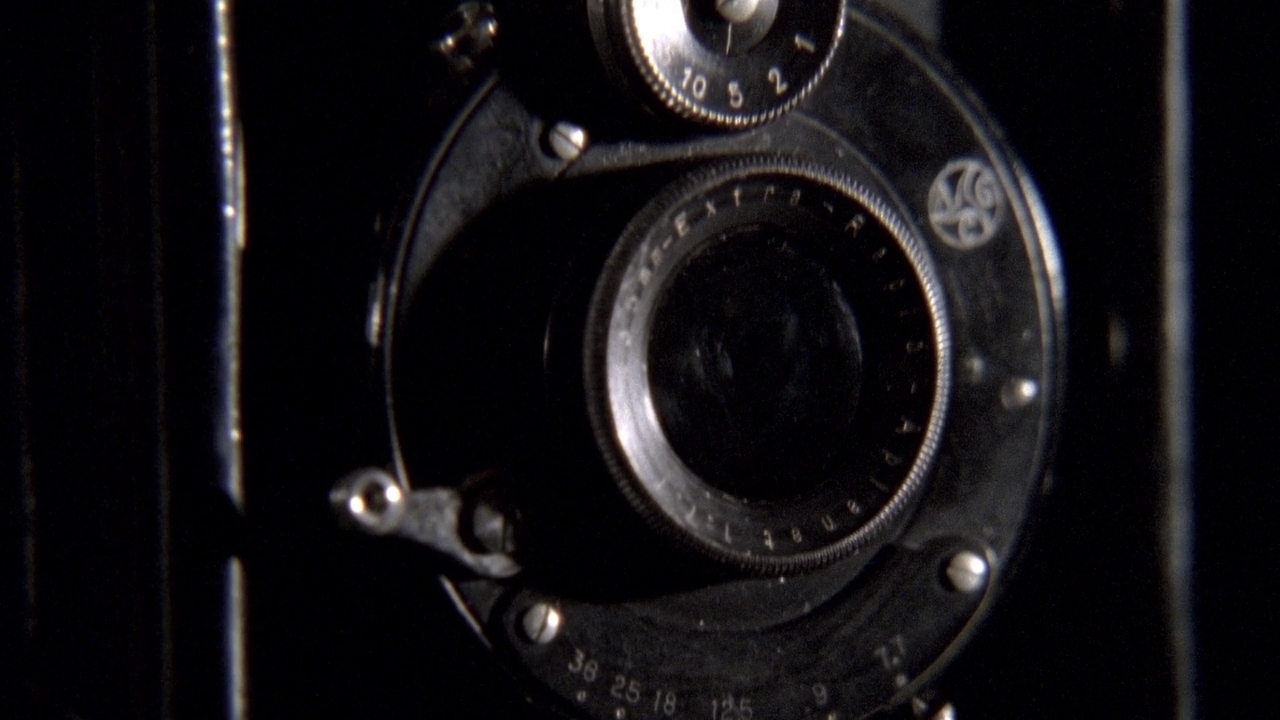
A still from Everlasting Moments (2008)

Jean, a single mother in the 1970s, is struggling with a recent cancer diagnosis while arguing with her son Frank over his decision about whether he will attend college. As a last resort, Jean brings Frank to Manzanar and searches for a camera she hid during her time in the World War II internment camp.
The story then flashes back to young Jean and her family in the 1940s as they are incarcerated by the US government. She secretly takes photographs during her time behind barbed wire before burying the camera to protect herself and her family.
In the present day, Jean’s son grapples with this new information about his mother’s past. Together, they must find a path forward -- both as individuals and as a family.
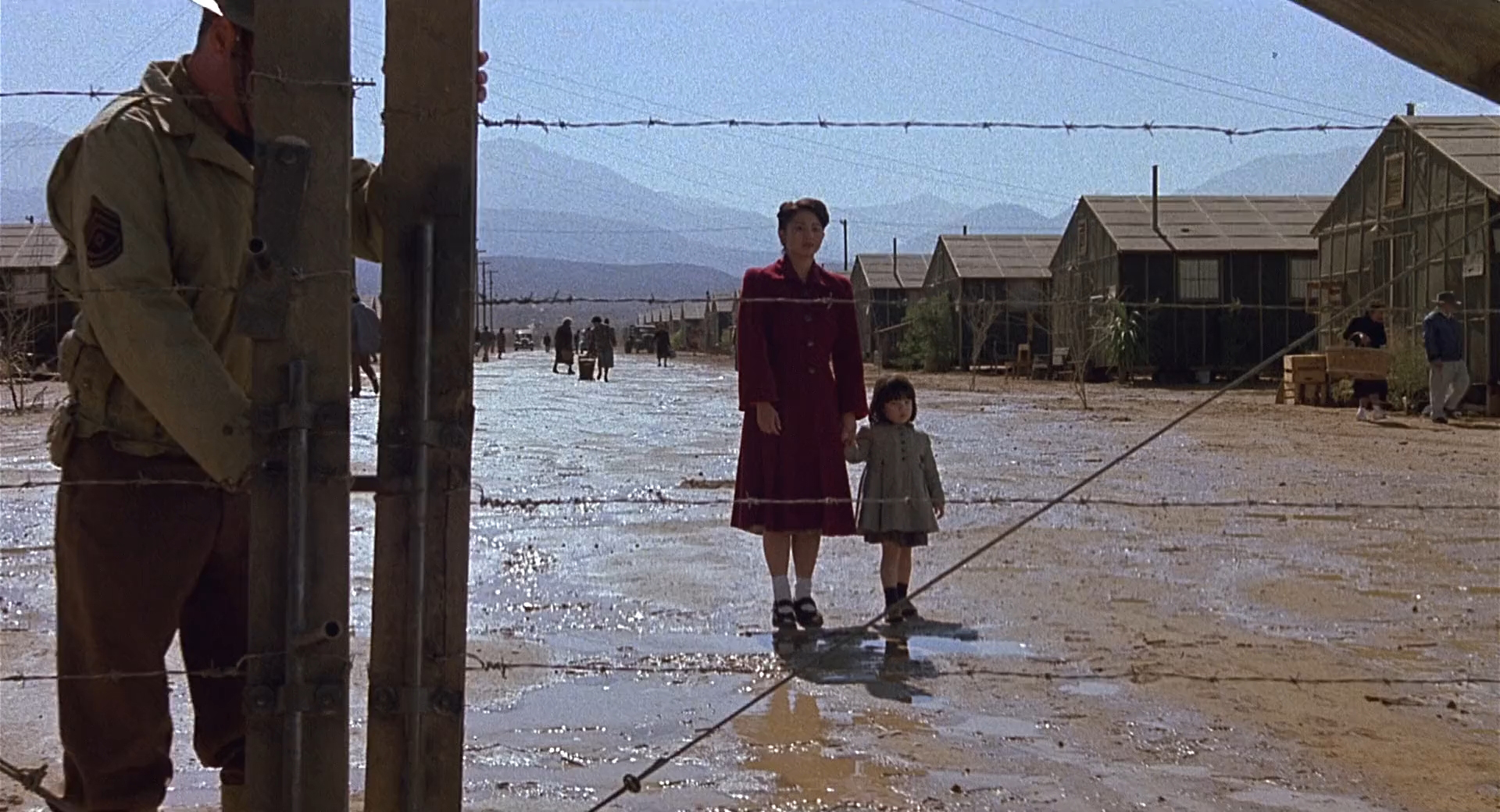
A still from Come See the Paradise (1990)

The Camera is set in the 1970s and 1940s, which presents tremendous opportunities to be tonally immersed in period filmmaking, similar to I’m Still Here and Blitz. We are also planning to have a majority of the dialogue spoken in Japanese and to use archival photographs as central narrative elements throughout the film.
Director Mari Walker is immersing herself in films from both periods, not only to be inspired by the styles of filmmaking of those times but also to consider cultural touchstones and cadences in the way of speaking that suit the time.
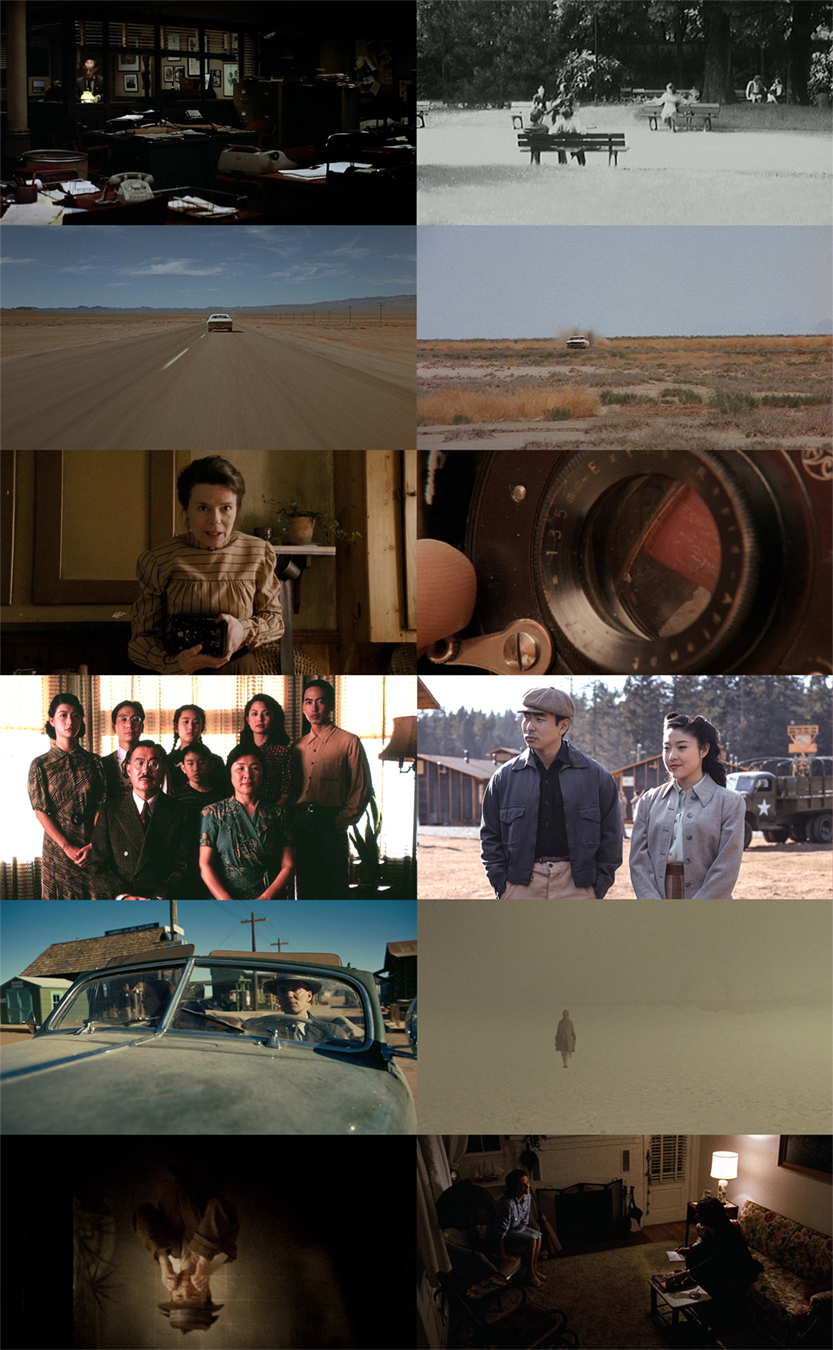
A mood board for The Camera

JEAN
The story's hero is a woman who is initially an intrepid photographer in camp and, as an adult, is in denial about her tremendous loss from years ago. Still headstrong and driven, she forces her son on a road trip to the desert to convince him of today’s reality, but is instead confronted by her past.
HIROTOSHI
Savvy and metropolitan when we first meet him before America’s involvement in World War II, Jean’s father struggles with his time being incarcerated and what it did to his family and his future. In the 1970s, he lives with Jean and his grandson, Frank.
FRANK
Jean’s son dreams of skipping college and going straight into the life of an artist. Throughout the years, he has learned very little about his family's history, which his mother has chosen to keep hidden.
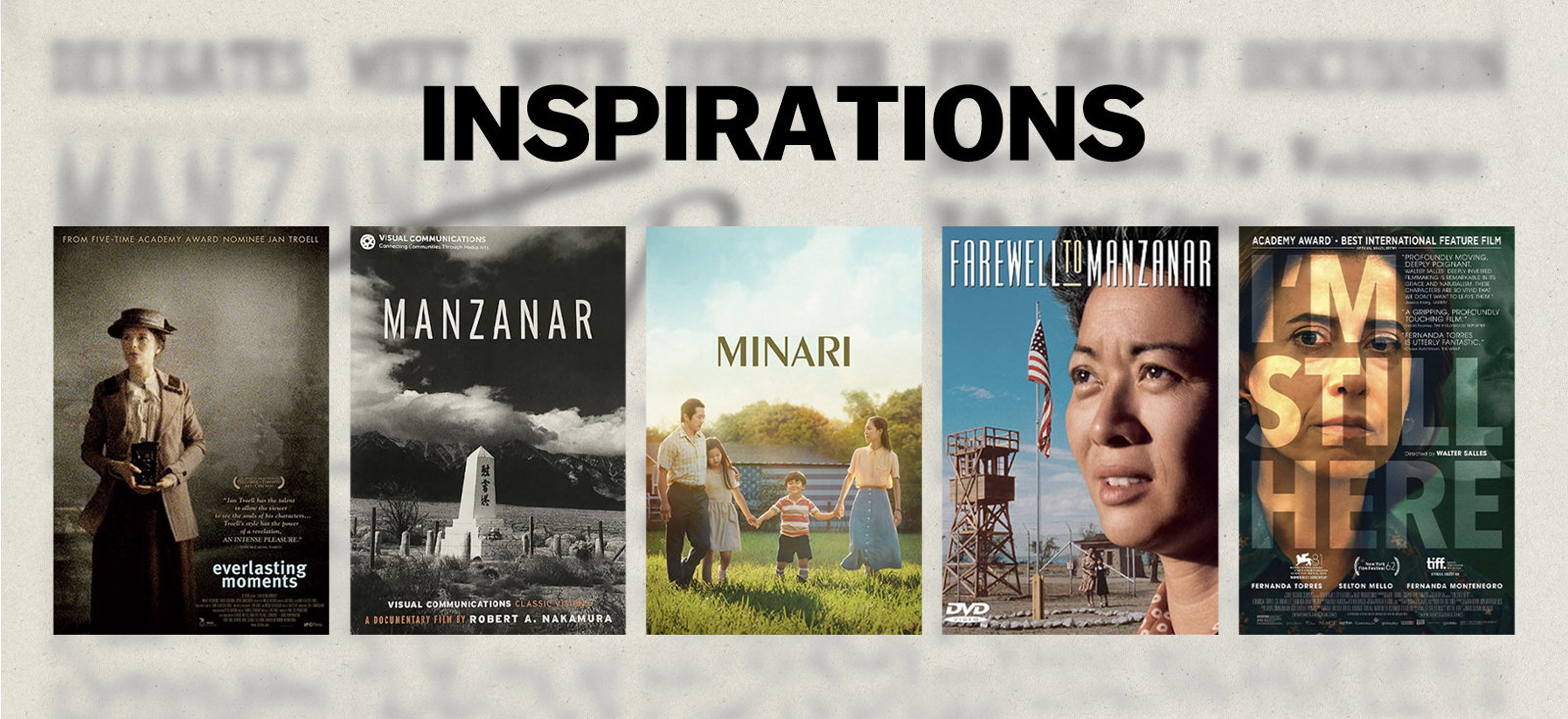
These films have inspired the story and visual language of The Camera. From left to right:
Everlasting Moments (2008), Manzanar (1972), Minari (2020), Farewell to Manzanar (1976), and I’m Still Here (2024)

The Camera focuses on the lasting trauma that was created through the wrongful incarceration of Japanese Americans during World War II. These unique and tragic events in American history provide a compelling basis for exploring universal themes of loss, shame, and intergenerational trauma.
The loss of Jean’s passion for photography is reflected in the pain and sacrifices she must make during her time at Manzanar. The story of her camera, though fictional, represents the thousands of artists and passions that are lost during times of tremendous hardship, and it is something that must be discussed now.
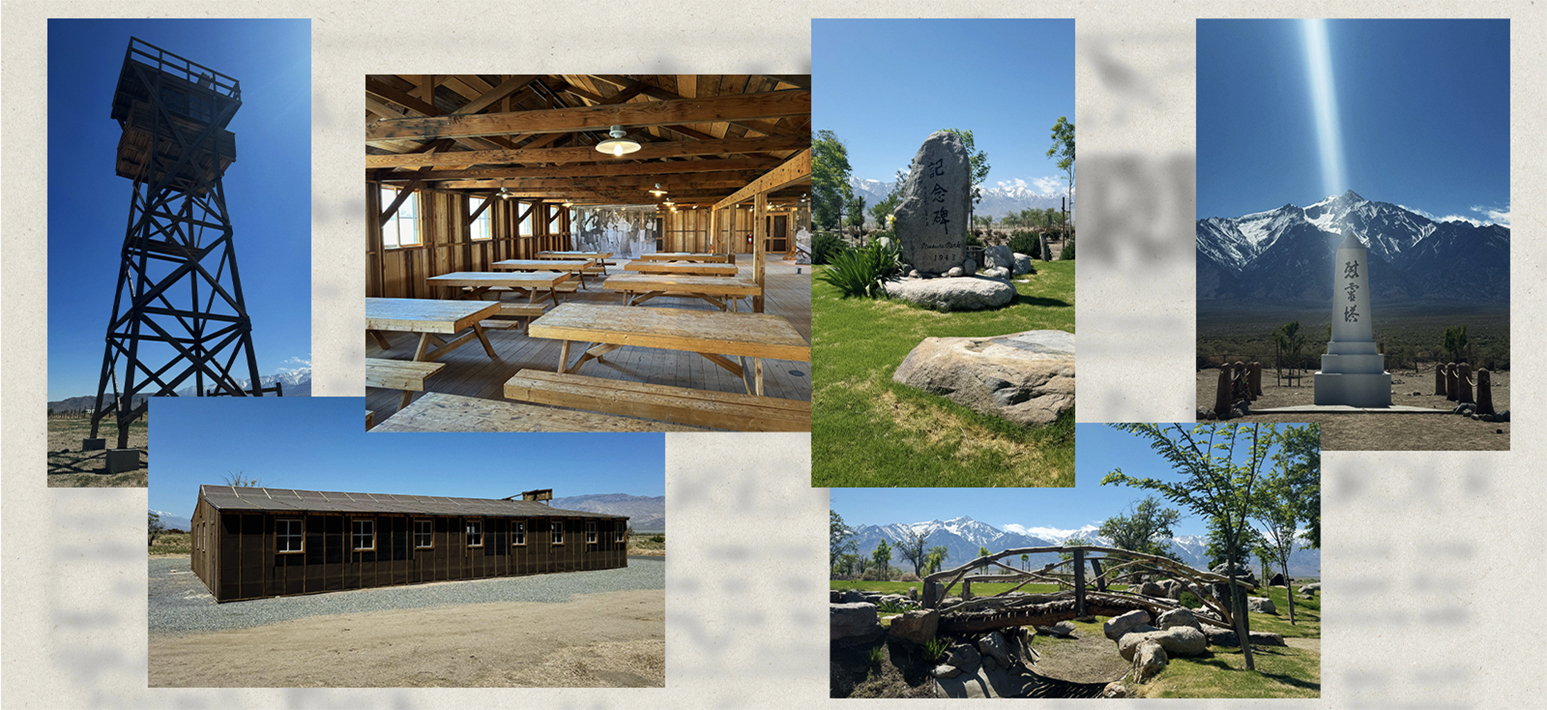
Photos director Mari Walker took during her first location scout for The Camera

At a time when our civil liberties are at risk and the act of public art is under attack, The Camera addresses many of the issues we face across our country today. The incarceration of Japanese Americans during World War II is a vastly underrepresented part of American history that people must be reminded of.
We cannot allow history to repeat itself or allow more individuals to fall under cruel injustices.
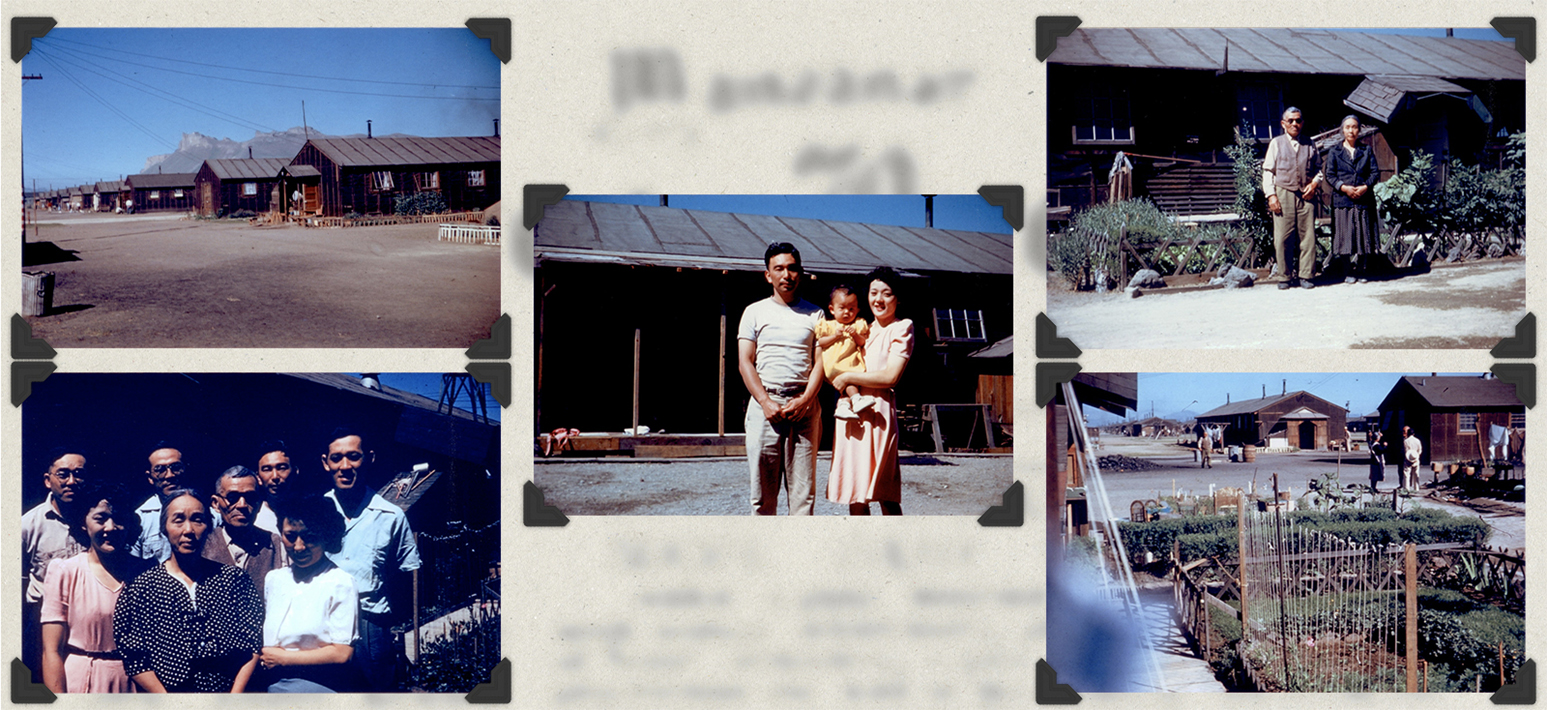
Photos taken at Tule Lake by Mari Walker’s great-uncle using a smuggled box camera

The story of The Camera is a personal one for our writer and producer, Steve Sasaki, who has loosely based the film on his own family's experiences.
Director Mari Walker and producer Kristen Uno also had family who were incarcerated during World War II, including Mari’s grandparents, who met while working together in the mess hall at the Tule Lake incarceration center.
This film was fortunate enough to obtain a grant from the National Park Service, and we are working in affiliation with the nonprofit Visual Communications, whose mission is to support Asian American and Pacific Islander filmmakers.
The Camera is an important film, a story that must be told in the greatest way possible. Our commitment is to make the best film we can possibly make, and we will do everything within our power to make it a film that is necessary to watch.

Principal photography for The Camera will take place in California and is scheduled for October 2025!
Your contributions will help cover expenses related to period-specific wardrobe, multiple iterations of props, travel costs for the cast and crew, location, and permitting fees. Supporting The Camera will allow us to get this film out into the world, providing an opportunity to present an underrepresented part of our American history.
We need roughly $35,000 to help cover costs for The Camera, including:
- $4000 for art and props that are historically accurate.
- $2500 for period-specific wardrobe options.
- $2500 to hire an editor.
- $5000 for location and park permitting.
You can find more details of these budget items in the "Wishlist" tab.

- Please help us spread the word!
- Follow the film's journey on Instagram, Threads, Twitter, and TikTok!
- Let people know about the campaign! Sharing the film's journey with family and friends goes a huge way towards us reaching our goal to make The Camera a reality!
THANK YOU SO MUCH FOR CONSIDERING OUR FILM!!
Wishlist
Use the WishList to Pledge cash and Loan items - or - Make a pledge by selecting an Incentive directly.
TRAVEL COSTS
Costs $4,000
To bring as much authenticity as possible to the film, we plan to film at Manzanar, located nearly three hours away from Los Angeles.
LOCATION & PARK PERMITTING FEES + PARK PERSONNEL
Costs $5,000
To film at the Manzanar Historical site, we need to cover location and park permitting fees + any personnel that may be needed on-site.
CREW
Costs $10,000
We need to pay our crew to make it up to Manzanar and potentially provide accommodations to stay overnight!
CAST
Costs $5,000
We need our wonderful cast to have good accommodations and food when we make our way up to Manzanar for filming on location!
COFFEE FUND
Costs $500
Help keep our cast and crew alert on set!
ART & PROPS
Costs $1,500
Help us secure the necessary props and art to create an immersive period production design that remains historically accurate!
WARDROBE
Costs $2,500
Actors need period-specific outfits!
CAMERA FUNDS
Costs $2,500
This prop is central to our film! We may need several versions of it for different scenes in The Camera.
FILM FESTIVALS
Costs $1,500
Film festival costs can add up quickly! This would help cover film festival submissions and travel accommodations for screenings and events.
EDITOR
Costs $2,500
Help us hire an editor, so we have another set of talented eyes in post-production to make the film great!
Cash Pledge
Costs $0


Direct link:
Share this update!
About This Team
The creation of this team has been a matter of serendipity. We have been tremendously lucky in finding a group of artists, all connected by a shared family history, who are deeply passionate about telling this story.
MARI WALKER (DIRECTOR)
Mari Walker is an award-winning director, writer, and editor. The films she has worked on have been screened at over 450 festivals, including Sundance, SXSW, Frameline, and Outfest.
Her work explores identity through multiple forms and genres, championing the shared humanity of others through stories that promote empathy and equality.
Mari’s film The Soul of a Tree won Best Short Documentary at the Kerry Film Festival in 2016. Swim, her first narrative short, won an Audience Award at the 2017 Los Angeles Film Festival.
Her first feature, See You Then, had its World Premiere at SXSW and was released across PVOD platforms this past April. It won seven awards, including Best Narrative Feature at the Sun Valley Film Festival, and is currently rated at 97% on RottenTomatoes.
KRISTEN UNO (PRODUCER)
Kristen Uno is an award-winning producer whose films have premiered at top festivals like Cannes, SXSW, and Tribeca. She is passionate about telling humanistic stories centered on traditionally underrepresented or marginalized communities.
Most recently, she produced the feature film Color Book (winner of the Untold Stories Grant), which premiered at the 2024 Tribeca Film Festival & won the Prix de la Critique at the 2024 Deauville Film Festival. Previously, she produced Netflix's 3rd season of Taco Chronicles: Cross the Border. She's also produced two short films EP'd by Lena Waithe as a part of the Indeed Rising Voices Program and co-wrote and produced Mari Walker's debut feature film See You Then, which premiered in the Narrative Spotlight section at SXSW 2021 & received distribution through Breaking Glass Films.
Kristen is based in Los Angeles, but travels across the US for work. She enjoys going on food adventures, wandering museums, and watching films at local independent theaters.
STEVE SASAKI (WRITER/PRODUCER)
Steve Sasaki is an award-winning writer whose work has been described as having a spiritual element despite the genre. He’s extremely grateful, after many years of persevering to have this deeply personal story told, that the pieces of the puzzle are falling into place, including having the experienced and altruistically motivated team of Mari Walker & Kristen Uno to lead production.
Steve has had other short film scripts produced, written feature film treatments for a producer and Sunset Pictures, contributed to a non-fiction book and poetry journal, and was represented for a potential script sale to the television show, “The Crazy Ones,” that starred Robin Williams. He is also a licensed Civil Engineer and Traffic Engineer in the State of California.
ERIC MICHAEL KOCHMER (PRODUCER)
A protégée of composer and theater director Elizabeth Swados and experimental filmmaker Owen Land, Kochmer has worked as an actor, director, video artist, producer, editor, and night watchman in a graveyard. Kochmer has consulted on over 1000 low-budget productions from his former role as VP of Content of We Make Movies. In the last 3 years, he has turned into a combination of a creative, line-producer and director, working on more than 12 feature films from horror, westerns, lifetime films, drama's and experimental with companies like R&R Media and Seth Green's Stoopid Buddy Stoodios.
NATE LIPP (PRODUCER)
Nate Lipp is a twice Emmy-nominated Producer and Director. In 2024, he made two films with sub-2-million-dollar budgets in Kentucky. In 2023, I had two narrative films in the Austin Film Festival and earned a Webby. In 2022, a feature film I Executive Produced and Segment Directed came in as runner up for North American Feature at Outfest. Over the last few years, he supervised the production of multiple non-scripted shows for HGTV/MAX.
.png)
Cinesthesia Factory, LLC. is a development, production, and exhibition company dedicated to creating arthouse and risk-taking genre films. The company is founded by Eric Michael Kochmer, Nate Lipp, and Whit Spurgeon.
Current Team
Incentives
- The Story
- Wishlist
- Updates
- The Team
- Community
Mission Statement
The Story
A still from Everlasting Moments (2008)
Jean, a single mother in the 1970s, is struggling with a recent cancer diagnosis while arguing with her son Frank over his decision about whether he will attend college. As a last resort, Jean brings Frank to Manzanar and searches for a camera she hid during her time in the World War II internment camp.
The story then flashes back to young Jean and her family in the 1940s as they are incarcerated by the US government. She secretly takes photographs during her time behind barbed wire before burying the camera to protect herself and her family.
In the present day, Jean’s son grapples with this new information about his mother’s past. Together, they must find a path forward -- both as individuals and as a family.
A still from Come See the Paradise (1990)
The Camera is set in the 1970s and 1940s, which presents tremendous opportunities to be tonally immersed in period filmmaking, similar to I’m Still Here and Blitz. We are also planning to have a majority of the dialogue spoken in Japanese and to use archival photographs as central narrative elements throughout the film.
Director Mari Walker is immersing herself in films from both periods, not only to be inspired by the styles of filmmaking of those times but also to consider cultural touchstones and cadences in the way of speaking that suit the time.
A mood board for The Camera
JEAN
The story's hero is a woman who is initially an intrepid photographer in camp and, as an adult, is in denial about her tremendous loss from years ago. Still headstrong and driven, she forces her son on a road trip to the desert to convince him of today’s reality, but is instead confronted by her past.
HIROTOSHI
Savvy and metropolitan when we first meet him before America’s involvement in World War II, Jean’s father struggles with his time being incarcerated and what it did to his family and his future. In the 1970s, he lives with Jean and his grandson, Frank.
FRANK
Jean’s son dreams of skipping college and going straight into the life of an artist. Throughout the years, he has learned very little about his family's history, which his mother has chosen to keep hidden.
These films have inspired the story and visual language of The Camera. From left to right:
Everlasting Moments (2008), Manzanar (1972), Minari (2020), Farewell to Manzanar (1976), and I’m Still Here (2024)
The Camera focuses on the lasting trauma that was created through the wrongful incarceration of Japanese Americans during World War II. These unique and tragic events in American history provide a compelling basis for exploring universal themes of loss, shame, and intergenerational trauma.
The loss of Jean’s passion for photography is reflected in the pain and sacrifices she must make during her time at Manzanar. The story of her camera, though fictional, represents the thousands of artists and passions that are lost during times of tremendous hardship, and it is something that must be discussed now.
Photos director Mari Walker took during her first location scout for The Camera
At a time when our civil liberties are at risk and the act of public art is under attack, The Camera addresses many of the issues we face across our country today. The incarceration of Japanese Americans during World War II is a vastly underrepresented part of American history that people must be reminded of.
We cannot allow history to repeat itself or allow more individuals to fall under cruel injustices.
Photos taken at Tule Lake by Mari Walker’s great-uncle using a smuggled box camera
The story of The Camera is a personal one for our writer and producer, Steve Sasaki, who has loosely based the film on his own family's experiences.
Director Mari Walker and producer Kristen Uno also had family who were incarcerated during World War II, including Mari’s grandparents, who met while working together in the mess hall at the Tule Lake incarceration center.
This film was fortunate enough to obtain a grant from the National Park Service, and we are working in affiliation with the nonprofit Visual Communications, whose mission is to support Asian American and Pacific Islander filmmakers.
The Camera is an important film, a story that must be told in the greatest way possible. Our commitment is to make the best film we can possibly make, and we will do everything within our power to make it a film that is necessary to watch.
Principal photography for The Camera will take place in California and is scheduled for October 2025!
Your contributions will help cover expenses related to period-specific wardrobe, multiple iterations of props, travel costs for the cast and crew, location, and permitting fees. Supporting The Camera will allow us to get this film out into the world, providing an opportunity to present an underrepresented part of our American history.
We need roughly $35,000 to help cover costs for The Camera, including:
- $4000 for art and props that are historically accurate.
- $2500 for period-specific wardrobe options.
- $2500 to hire an editor.
- $5000 for location and park permitting.
You can find more details of these budget items in the "Wishlist" tab.
- Please help us spread the word!
- Follow the film's journey on Instagram, Threads, Twitter, and TikTok!
- Let people know about the campaign! Sharing the film's journey with family and friends goes a huge way towards us reaching our goal to make The Camera a reality!
THANK YOU SO MUCH FOR CONSIDERING OUR FILM!!
Wishlist
Use the WishList to Pledge cash and Loan items - or - Make a pledge by selecting an Incentive directly.
TRAVEL COSTS
Costs $4,000
To bring as much authenticity as possible to the film, we plan to film at Manzanar, located nearly three hours away from Los Angeles.
LOCATION & PARK PERMITTING FEES + PARK PERSONNEL
Costs $5,000
To film at the Manzanar Historical site, we need to cover location and park permitting fees + any personnel that may be needed on-site.
CREW
Costs $10,000
We need to pay our crew to make it up to Manzanar and potentially provide accommodations to stay overnight!
CAST
Costs $5,000
We need our wonderful cast to have good accommodations and food when we make our way up to Manzanar for filming on location!
COFFEE FUND
Costs $500
Help keep our cast and crew alert on set!
ART & PROPS
Costs $1,500
Help us secure the necessary props and art to create an immersive period production design that remains historically accurate!
WARDROBE
Costs $2,500
Actors need period-specific outfits!
CAMERA FUNDS
Costs $2,500
This prop is central to our film! We may need several versions of it for different scenes in The Camera.
FILM FESTIVALS
Costs $1,500
Film festival costs can add up quickly! This would help cover film festival submissions and travel accommodations for screenings and events.
EDITOR
Costs $2,500
Help us hire an editor, so we have another set of talented eyes in post-production to make the film great!
Cash Pledge
Costs $0
Direct link:
Share this update!
About This Team
The creation of this team has been a matter of serendipity. We have been tremendously lucky in finding a group of artists, all connected by a shared family history, who are deeply passionate about telling this story.
MARI WALKER (DIRECTOR)
Mari Walker is an award-winning director, writer, and editor. The films she has worked on have been screened at over 450 festivals, including Sundance, SXSW, Frameline, and Outfest.
Her work explores identity through multiple forms and genres, championing the shared humanity of others through stories that promote empathy and equality.
Mari’s film The Soul of a Tree won Best Short Documentary at the Kerry Film Festival in 2016. Swim, her first narrative short, won an Audience Award at the 2017 Los Angeles Film Festival.
Her first feature, See You Then, had its World Premiere at SXSW and was released across PVOD platforms this past April. It won seven awards, including Best Narrative Feature at the Sun Valley Film Festival, and is currently rated at 97% on RottenTomatoes.
KRISTEN UNO (PRODUCER)
Kristen Uno is an award-winning producer whose films have premiered at top festivals like Cannes, SXSW, and Tribeca. She is passionate about telling humanistic stories centered on traditionally underrepresented or marginalized communities.
Most recently, she produced the feature film Color Book (winner of the Untold Stories Grant), which premiered at the 2024 Tribeca Film Festival & won the Prix de la Critique at the 2024 Deauville Film Festival. Previously, she produced Netflix's 3rd season of Taco Chronicles: Cross the Border. She's also produced two short films EP'd by Lena Waithe as a part of the Indeed Rising Voices Program and co-wrote and produced Mari Walker's debut feature film See You Then, which premiered in the Narrative Spotlight section at SXSW 2021 & received distribution through Breaking Glass Films.
Kristen is based in Los Angeles, but travels across the US for work. She enjoys going on food adventures, wandering museums, and watching films at local independent theaters.
STEVE SASAKI (WRITER/PRODUCER)
Steve Sasaki is an award-winning writer whose work has been described as having a spiritual element despite the genre. He’s extremely grateful, after many years of persevering to have this deeply personal story told, that the pieces of the puzzle are falling into place, including having the experienced and altruistically motivated team of Mari Walker & Kristen Uno to lead production.
Steve has had other short film scripts produced, written feature film treatments for a producer and Sunset Pictures, contributed to a non-fiction book and poetry journal, and was represented for a potential script sale to the television show, “The Crazy Ones,” that starred Robin Williams. He is also a licensed Civil Engineer and Traffic Engineer in the State of California.
ERIC MICHAEL KOCHMER (PRODUCER)
A protégée of composer and theater director Elizabeth Swados and experimental filmmaker Owen Land, Kochmer has worked as an actor, director, video artist, producer, editor, and night watchman in a graveyard. Kochmer has consulted on over 1000 low-budget productions from his former role as VP of Content of We Make Movies. In the last 3 years, he has turned into a combination of a creative, line-producer and director, working on more than 12 feature films from horror, westerns, lifetime films, drama's and experimental with companies like R&R Media and Seth Green's Stoopid Buddy Stoodios.
NATE LIPP (PRODUCER)
Nate Lipp is a twice Emmy-nominated Producer and Director. In 2024, he made two films with sub-2-million-dollar budgets in Kentucky. In 2023, I had two narrative films in the Austin Film Festival and earned a Webby. In 2022, a feature film I Executive Produced and Segment Directed came in as runner up for North American Feature at Outfest. Over the last few years, he supervised the production of multiple non-scripted shows for HGTV/MAX.
Cinesthesia Factory, LLC. is a development, production, and exhibition company dedicated to creating arthouse and risk-taking genre films. The company is founded by Eric Michael Kochmer, Nate Lipp, and Whit Spurgeon.