THE STORY WE BROKE
New York City, New York | Film Feature
Documentary, News
THE STORY WE BROKE follows one of the most consequential student movements of our time, told by the student journalists who were there first. Amidst rising censorship and institutional crackdown, this film is both a historical document and a defense of the right to resist and the right to report.
THE STORY WE BROKE
New York City, New York | Film Feature
Documentary, News

Green Light
This campaign raised $25,382 for post-production. Follow the filmmaker to receive future updates on this project.
200 supporters | followers
Enter the amount you would like to pledge
THE STORY WE BROKE follows one of the most consequential student movements of our time, told by the student journalists who were there first. Amidst rising censorship and institutional crackdown, this film is both a historical document and a defense of the right to resist and the right to report.
About The Project


- The Story
- Wishlist
- Updates
- The Team
- Community
Mission Statement
The Story
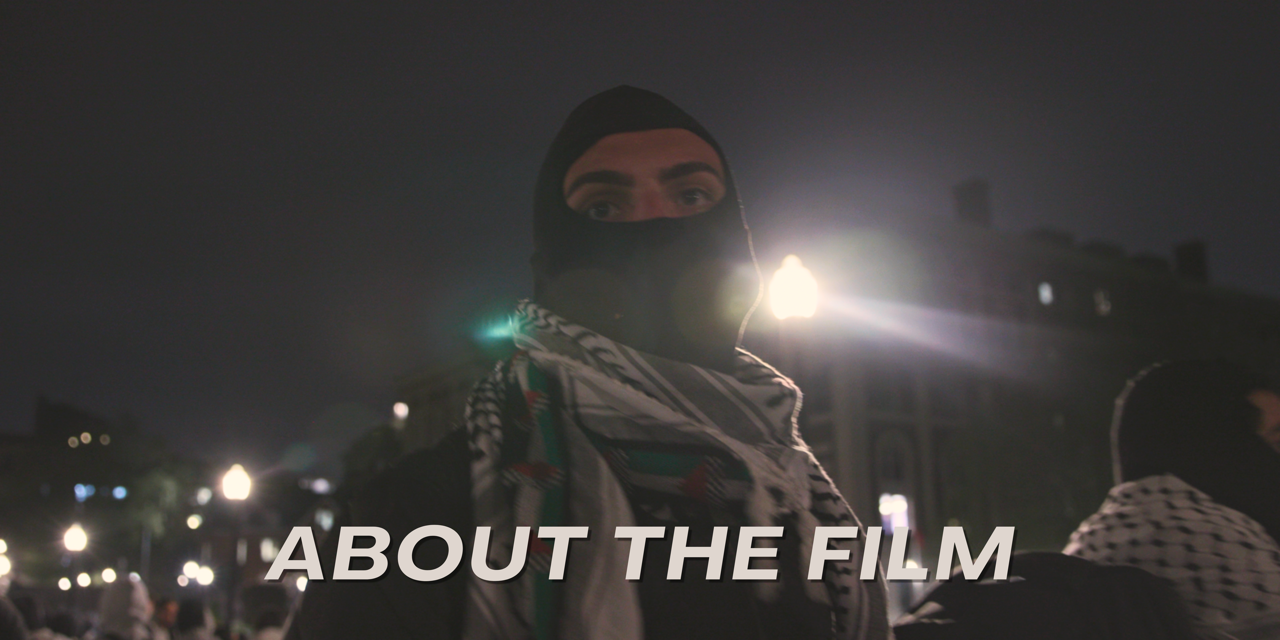
"Some stories don't just unfold in front of you. They pull you under, hold your breath, ask you to choose who you are before you speak." — Jude Taha
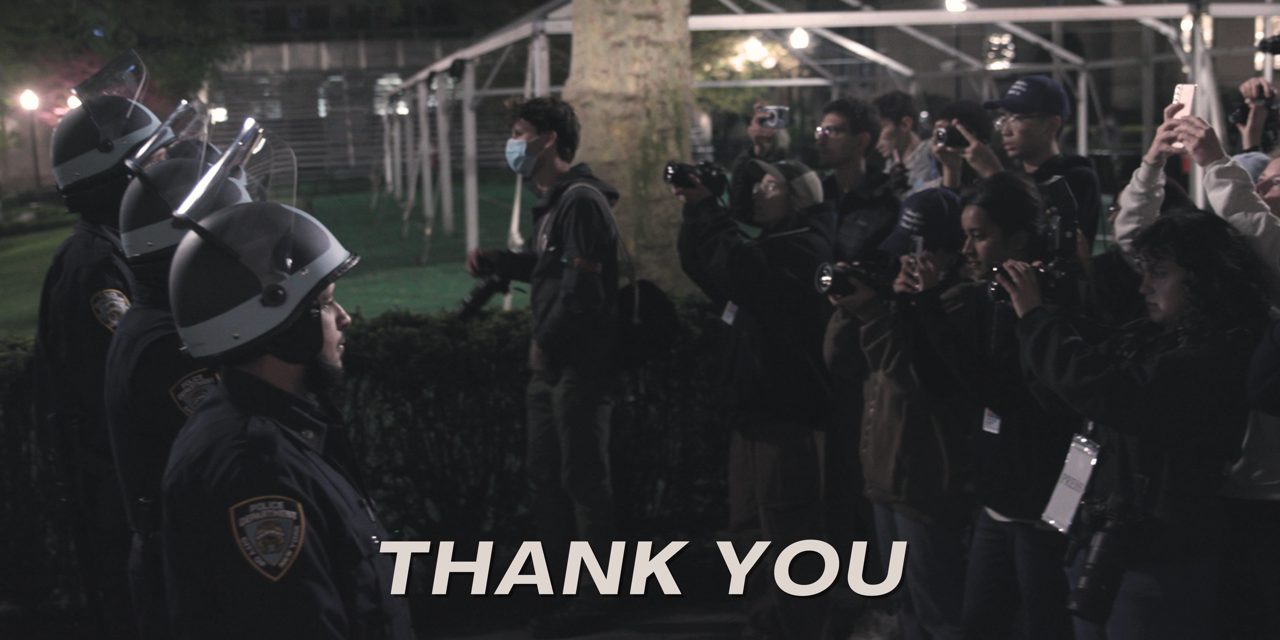
As dawn broke on April 17, 2024, dozens of students pitched tents on Columbia University’s lawn, marking the beginning of a global protest movement – what is now known as the Gaza Solidarity Encampment. As this moment unfolded, a wave of student journalists, many of whom had been tracking campus activism for months, felt an instinctive responsibility to bear witness. Day and night, they documented every detail. Between juggling classes and watching friends get arrested, they reached audiences that legacy media had already lost, and these young reporters emerged committed, courageous, and propelled by a profound sense of duty. Jude Taha is one of these reporters.
Jude, a Palestinian-Jordanian graduate student at Columbia University’s world-renowned Journalism School, anchors the film as both a participant and our guide. Her Palestinian identity often leads editors, classmates, and professors to question her credibility, while her rigorous reporting is dismissed as biased. As the encampment grows and the death toll in Gaza escalates, Jude must navigate the emotional toll of covering a cause that is deeply personal, witnessing her people being continuously subjected to death and destruction.
She isn't alone. Maryam, a 21-year-old Palestinian-American undergrad who came to Columbia for her love of journalism, grows disillusioned watching mainstream coverage. From her tent inside the encampment, she begins pitching op-eds, then becomes the movement's unofficial press lead — appearing on Democracy Now!, Frontline, and MSNBC.
And then there's WKCR — Columbia's student radio station, better known for jazz than breaking news. When the encampment begins, undergrad student Ted and his team find themselves in the thick of it. During the NYPD raid on Hamilton Hall, their live broadcast becomes something extraordinary: capturing the moments of love and care, while being the only real-time record of a community being brutalized.
The film weaves between the encampment and present-day Amman, Jordan, where Jude now teaches journalism to a new generation of students — some of whom are from Gaza and have lived through what she once reported on from a distance. Here, the question emerges: how do you teach journalistic rigor without reproducing the same myths of neutrality that were used to silence you?
As renowned Palestinian-American historian Rashid Khalidi said: “If there is any light in this dark picture of media malpractice and systematic bias, it is that the veil that the mainstream media sought to provide to hide Israel’s war crimes and genocide is becoming ever more tattered every day.”
THE STORY WE BROKE is this unveiling — told from the inside, by the people who were there.
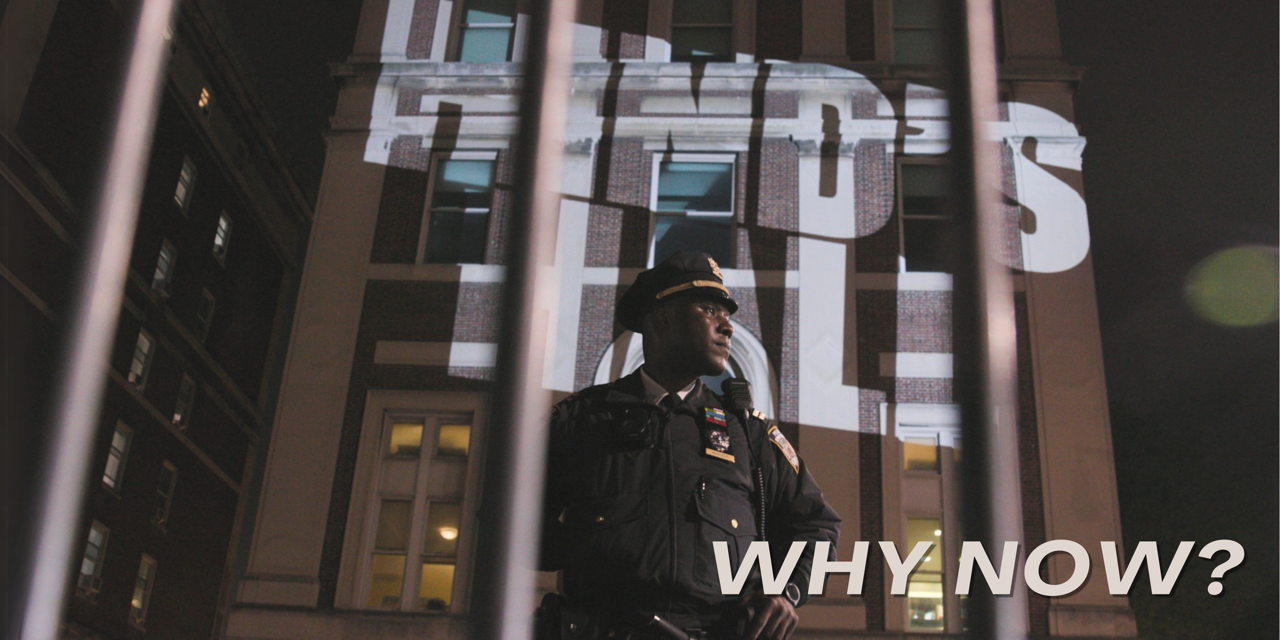
As you read this, the genocide of Gaza is ongoing. The tepid promise of “ceasefire” continues to be violated by the Israeli state every day.
Coverage of Gaza has exposed, in real time, how corporate funding and institutional pressure shape what gets reported, who gets platformed, and whose credibility goes unquestioned. Palestinian journalists and voices have been systematically sidelined. Student reporters who filled that gap, many of them without formal training and personally affected, produced some of the most honest, rigorously documented work of the past two and a half years.
While some mainstream Western outlets have slowly begun to shift their framing, driven entirely by public pressure, we are still far from honest, consistent coverage of Palestinian life and death. The student journalists in this film did not wait for Western media to change before they modeled something better. Young, scrappy, and often underfunded, they are building new models of journalism in front of our eyes.
This film is made by them, about them, and for the promise that they hold for a better future in journalism. But this film is also made in humble recognition of the courageous journalists in Gaza who Israel murdered for reporting the truth.
By supporting THE STORY WE BROKE, you are helping to preserve a vital historical record and supporting independent filmmaking at a time when our voices are urgently needed.
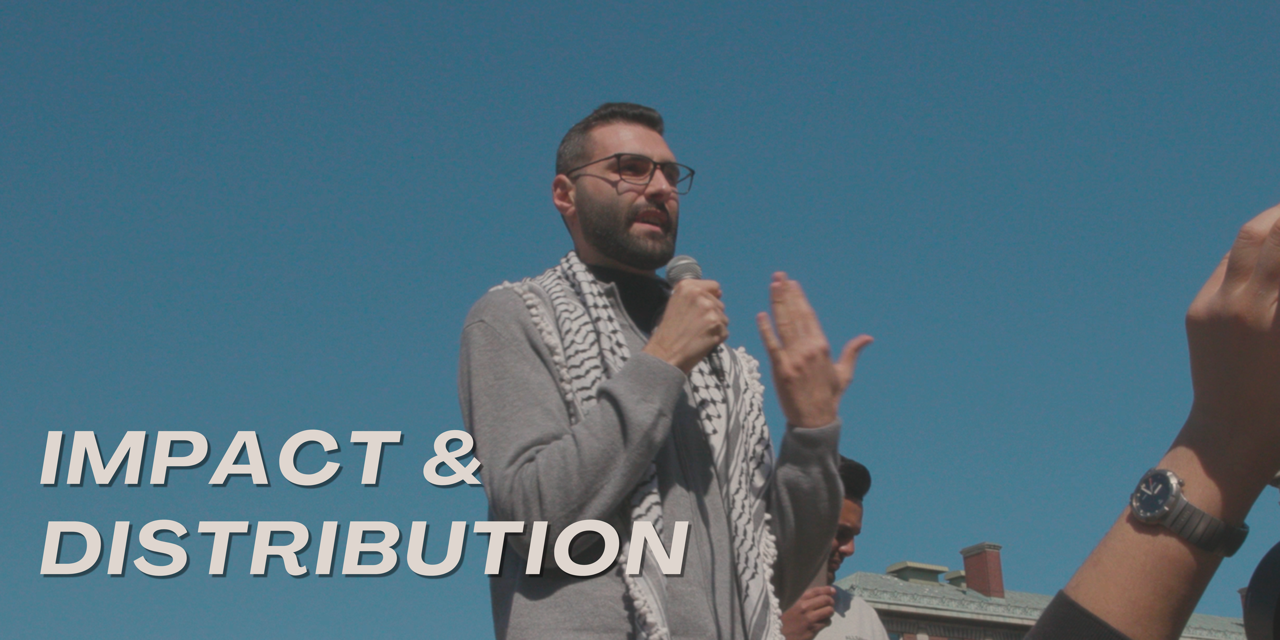
THE STORY WE BROKE is a call to action for journalists to reckon with the responsibility of honest, community-centered reporting and for audiences to develop stronger media literacy.
With support from the Bertha Foundation and a major distributor on board, our team has a robust network of community organizations and advocacy partners ready to bring this film to audiences who need it most. We plan to reach Gen Z and millennial viewers, young journalists, activists, and content creators hungry for a different model, to mobilize individual and collective action around free speech, media literacy, and activism.
Our campaign will focus on:
- Educating budding reporters (high school and college-age students) on the importance of community-centered journalism
- Amplifying Palestinian voices as legitimate and credible sources of their own stories
- Expanding opportunities for all audiences to engage in media literacy development, building a community of well-informed, resourced journalists, activists, and content creators
- Uplifting independent journalism publications that provide in-depth reporting with moral clarity
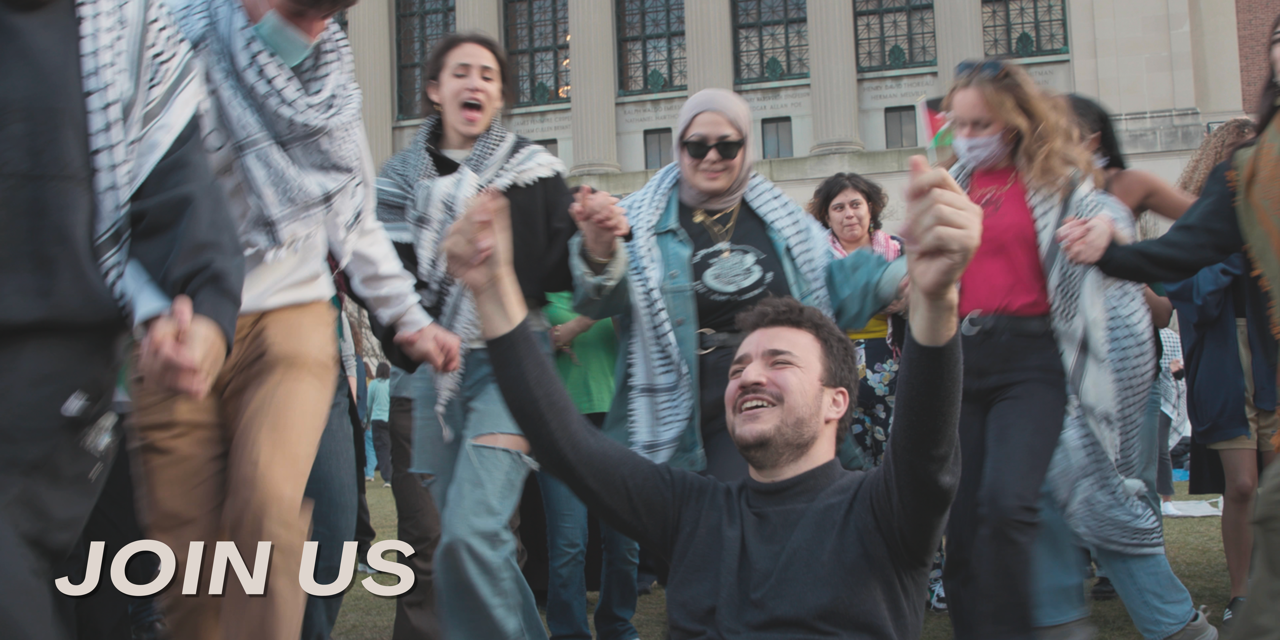
To bring this film to the big screen and audiences everywhere, we need your help!
We already have over 60 hours of footage and are actively working with our brilliant Emmy-nominated editor to prepare a rough cut and film our final remaining scenes in Jordan and New York.
This campaign will help us complete production and post-production, and begin community feedback screenings that will shape the final film. How this platform works is that we need to hit 80% of our $30,000 goal in order to receive any of our contributions. Anyone who contributes will only be charged when we hit that threshold.
We are an independent team making this project with enormous care, urgency, and conviction. Every contribution—large or small—helps us continue building a film that challenges dominant narratives and centers the voices too often excluded from mainstream coverage.
We dearly appreciate your support; these stories take a village to bring forth, so thank you for being part of our village. Connect with us on Instagram for more updates! @TheStoryWeBroke
Wishlist
Use the WishList to Pledge cash and Loan items - or - Make a pledge by selecting an Incentive directly.
Research + Archival
Costs $2,000
Working with investigative journalists to build an extensive map of mainstream media coverage on Palestine and the encampments
Post-Production
Costs $15,000
Continuing work with our amazing editor to parse through 60 hours of footage and get us to a solid rough cut
Graphics
Costs $5,000
Hiring a graphic designer and animator who can help expand the film's visual language and bring in bright punk energy
Music
Costs $5,000
Bringing the score to life!
Remaining production in Jordan + U.S.
Costs $3,000
Filming our last few scenes with Jude in Jordan + other student journalists in New York
Cash Pledge
Costs $0


Direct link:
Share this update!
About This Team
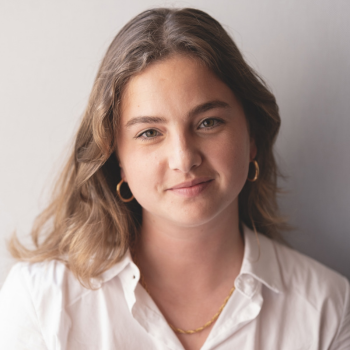 GAIA CARAMAZZA (director) is an award-winning filmmaker and journalist who reports stories of politics, identity, and resistance. Her work has appeared across print, audio and TV in The Guardian, Al Jazeera English, Al Araby Al Jadeed, and the BBC World Service. She was inspired to become a reporter growing up in Jordan and Tunisia during Iraq’s invasion and the Arab Spring and is currently based between Rome and New York City. Born in Italy but growing up in the Middle East and North Africa, she quickly became aware of Western media’s racialised portrayal of the region. Her film about student journalism countering harmful media narratives vilifying communities mobilising for Palestine earned her a fellowship with the Bertha Foundation in collaboration with Watermelon Pictures. A graduate of the Columbia Journalism School and a Pulitzer Center reporting fellow, Gaia is committed to making films challenging dominant narratives with nuance and empathy.
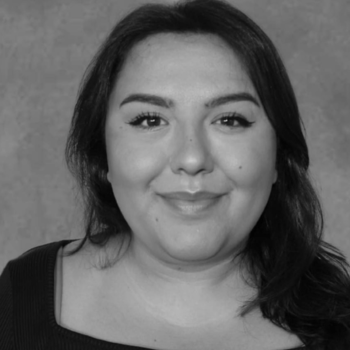 JUDE TAHA (writer, producer, participant) is an award-winning Palestinian-Jordanian visual and written journalist and editor. She is passionate about empowering youth through hyper-local reporting, dissecting mainstream narratives, and sharing stories often considered "too complicated" or "too niche" and thus ignored by the news cycle. An advocate for freedom of speech and elevating marginalized voices, particularly in relation to intersectional identities, she served as the senior managing editor of Jordan News, a daily newspaper based in Amman. Additionally, she was the Columbia University correspondent for Palestine In America. Her reporting has appeared in Al Jazeera English, AJ+, DemocracyNow!, Time Magazine, and The Washington Post.
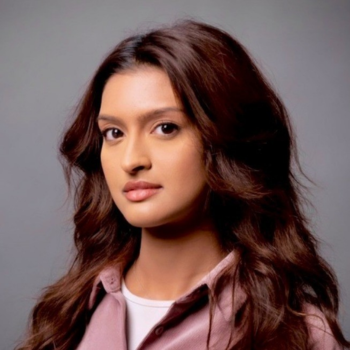 SANJNA SELVA (producer) is an award-winning documentary filmmaker, journalist, and impact producer raised in Malaysia and based between New York and Tunis. Sanjna’s directorial debut, the Oscar-qualifying short documentary “Call Me Anytime, I’m Not Leaving the House”, filmed two days into the start of the invasion of Ukraine, was distributed by PBS (POV Shorts Season 5), becoming the first film about the war to be released in North America. Her other work has been featured on CBS, EST Media, and the International Center of Photography, and supported by institutions such as Firelight Media, Open Society Foundations, the Center for Asian American Media, New York Foundation for the Arts, and The New Museum. She is currently producing her second film for PBS, which explores the rise of Hindu nationalism in India, and presenting a new short documentary work-in-progress at the 2026 Cannes Film Festival. Sanjna serves on the board of REEL Film and has juried the Cannes Corporate Media & TV Awards and the International South Asian Film Festival (ISAFF). Sanjna is also a graduate of the Columbia Journalism School and was a former Pulitzer Center reporting fellow, examining racially motivated police misconduct within small-town America.
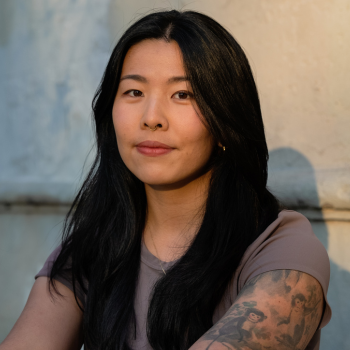 KITTY HU (producer) is a queer Chinese diasporic documentary filmmaker and co-founder/head of development at Shoes Off Media. As the daughter of immigrants, Kitty’s work applies community-centered documentary tactics to amplify stories at the intersection of justice and human relationships, looking at topics like labor, housing, culture, migration, and climate. Her work has been featured on HBO, CNN+, Hulu, PBS. Her personal short, Golden Boy, played in festivals nationally including DOC NYC and LAAPFF. As a member of Brown Girls Doc Mafia, Asian American Documentary Network, and Asian American Journalists Association, she has received generous opportunities to amplify stories about community resistance in Los Angeles’ Chinatown, intergenerational restaurants in Koreatown, and youth mobilization in suburban Fremont, California. She is currently based between unceded Lenape land (Brooklyn, New York) and unceded Muwekma Ohlone land (Bay Area, California).
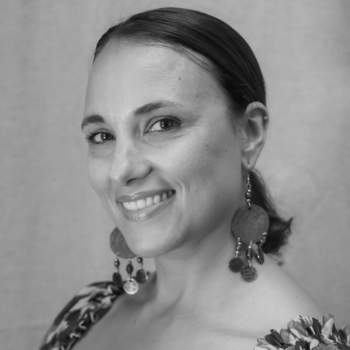 M'DAYA MELIANI (editor) is an Emmy-nominated editor whose career spans over 20 years in television and documentary film. Her work includes: "Sprint"(Netflix); "House of Secrets: the Burari Deaths" (Netflix); and, "Red Lake" (2016 IDA nominee for Best Short Documentary). She recently edited “Fire Through Dry Grass” which premiered at the 2023 BlackStar Film Festival and received Best Documentary. A 2022-23 Karen Schmeer Editing fellow, M’Daya was also a contributing editor at the 2019 Sundance Documentary Lab. Born in Paris to an Algerian father and an American mother, life-long cross-cultural musings have informed her artistic path.
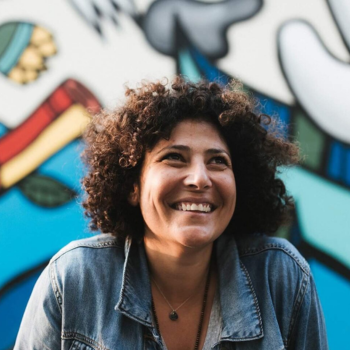 AMBER FARES (consulting producer) is an award-winning documentary filmmaker best known for “CO-EXISTENCE MY ASS” (Sundance 2025) and “SPEED SISTERS” (HotDocs, 2015), which aired on Netflix, Al Jazeera, and RAI. Her work includes “WE ARE AYENDA” (WhatsApp/Amazon), which won a Grand Prix and two Golds at Cannes, and Best Director at Sundance Brand Storytelling. She directed an episode of “GUTSY” (AppleTV), co-directed “CONVERGENCE” (Netflix), and worked on “AMERICA INSIDE OUT” (NatGeo) and ”THE JUDGE” (PBS). A Sundance Momentum and Editing Lab Fellow, Amber lives in New York
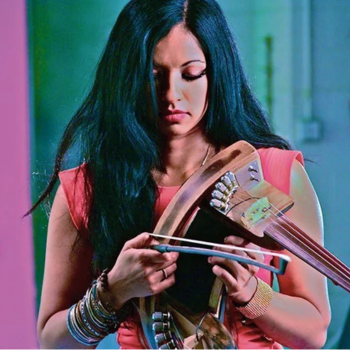 GINGGER SHANKAR (composer) is a filmmaker, artist, activist, composer, and the only female double violinist in the world. A TED speaker and advocate for girls’ education, she’s collaborated with Michelle Obama, Ava DuVernay, AOC, and more. Her music credits span The Smashing Pumpkins to Trent Reznor, with scores for *The Passion of the Christ*, *Charlie Wilson’s War*, and CNN’s *We Will Rise*. A Filmmaker Magazine “25 New Faces” alum, she directed *Nari* and *Promises of Our Grandmothers*, and produced Sundance selection *Akicita*. She co-founded Naughty Horses Records and leads Little Indian Girl Productions, spotlighting underrepresented voices in music and film.
Current Team
Incentives
- The Story
- Wishlist
- Updates
- The Team
- Community
Mission Statement
The Story
"Some stories don't just unfold in front of you. They pull you under, hold your breath, ask you to choose who you are before you speak." — Jude Taha
As dawn broke on April 17, 2024, dozens of students pitched tents on Columbia University’s lawn, marking the beginning of a global protest movement – what is now known as the Gaza Solidarity Encampment. As this moment unfolded, a wave of student journalists, many of whom had been tracking campus activism for months, felt an instinctive responsibility to bear witness. Day and night, they documented every detail. Between juggling classes and watching friends get arrested, they reached audiences that legacy media had already lost, and these young reporters emerged committed, courageous, and propelled by a profound sense of duty. Jude Taha is one of these reporters.
Jude, a Palestinian-Jordanian graduate student at Columbia University’s world-renowned Journalism School, anchors the film as both a participant and our guide. Her Palestinian identity often leads editors, classmates, and professors to question her credibility, while her rigorous reporting is dismissed as biased. As the encampment grows and the death toll in Gaza escalates, Jude must navigate the emotional toll of covering a cause that is deeply personal, witnessing her people being continuously subjected to death and destruction.
She isn't alone. Maryam, a 21-year-old Palestinian-American undergrad who came to Columbia for her love of journalism, grows disillusioned watching mainstream coverage. From her tent inside the encampment, she begins pitching op-eds, then becomes the movement's unofficial press lead — appearing on Democracy Now!, Frontline, and MSNBC.
And then there's WKCR — Columbia's student radio station, better known for jazz than breaking news. When the encampment begins, undergrad student Ted and his team find themselves in the thick of it. During the NYPD raid on Hamilton Hall, their live broadcast becomes something extraordinary: capturing the moments of love and care, while being the only real-time record of a community being brutalized.
The film weaves between the encampment and present-day Amman, Jordan, where Jude now teaches journalism to a new generation of students — some of whom are from Gaza and have lived through what she once reported on from a distance. Here, the question emerges: how do you teach journalistic rigor without reproducing the same myths of neutrality that were used to silence you?
As renowned Palestinian-American historian Rashid Khalidi said: “If there is any light in this dark picture of media malpractice and systematic bias, it is that the veil that the mainstream media sought to provide to hide Israel’s war crimes and genocide is becoming ever more tattered every day.”
THE STORY WE BROKE is this unveiling — told from the inside, by the people who were there.
As you read this, the genocide of Gaza is ongoing. The tepid promise of “ceasefire” continues to be violated by the Israeli state every day.
Coverage of Gaza has exposed, in real time, how corporate funding and institutional pressure shape what gets reported, who gets platformed, and whose credibility goes unquestioned. Palestinian journalists and voices have been systematically sidelined. Student reporters who filled that gap, many of them without formal training and personally affected, produced some of the most honest, rigorously documented work of the past two and a half years.
While some mainstream Western outlets have slowly begun to shift their framing, driven entirely by public pressure, we are still far from honest, consistent coverage of Palestinian life and death. The student journalists in this film did not wait for Western media to change before they modeled something better. Young, scrappy, and often underfunded, they are building new models of journalism in front of our eyes.
This film is made by them, about them, and for the promise that they hold for a better future in journalism. But this film is also made in humble recognition of the courageous journalists in Gaza who Israel murdered for reporting the truth.
By supporting THE STORY WE BROKE, you are helping to preserve a vital historical record and supporting independent filmmaking at a time when our voices are urgently needed.
THE STORY WE BROKE is a call to action for journalists to reckon with the responsibility of honest, community-centered reporting and for audiences to develop stronger media literacy.
With support from the Bertha Foundation and a major distributor on board, our team has a robust network of community organizations and advocacy partners ready to bring this film to audiences who need it most. We plan to reach Gen Z and millennial viewers, young journalists, activists, and content creators hungry for a different model, to mobilize individual and collective action around free speech, media literacy, and activism.
Our campaign will focus on:
- Educating budding reporters (high school and college-age students) on the importance of community-centered journalism
- Amplifying Palestinian voices as legitimate and credible sources of their own stories
- Expanding opportunities for all audiences to engage in media literacy development, building a community of well-informed, resourced journalists, activists, and content creators
- Uplifting independent journalism publications that provide in-depth reporting with moral clarity
To bring this film to the big screen and audiences everywhere, we need your help!
We already have over 60 hours of footage and are actively working with our brilliant Emmy-nominated editor to prepare a rough cut and film our final remaining scenes in Jordan and New York.
This campaign will help us complete production and post-production, and begin community feedback screenings that will shape the final film. How this platform works is that we need to hit 80% of our $30,000 goal in order to receive any of our contributions. Anyone who contributes will only be charged when we hit that threshold.
We are an independent team making this project with enormous care, urgency, and conviction. Every contribution—large or small—helps us continue building a film that challenges dominant narratives and centers the voices too often excluded from mainstream coverage.
We dearly appreciate your support; these stories take a village to bring forth, so thank you for being part of our village. Connect with us on Instagram for more updates! @TheStoryWeBroke
Wishlist
Use the WishList to Pledge cash and Loan items - or - Make a pledge by selecting an Incentive directly.
Research + Archival
Costs $2,000
Working with investigative journalists to build an extensive map of mainstream media coverage on Palestine and the encampments
Post-Production
Costs $15,000
Continuing work with our amazing editor to parse through 60 hours of footage and get us to a solid rough cut
Graphics
Costs $5,000
Hiring a graphic designer and animator who can help expand the film's visual language and bring in bright punk energy
Music
Costs $5,000
Bringing the score to life!
Remaining production in Jordan + U.S.
Costs $3,000
Filming our last few scenes with Jude in Jordan + other student journalists in New York
Cash Pledge
Costs $0
Direct link:
Share this update!
About This Team
GAIA CARAMAZZA (director) is an award-winning filmmaker and journalist who reports stories of politics, identity, and resistance. Her work has appeared across print, audio and TV in The Guardian, Al Jazeera English, Al Araby Al Jadeed, and the BBC World Service. She was inspired to become a reporter growing up in Jordan and Tunisia during Iraq’s invasion and the Arab Spring and is currently based between Rome and New York City. Born in Italy but growing up in the Middle East and North Africa, she quickly became aware of Western media’s racialised portrayal of the region. Her film about student journalism countering harmful media narratives vilifying communities mobilising for Palestine earned her a fellowship with the Bertha Foundation in collaboration with Watermelon Pictures. A graduate of the Columbia Journalism School and a Pulitzer Center reporting fellow, Gaia is committed to making films challenging dominant narratives with nuance and empathy.
JUDE TAHA (writer, producer, participant) is an award-winning Palestinian-Jordanian visual and written journalist and editor. She is passionate about empowering youth through hyper-local reporting, dissecting mainstream narratives, and sharing stories often considered "too complicated" or "too niche" and thus ignored by the news cycle. An advocate for freedom of speech and elevating marginalized voices, particularly in relation to intersectional identities, she served as the senior managing editor of Jordan News, a daily newspaper based in Amman. Additionally, she was the Columbia University correspondent for Palestine In America. Her reporting has appeared in Al Jazeera English, AJ+, DemocracyNow!, Time Magazine, and The Washington Post.
SANJNA SELVA (producer) is an award-winning documentary filmmaker, journalist, and impact producer raised in Malaysia and based between New York and Tunis. Sanjna’s directorial debut, the Oscar-qualifying short documentary “Call Me Anytime, I’m Not Leaving the House”, filmed two days into the start of the invasion of Ukraine, was distributed by PBS (POV Shorts Season 5), becoming the first film about the war to be released in North America. Her other work has been featured on CBS, EST Media, and the International Center of Photography, and supported by institutions such as Firelight Media, Open Society Foundations, the Center for Asian American Media, New York Foundation for the Arts, and The New Museum. She is currently producing her second film for PBS, which explores the rise of Hindu nationalism in India, and presenting a new short documentary work-in-progress at the 2026 Cannes Film Festival. Sanjna serves on the board of REEL Film and has juried the Cannes Corporate Media & TV Awards and the International South Asian Film Festival (ISAFF). Sanjna is also a graduate of the Columbia Journalism School and was a former Pulitzer Center reporting fellow, examining racially motivated police misconduct within small-town America.
KITTY HU (producer) is a queer Chinese diasporic documentary filmmaker and co-founder/head of development at Shoes Off Media. As the daughter of immigrants, Kitty’s work applies community-centered documentary tactics to amplify stories at the intersection of justice and human relationships, looking at topics like labor, housing, culture, migration, and climate. Her work has been featured on HBO, CNN+, Hulu, PBS. Her personal short, Golden Boy, played in festivals nationally including DOC NYC and LAAPFF. As a member of Brown Girls Doc Mafia, Asian American Documentary Network, and Asian American Journalists Association, she has received generous opportunities to amplify stories about community resistance in Los Angeles’ Chinatown, intergenerational restaurants in Koreatown, and youth mobilization in suburban Fremont, California. She is currently based between unceded Lenape land (Brooklyn, New York) and unceded Muwekma Ohlone land (Bay Area, California).
M'DAYA MELIANI (editor) is an Emmy-nominated editor whose career spans over 20 years in television and documentary film. Her work includes: "Sprint"(Netflix); "House of Secrets: the Burari Deaths" (Netflix); and, "Red Lake" (2016 IDA nominee for Best Short Documentary). She recently edited “Fire Through Dry Grass” which premiered at the 2023 BlackStar Film Festival and received Best Documentary. A 2022-23 Karen Schmeer Editing fellow, M’Daya was also a contributing editor at the 2019 Sundance Documentary Lab. Born in Paris to an Algerian father and an American mother, life-long cross-cultural musings have informed her artistic path.
AMBER FARES (consulting producer) is an award-winning documentary filmmaker best known for “CO-EXISTENCE MY ASS” (Sundance 2025) and “SPEED SISTERS” (HotDocs, 2015), which aired on Netflix, Al Jazeera, and RAI. Her work includes “WE ARE AYENDA” (WhatsApp/Amazon), which won a Grand Prix and two Golds at Cannes, and Best Director at Sundance Brand Storytelling. She directed an episode of “GUTSY” (AppleTV), co-directed “CONVERGENCE” (Netflix), and worked on “AMERICA INSIDE OUT” (NatGeo) and ”THE JUDGE” (PBS). A Sundance Momentum and Editing Lab Fellow, Amber lives in New York
GINGGER SHANKAR (composer) is a filmmaker, artist, activist, composer, and the only female double violinist in the world. A TED speaker and advocate for girls’ education, she’s collaborated with Michelle Obama, Ava DuVernay, AOC, and more. Her music credits span The Smashing Pumpkins to Trent Reznor, with scores for *The Passion of the Christ*, *Charlie Wilson’s War*, and CNN’s *We Will Rise*. A Filmmaker Magazine “25 New Faces” alum, she directed *Nari* and *Promises of Our Grandmothers*, and produced Sundance selection *Akicita*. She co-founded Naughty Horses Records and leads Little Indian Girl Productions, spotlighting underrepresented voices in music and film.