The Thin Green Line
Los Angeles, California | Film Feature
Documentary
As high-profile trials against U.S. Border Patrol agents reach a climax, the Trump administration pushes to hire thousands of new agents with scant oversight. THE THIN GREEN LINE confronts this alarming prospect by critically examining the past, present, and future of the Border Patrol.
The Thin Green Line
Los Angeles, California | Film Feature
Documentary

1 Campaigns | California, United States
Green Light
This campaign raised $37,478 for production. Follow the filmmaker to receive future updates on this project.
290 supporters | followers
Enter the amount you would like to pledge
As high-profile trials against U.S. Border Patrol agents reach a climax, the Trump administration pushes to hire thousands of new agents with scant oversight. THE THIN GREEN LINE confronts this alarming prospect by critically examining the past, present, and future of the Border Patrol.
About The Project


- The Story
- Wishlist
- Updates
- The Team
- Community
Mission Statement
The Story
A Slow-Burning Scandal
When Mexican police found the lifeless body of fifteen-year-old Sergio Hernández on the blood-soaked concrete, U.S. Border Patrol agent Jesus Mesa had already fled the scene. The official story was that Sergio and his three friends, having surrounded the agent, were pelting him with rocks when Mesa’s firearm accidentally discharged. It was a lie, and James Tomsheck knew it. He had already seen the security footage, which showed Sergio’s slight frame peering out from behind a pillar just moments before the flash and peel of Mesa’s carefully aimed gun put a bullet between the boy’s eyes, killing him instantly.
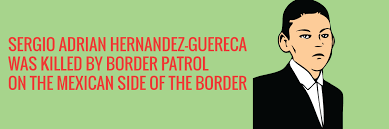
The agent who killed Sergio Hernández has never been held accountable.
9/11 and Border Militarization
Four years earlier, in 2006, when Tomsheck was brought into the newly created Customs and Border Protection (CBP) agency as the chief of internal affairs, the Border Patrol had just been ordered by Congress to rapidly hire ten thousand new agents. This mandate constituted the largest hiring initiative in modern U.S. law enforcement history.
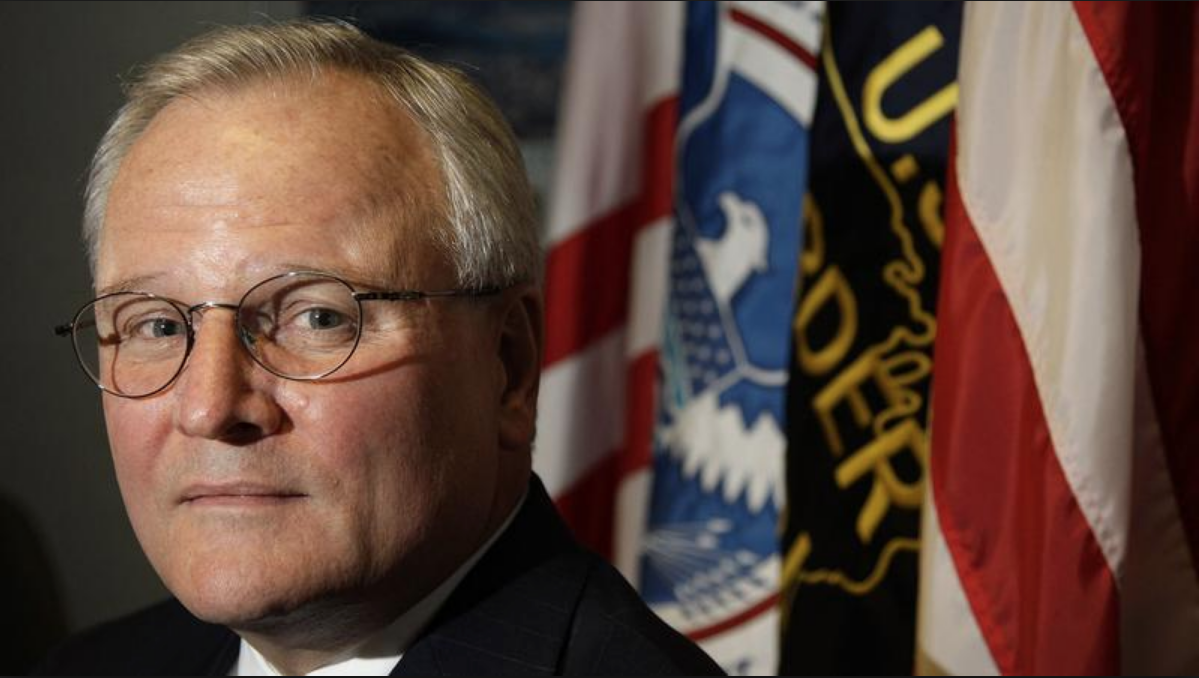
James Tomsheck, ex-chief of internal affairs at Customs and Border Protection.
Long before this hiring surge, back before the planes hit the towers, the U.S. Border Patrol consisted of a much smaller, looser network of individual outposts, and was considered a relatively minor figure within federal law enforcement. But the George W. Bush administration's reaction to 9/11 meant a big promotion for the backwater agency: hundreds of millions of dollars, Blackhawk helicopters, Predator drones, and an army of new agents. You name it, they got it. And this development might not have been such a disaster - many innocent lives could have been spared - if they had proceeded with more caution. But that didn't happen. The race to stop terror was on and the fledgling Department of Homeland Security gave the Border Patrol, among others, carte blanche to get the job done by any means necessary.
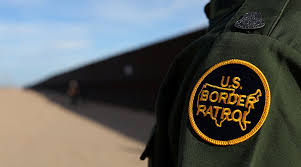
The U.S. Border Patrol operates in the hundreds of miles between various ports of entry.
What Went Wrong?
Rock-bottom hiring standards combined with a panicked rush to bring in thousands of new agents transformed the Border Patrol into a mecca for underqualified - and sometimes dangerous - people looking to get their hands on a badge, a gun, and a federal job. It wasn’t long before Jim Tomsheck and his counterparts at the FBI learned that Mexican cartel members had infiltrated the very agency charged with stopping them. In fact, by 2012, the FBI viewed Customs and Border Protection, now the largest federal law enforcement agency, as the number one criminal threat to the United States. Amidst these peaking levels of Border Patrol corruption and violence, Tomsheck was given an astonishing order by his boss: falsify the report on Anastasio Hernández-Rojas to make his death appear justifiable.
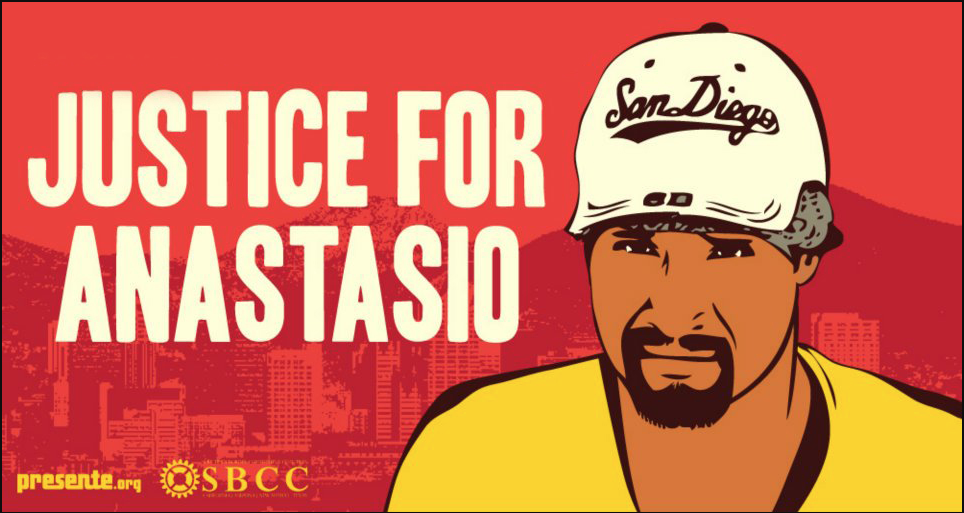
Agents were not aware that the attack on Anastacio Hernández-Rojas was being recorded.
A History of Violence
The Border Patrol has historically refused to hold their own agents accountable for taking the lives of unarmed people like Anastasio Hernández-Rojas, who, after being hogtied, beaten, and tasered by a swarm of U.S. border personnel from CBP and ICE at the San Ysidro border crossing, died in a hospital days later. Or José Antonio Elena Rodríguez, a sixteen-year-old boy who, walking home at night after playing basketball in Nogales, was shot through the border fence 10 times in the back and head by Border Patrol agent Lonnie Swartz. In every one of these deaths - Sergio, Anastasio, and José – Border Patrol agents and administration took startling measures to obfuscate the facts of what happened.
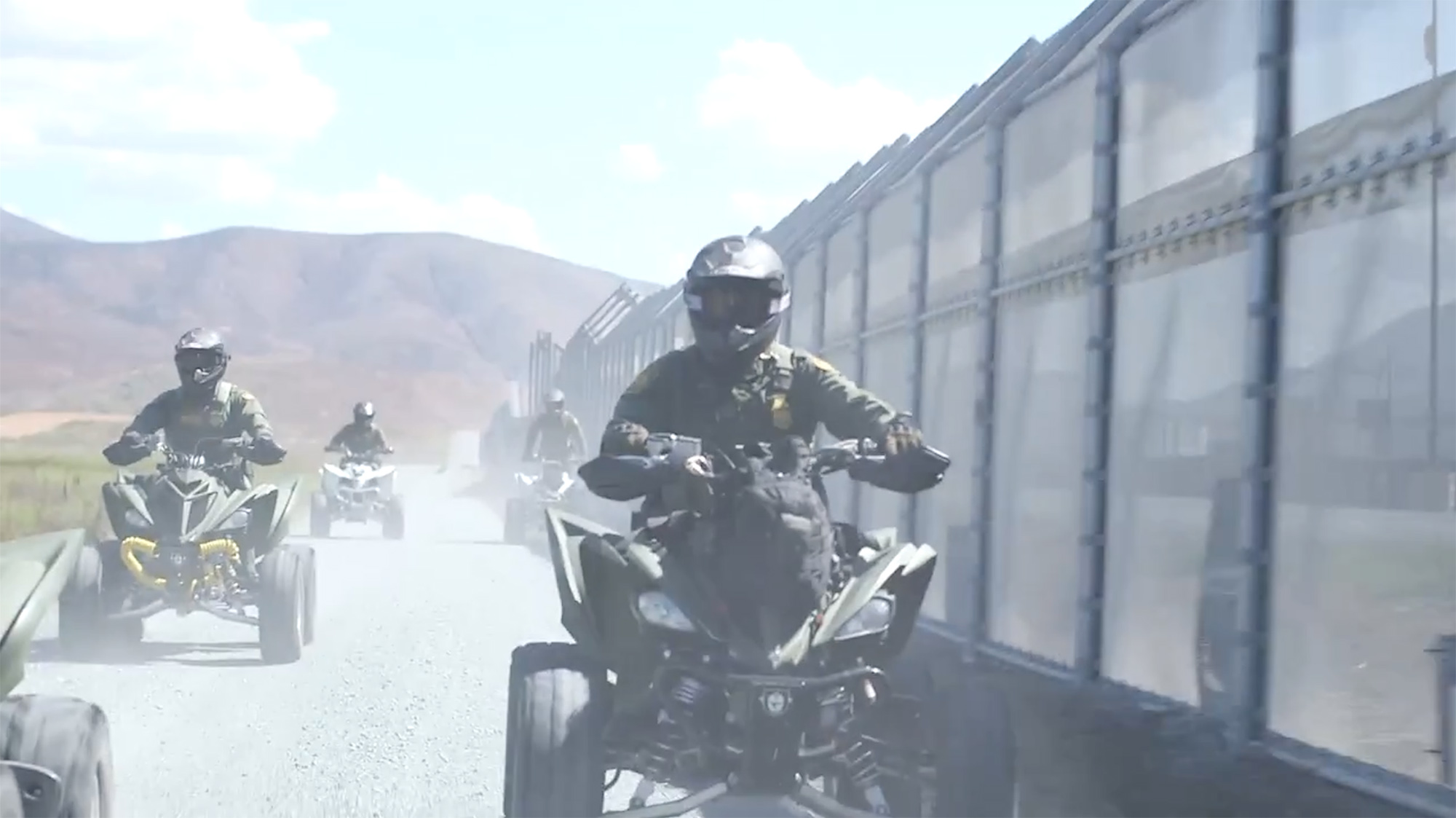
The Search for Justice
Today, after years of litigation – the Supreme Court’s non-decision in Hernandez v. Mesa, the Trump administration’s refusal to recognize the Inter-American Commission on Human Rights’ requests for a hearing regarding the death of Anastasio Hernández-Rojas, and the current, second-degree murder trial against Border Patrol agent Lonnie Swartz for killing José Antonio Elena Rodríguez – still no agent has ever been held accountable for a cross-border death. But the families of victims and their advocates continue to fight for justice.
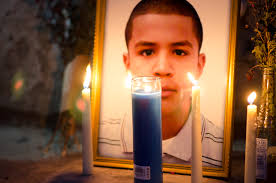
16-year-old José Antonio Elena Rodríguez was killed by a BP agent in 2012.
Trump's Army on the Border
In June 2015, Donald Trump’s candidacy unofficially and infamously kicked off inside of a Trump Tower elevator: “I would build a great wall, and nobody builds walls better than me...and I will make Mexico pay for that wall." The following month, on his first high-profile campaign trip, Trump traveled to the U.S./Mexico border, solidifying his relationship with the National Border Patrol Council (NBPC). Later a guest on the NBPC's weekly podcast, The Green Line, Trump told agents that he was going to finally allow them to do their jobs. As former POLITICO editor Garrett Graff told us: "Within probably the entire federal government, there is no group or workforce more closely aligned with the Trump administration than the agents of the Border Patrol union."
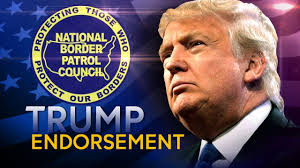
The NBPC - who represents thousands of agents - endorsed Donald Trump for president.
History Repeating?
The future of law enforcement at the U.S. border with Mexico remains precarious and unsettling: President Trump’s executive order to hire 5,000 new Border Patrol agents, alongside a proposal from Congress to significantly weaken hiring standards at CBP, portend yet another disaster at the agency. The time for this story to be told is now. We must take collective and immediate action to prevent this shameful past from needlessly repeating. Having devoted the last 15 months of our lives to this subject, we are particularly well-positioned to contribute to the public conversation demanding that U.S. Congress and CBP make serious and lasting reforms now.
*********
Note: Your donation is tax deductible! THE THIN GREEN LINE is a fiscally sponsored project of the International Documentary Association (IDA), a 501(c)(3) nonprofit organization. Contributions in support of THE THIN GREEN LINE are payable to IDA and are tax deductible, less the value of any goods or services received, as allowed by law. The value of goods and services being offered is noted under each donation level. If you would like to deduct the entire donation you have the option to simply decline the reward at checkout.
Wishlist
Use the WishList to Pledge cash and Loan items - or - Make a pledge by selecting an Incentive directly.
Sennheiser MKH416 Supercardioid Mic
Costs $1,000
High-quality sound is essential for documentaries and the Sennheiser is an industry standard.
Cash Pledge
Costs $0
LLC Costs
Costs $2,000
Administrative costs associated with The Thin Green Line LLC.
Sachtler Ace M Tripod
Costs $620
A heavy-duty tripod built to last.
iPad Mini 4
Costs $300
We'll use this to remotely pilot our DJI Phantom 4 drone.
27" iMac w/ 5K Display
Costs $2,879
This computer will allow us to edit our 4K footage without issue.
Lowel Rifa-Lite EX55 Light Kit + Sandbag + Extra Light
Costs $470
Light kit is essential for a professional look for interviews.
Two AngelBird 64GB SD and Six AngelBird 128GB SD Cards
Costs $1,460
These top-quality SD cards are necessary to handle our 4K 10-bit footage.
Panasonic DMW-XLR1 XLR Microphone Adapter
Costs $400
This device allows the GH5 to capture high-quality sound in conjunction with a shotgun mic.
Four Samsung 1TB SSD 860 EVO SATA III 2.5”
Costs $1,160
We'll be filming on the road for weeks and require lots of storage space for footage.
Video and Sound Equipment
Costs $1,268
Accessories and equipment to complete filming kit for THE THIN GREEN LINE.
Rokinon 10mm & 85mm Cine Lenses, and Sigma 18-35mm Lens
Costs $1,500
High-quality lenses for every situation: seated for an interview, inside of a car, and on the move.
Panasonic GH5
Costs $1,550
We are particularly excited about the GH5!
Motels
Costs $2,100
Motels for our final phase of production across the border; hotel room for interview subject.
Food
Costs $3,200
Food for the road during our final phase of production along the border.
Gasoline & Flight
Costs $1,320
Gasoline to drive across the entire U.S. / Mexico border; flight for interview subject.
Original Score
Costs $1,500
Original music to augment the tone of the film, composed by Jeremy Scott.
Cost of Living
Costs $16,150
Our total living expenses to complete THE THIN GREEN LINE all the way through post-production.
Professional Crew
Costs $1,500
Directors of Photography and Sound Recordists for our most complex and critical remaining shoots.


Direct link:
Share this update!
About This Team

Max Cheney (Director/Producer)
Max Cheney is a Los Angeles filmmaker. Last year, he directed, edited, and co-wrote (with Jeremy Scott) the short documentary Dead Mall Walking about the long-abandoned Hawthorne Plaza Shopping Center near LAX. He recently completed El Zócalo, a short documentary on the workers in the dynamic center square of Oaxaca City in Southern Mexico. Max lived for many years in Central and Southern Mexico, where he became fluent in Spanish and first became interested in the complex relationship between the U.S. and Mexico. He currently works as a researcher for the true crime documentary series Criminal Confessions.
 Jeremy Scott (Director/Producer)
Jeremy has collaborated with Max on several previous short documentaries, including Dead Mall Walking and El Zócalo. Along with Max, Jeremy directed the music video, I'm Not Crazy (You Are), for his musical project Body Song, which was an Official Selection at San Diego Film Week 2017. Having lived within 15 miles of the U.S./Mexico border for over a decade, Jeremy brings to THE THIN GREEN LINE a passion for social justice and history to contexualize the intricate topics of immigration and border enforcement.

Toni Bell (Expert Advisor)
Toni Bell is the Filmmaker Services Manager at the International Documentary Association. With the organization since 2015, she runs the day to day operations of the Fiscal Sponsorship Program, and supports the operation and growth of other IDA filmmaker services, including but not limited to grants and funding initiatives, online resources, works in progress screenings, and other services for documentary filmmakers at all professional levels. She has an M.A. in Visual Anthropology from USC, an M.F.A in Creative Writing from Naropa University and a certificate in professional screenwriting from UCLA. She has been a featured speaker at film conferences, universities, a mentor for documentary festival labs, and a member of several documentary feature juries.

Monet Malek (Consulting Editor)
Monet Malek is a Jane-of-all-trades editor whose one true love is storytelling. Craving to tell beautiful, thought-provoking stories at every turn she delved into the worlds of color, sound and visual effects as well. She graduated with a B.A. in Film + Aesthetics from the Johnston Center of Integrative Studies at the University of Redlands. Monet has edited narrative, docu-series and commercial projects for FX, Comedy Central, Warner Bros, Legendary, YouTubeRED, Go90, The Food Network, Xbox, Purina and Pepsi among others. Her most recent work was on a critically acclaimed series for the Sundance Channel called This Close that recently premiered at the Sundance Film Festival.

Jazmin Jamias (Director of Photography: Washington D.C. and San Francisco)
Jazmin Jamias is a Bay Area filmmaker. She graduated from SFSU with a degree in Cinema and an emphasis in fictional filmmaking. Her final short student documentary, The Altered Lives of LaVonne Salleé, won two audience awards and a best documentary award. The film is currently part of the online program “Frameline Voices.” Jazmin is currently touring with her senior thesis film, I Hate the Color Red, which she wrote, edited and directed. The film has screened in over 30 film festivals and has garnered several awards, including the Good Life audience award from Bernal Heights Outdoor Cinema. I Hate the Color Red also received Honorable mentions from DisOrient Film Festival of Oregon and Asian American International film festival in New York. Jazmin was also an assistant editor on the feature-length documentary Happy, which can be found on Netflix and several other platforms.

Sinjun Balabanoff (Director of Photography: Juarez, MX and San Diego, CA)
Sinjun has been a cinematographer and filmmaker for over 8 years and is currently working as a videographer at San Diego Zoo Global.

Rayell Abad (Location Sound Mixer: Juarez, MX)
Rayell Abad Guangorena is a location sound mixer, boom operator, voice actor and musician with a B.A. in Digital Media Production w/ Commercial Music & Recording at the University of Texas at El Paso. He also received a certification by Estudios Gálaz at Mexico City for 5.1 Surround Sound Mixing. As a location sound mixer, Rayell has worked with bands such as: Papa Roach, Molotov, The Mars Volta and Omar Rodriguez-Lopez. In 2016, Rayell featured as Sound Mixer for feature film Paranoid Flux (2017) official selection at : Miami Independent Film Festival, Silver Screen FF, L.A Underground Film Forum, Austin Indie Fest, Plaza Classic FF and Nevada International Film Festival.
Home + Away (2018) directed by Matt Ogens and featuring Rayell as a Location Sound Mixer will premiere at Tribeca Film Festival in April 2018. In the present, Rayell continues to work in Mexico as a Sound Mixer in an Amy Berg´s (Academy Award Nominee) undisclosed feature documentary and in an upcoming Netflix´s series ¨The Bunker¨. Rayell is fluent in Spanish, English and German.

Stuart Schenk (Sound Mixing)
Stuart Schenk is a Grammy-award winning sound engineer who has recorded and mixed sound for Stevie Wonder, Christina Aguilera, Macy Gray, and many more.
Current Team
Incentives
- The Story
- Wishlist
- Updates
- The Team
- Community
Mission Statement
The Story
A Slow-Burning Scandal
When Mexican police found the lifeless body of fifteen-year-old Sergio Hernández on the blood-soaked concrete, U.S. Border Patrol agent Jesus Mesa had already fled the scene. The official story was that Sergio and his three friends, having surrounded the agent, were pelting him with rocks when Mesa’s firearm accidentally discharged. It was a lie, and James Tomsheck knew it. He had already seen the security footage, which showed Sergio’s slight frame peering out from behind a pillar just moments before the flash and peel of Mesa’s carefully aimed gun put a bullet between the boy’s eyes, killing him instantly.
The agent who killed Sergio Hernández has never been held accountable.
9/11 and Border Militarization
Four years earlier, in 2006, when Tomsheck was brought into the newly created Customs and Border Protection (CBP) agency as the chief of internal affairs, the Border Patrol had just been ordered by Congress to rapidly hire ten thousand new agents. This mandate constituted the largest hiring initiative in modern U.S. law enforcement history.
James Tomsheck, ex-chief of internal affairs at Customs and Border Protection.
Long before this hiring surge, back before the planes hit the towers, the U.S. Border Patrol consisted of a much smaller, looser network of individual outposts, and was considered a relatively minor figure within federal law enforcement. But the George W. Bush administration's reaction to 9/11 meant a big promotion for the backwater agency: hundreds of millions of dollars, Blackhawk helicopters, Predator drones, and an army of new agents. You name it, they got it. And this development might not have been such a disaster - many innocent lives could have been spared - if they had proceeded with more caution. But that didn't happen. The race to stop terror was on and the fledgling Department of Homeland Security gave the Border Patrol, among others, carte blanche to get the job done by any means necessary.
The U.S. Border Patrol operates in the hundreds of miles between various ports of entry.
What Went Wrong?
Rock-bottom hiring standards combined with a panicked rush to bring in thousands of new agents transformed the Border Patrol into a mecca for underqualified - and sometimes dangerous - people looking to get their hands on a badge, a gun, and a federal job. It wasn’t long before Jim Tomsheck and his counterparts at the FBI learned that Mexican cartel members had infiltrated the very agency charged with stopping them. In fact, by 2012, the FBI viewed Customs and Border Protection, now the largest federal law enforcement agency, as the number one criminal threat to the United States. Amidst these peaking levels of Border Patrol corruption and violence, Tomsheck was given an astonishing order by his boss: falsify the report on Anastasio Hernández-Rojas to make his death appear justifiable.
Agents were not aware that the attack on Anastacio Hernández-Rojas was being recorded.
A History of Violence
The Border Patrol has historically refused to hold their own agents accountable for taking the lives of unarmed people like Anastasio Hernández-Rojas, who, after being hogtied, beaten, and tasered by a swarm of U.S. border personnel from CBP and ICE at the San Ysidro border crossing, died in a hospital days later. Or José Antonio Elena Rodríguez, a sixteen-year-old boy who, walking home at night after playing basketball in Nogales, was shot through the border fence 10 times in the back and head by Border Patrol agent Lonnie Swartz. In every one of these deaths - Sergio, Anastasio, and José – Border Patrol agents and administration took startling measures to obfuscate the facts of what happened.
The Search for Justice
Today, after years of litigation – the Supreme Court’s non-decision in Hernandez v. Mesa, the Trump administration’s refusal to recognize the Inter-American Commission on Human Rights’ requests for a hearing regarding the death of Anastasio Hernández-Rojas, and the current, second-degree murder trial against Border Patrol agent Lonnie Swartz for killing José Antonio Elena Rodríguez – still no agent has ever been held accountable for a cross-border death. But the families of victims and their advocates continue to fight for justice.
16-year-old José Antonio Elena Rodríguez was killed by a BP agent in 2012.
Trump's Army on the Border
In June 2015, Donald Trump’s candidacy unofficially and infamously kicked off inside of a Trump Tower elevator: “I would build a great wall, and nobody builds walls better than me...and I will make Mexico pay for that wall." The following month, on his first high-profile campaign trip, Trump traveled to the U.S./Mexico border, solidifying his relationship with the National Border Patrol Council (NBPC). Later a guest on the NBPC's weekly podcast, The Green Line, Trump told agents that he was going to finally allow them to do their jobs. As former POLITICO editor Garrett Graff told us: "Within probably the entire federal government, there is no group or workforce more closely aligned with the Trump administration than the agents of the Border Patrol union."
The NBPC - who represents thousands of agents - endorsed Donald Trump for president.
History Repeating?
The future of law enforcement at the U.S. border with Mexico remains precarious and unsettling: President Trump’s executive order to hire 5,000 new Border Patrol agents, alongside a proposal from Congress to significantly weaken hiring standards at CBP, portend yet another disaster at the agency. The time for this story to be told is now. We must take collective and immediate action to prevent this shameful past from needlessly repeating. Having devoted the last 15 months of our lives to this subject, we are particularly well-positioned to contribute to the public conversation demanding that U.S. Congress and CBP make serious and lasting reforms now.
*********
Note: Your donation is tax deductible! THE THIN GREEN LINE is a fiscally sponsored project of the International Documentary Association (IDA), a 501(c)(3) nonprofit organization. Contributions in support of THE THIN GREEN LINE are payable to IDA and are tax deductible, less the value of any goods or services received, as allowed by law. The value of goods and services being offered is noted under each donation level. If you would like to deduct the entire donation you have the option to simply decline the reward at checkout.
Wishlist
Use the WishList to Pledge cash and Loan items - or - Make a pledge by selecting an Incentive directly.
Sennheiser MKH416 Supercardioid Mic
Costs $1,000
High-quality sound is essential for documentaries and the Sennheiser is an industry standard.
Cash Pledge
Costs $0
LLC Costs
Costs $2,000
Administrative costs associated with The Thin Green Line LLC.
Sachtler Ace M Tripod
Costs $620
A heavy-duty tripod built to last.
iPad Mini 4
Costs $300
We'll use this to remotely pilot our DJI Phantom 4 drone.
27" iMac w/ 5K Display
Costs $2,879
This computer will allow us to edit our 4K footage without issue.
Lowel Rifa-Lite EX55 Light Kit + Sandbag + Extra Light
Costs $470
Light kit is essential for a professional look for interviews.
Two AngelBird 64GB SD and Six AngelBird 128GB SD Cards
Costs $1,460
These top-quality SD cards are necessary to handle our 4K 10-bit footage.
Panasonic DMW-XLR1 XLR Microphone Adapter
Costs $400
This device allows the GH5 to capture high-quality sound in conjunction with a shotgun mic.
Four Samsung 1TB SSD 860 EVO SATA III 2.5”
Costs $1,160
We'll be filming on the road for weeks and require lots of storage space for footage.
Video and Sound Equipment
Costs $1,268
Accessories and equipment to complete filming kit for THE THIN GREEN LINE.
Rokinon 10mm & 85mm Cine Lenses, and Sigma 18-35mm Lens
Costs $1,500
High-quality lenses for every situation: seated for an interview, inside of a car, and on the move.
Panasonic GH5
Costs $1,550
We are particularly excited about the GH5!
Motels
Costs $2,100
Motels for our final phase of production across the border; hotel room for interview subject.
Food
Costs $3,200
Food for the road during our final phase of production along the border.
Gasoline & Flight
Costs $1,320
Gasoline to drive across the entire U.S. / Mexico border; flight for interview subject.
Original Score
Costs $1,500
Original music to augment the tone of the film, composed by Jeremy Scott.
Cost of Living
Costs $16,150
Our total living expenses to complete THE THIN GREEN LINE all the way through post-production.
Professional Crew
Costs $1,500
Directors of Photography and Sound Recordists for our most complex and critical remaining shoots.
Direct link:
Share this update!
About This Team
Max Cheney (Director/Producer)
Max Cheney is a Los Angeles filmmaker. Last year, he directed, edited, and co-wrote (with Jeremy Scott) the short documentary Dead Mall Walking about the long-abandoned Hawthorne Plaza Shopping Center near LAX. He recently completed El Zócalo, a short documentary on the workers in the dynamic center square of Oaxaca City in Southern Mexico. Max lived for many years in Central and Southern Mexico, where he became fluent in Spanish and first became interested in the complex relationship between the U.S. and Mexico. He currently works as a researcher for the true crime documentary series Criminal Confessions.
Jeremy Scott (Director/Producer)
Jeremy has collaborated with Max on several previous short documentaries, including Dead Mall Walking and El Zócalo. Along with Max, Jeremy directed the music video, I'm Not Crazy (You Are), for his musical project Body Song, which was an Official Selection at San Diego Film Week 2017. Having lived within 15 miles of the U.S./Mexico border for over a decade, Jeremy brings to THE THIN GREEN LINE a passion for social justice and history to contexualize the intricate topics of immigration and border enforcement.
Toni Bell (Expert Advisor)
Toni Bell is the Filmmaker Services Manager at the International Documentary Association. With the organization since 2015, she runs the day to day operations of the Fiscal Sponsorship Program, and supports the operation and growth of other IDA filmmaker services, including but not limited to grants and funding initiatives, online resources, works in progress screenings, and other services for documentary filmmakers at all professional levels. She has an M.A. in Visual Anthropology from USC, an M.F.A in Creative Writing from Naropa University and a certificate in professional screenwriting from UCLA. She has been a featured speaker at film conferences, universities, a mentor for documentary festival labs, and a member of several documentary feature juries.
Monet Malek (Consulting Editor)
Monet Malek is a Jane-of-all-trades editor whose one true love is storytelling. Craving to tell beautiful, thought-provoking stories at every turn she delved into the worlds of color, sound and visual effects as well. She graduated with a B.A. in Film + Aesthetics from the Johnston Center of Integrative Studies at the University of Redlands. Monet has edited narrative, docu-series and commercial projects for FX, Comedy Central, Warner Bros, Legendary, YouTubeRED, Go90, The Food Network, Xbox, Purina and Pepsi among others. Her most recent work was on a critically acclaimed series for the Sundance Channel called This Close that recently premiered at the Sundance Film Festival.
Jazmin Jamias (Director of Photography: Washington D.C. and San Francisco)
Jazmin Jamias is a Bay Area filmmaker. She graduated from SFSU with a degree in Cinema and an emphasis in fictional filmmaking. Her final short student documentary, The Altered Lives of LaVonne Salleé, won two audience awards and a best documentary award. The film is currently part of the online program “Frameline Voices.” Jazmin is currently touring with her senior thesis film, I Hate the Color Red, which she wrote, edited and directed. The film has screened in over 30 film festivals and has garnered several awards, including the Good Life audience award from Bernal Heights Outdoor Cinema. I Hate the Color Red also received Honorable mentions from DisOrient Film Festival of Oregon and Asian American International film festival in New York. Jazmin was also an assistant editor on the feature-length documentary Happy, which can be found on Netflix and several other platforms.
Sinjun Balabanoff (Director of Photography: Juarez, MX and San Diego, CA)
Sinjun has been a cinematographer and filmmaker for over 8 years and is currently working as a videographer at San Diego Zoo Global.
Rayell Abad (Location Sound Mixer: Juarez, MX)
Rayell Abad Guangorena is a location sound mixer, boom operator, voice actor and musician with a B.A. in Digital Media Production w/ Commercial Music & Recording at the University of Texas at El Paso. He also received a certification by Estudios Gálaz at Mexico City for 5.1 Surround Sound Mixing. As a location sound mixer, Rayell has worked with bands such as: Papa Roach, Molotov, The Mars Volta and Omar Rodriguez-Lopez. In 2016, Rayell featured as Sound Mixer for feature film Paranoid Flux (2017) official selection at : Miami Independent Film Festival, Silver Screen FF, L.A Underground Film Forum, Austin Indie Fest, Plaza Classic FF and Nevada International Film Festival.
Home + Away (2018) directed by Matt Ogens and featuring Rayell as a Location Sound Mixer will premiere at Tribeca Film Festival in April 2018. In the present, Rayell continues to work in Mexico as a Sound Mixer in an Amy Berg´s (Academy Award Nominee) undisclosed feature documentary and in an upcoming Netflix´s series ¨The Bunker¨. Rayell is fluent in Spanish, English and German.
Stuart Schenk (Sound Mixing)
Stuart Schenk is a Grammy-award winning sound engineer who has recorded and mixed sound for Stevie Wonder, Christina Aguilera, Macy Gray, and many more.