Wood Street
Oakland, California | Film Feature
Documentary
WOOD STREET centers on John and LaMonté—two unhoused men turned community leaders—who organize their neighbors in the face of displacement, addiction, and a failing social system. Their story is a powerful testament to resilience, solidarity, and the right to remain.

Green Light
This campaign raised $25,665 for post-production. Follow the filmmaker to receive future updates on this project.
247 supporters | followers
Enter the amount you would like to pledge
WOOD STREET centers on John and LaMonté—two unhoused men turned community leaders—who organize their neighbors in the face of displacement, addiction, and a failing social system. Their story is a powerful testament to resilience, solidarity, and the right to remain.
About The Project


- The Story
- Wishlist
- Updates
- The Team
- Community
Mission Statement
The Story
WOOD STREET shows a year in the life of Oakland’s largest homeless encampment as there’s a countdown to evict them. Members of the community come together to file lawsuits, attend city council meetings, and camp outside city hall. Despite eventually losing their community, WOOD STREET is an empowering story of unhoused organizing that has never before been told.
The story follows John Janosko and LaMonté Ford. They lead the resistance movement, and face challenges organizing a diverse community struggling with addiction and mental health issues. Amid their organizing to stop the eviction, the community meets with the city to discuss plans for a temporary shelter site. But ultimately, they are unsuccessful in changing a broken system, and saving their community.
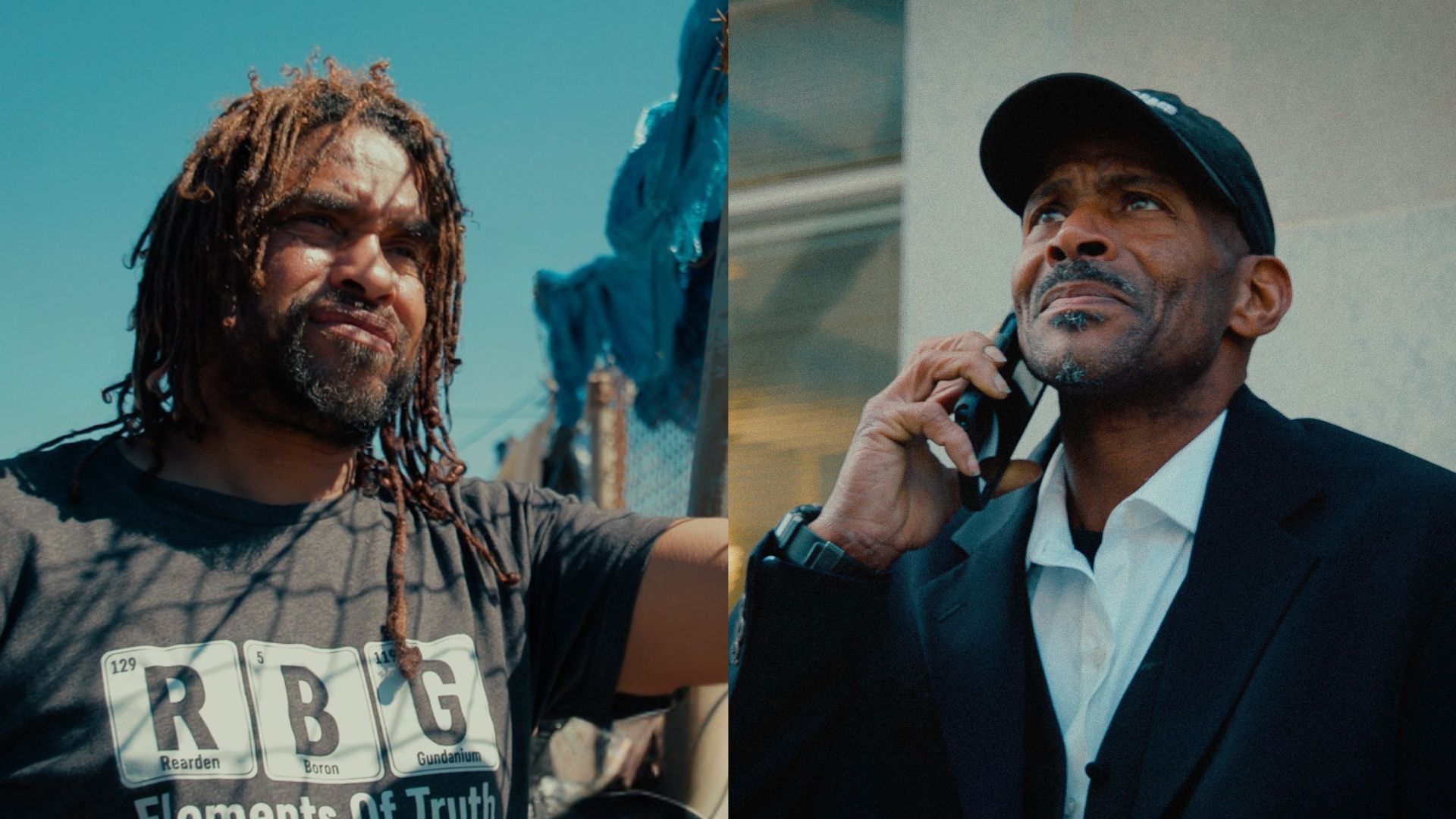 John Janosko (left) and LaMonté Ford (right) are leaders in the Wood Street community, and the main participants in the film.
California provides millions of dollars in grants to cities to forcibly remove unhoused people from sight. But cities like Oakland often don’t keep track of the results, offering limited data on how many people actually move into permanent housing. WOOD STREET is an empowering example of a community rallying together in an attempt to change things for the better.
 (16 x 4 in) (12 x 2 in) (12 x 1 in) (1).jpg)
In June 2024, the U.S. Supreme Court ruled on the City of Grants Pass v. Johnson, making it legal to ban people from sleeping outside without available alternative shelter– essentially criminalizing homelessness. Dissenting Justice Sotomayor wrote that the ruling “leaves the most vulnerable in our society with an impossible choice: Either stay awake or be arrested.”
Just days after the ruling, a number of cities across the country followed suit– Manchester, New Hampshire was the first to pass a camping ban, with fines of up to $250. In Lakewood, Washington, a camping ban threatens trespassing charges and arrest. In Española, New Mexico, sleeping on public property is a misdemeanor that can lead to arrest. In the Bay Area, San Francisco leads the way, cracking down on homeless encampments, arresting roughly 300 people in 2024 and counting. The Wood Street story is an urgent example of how anti-homeless policies will devastate unhoused communities across the country, by fining, ticketing, arresting and forcibly removing people for the crime of living in public.
Dominant narratives that dehumanize unhoused people contribute to these threats. By contrast, new and self-determined narratives like WOOD STREET can influence people’s attitudes and inspire them to take action to support housing justice.
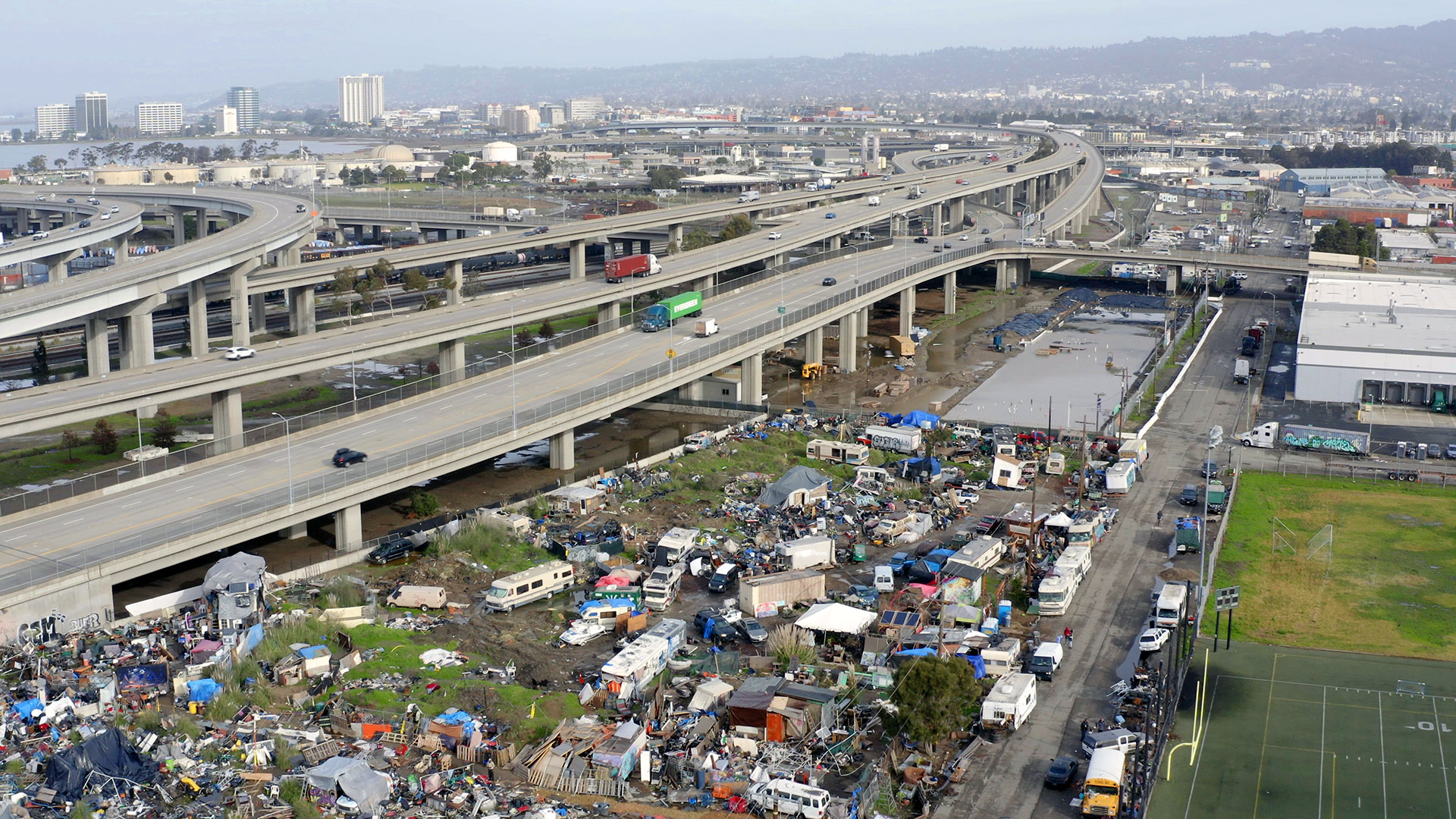
Overhead view of the Wood Street encampment early 2023.
 (16 x 4 in) (12 x 2 in) (12 x 1 in) (2).jpg)
WOOD STREET is a film made in partnership with the Wood Street Commons community. Since facing eviction, the Wood Street community has come together to form a non-profit organization. They are working with architect Mike Pyatok to design and fundraise to build multi-layered affordable housing that meets people where they're at. You can learn more about their work on their website.
The filmmaking team is in continual contact with John, LaMonté and the rest of the Wood Street community. We show scenes to the film's participants as we cut them, and keep the community updated on our progress. We are planning an impact campaign that centers the community, with the goal of supporting their work.
So far the project has received support from the Sundance Institute, SF Film, Bay Area Video Coalition, the Berkeley Film Foundation, Black Public Media, and other institutions. Director Caron Creighton has worked as a journalist in the Bay Area for years, and reported extensively on the Wood Street community for The San Francisco Chronicle before leaving her job to pursue making this film. Caron's dedication to reporting on homelessness has created a strong base of understanding and connection with the Wood Street community, allowing for an intimate portrait of this community and their activism.
 (16 x 4 in) (12 x 2 in) (12 x 1 in) (3).jpg)
We are working with Dr. Jeffrey Schonberg and filmmaker Amir Soltani as advisors on the film. Dr. Schonberg has over 20 years of experience working with unhoused communities as a professor of medical and visual anthropology. Amir produced and directed the film Dogtown Redemption (2015) about homeless recyclers in West Oakland. They have both been essential resources in developing ethical filmmaking practices.
We believe that continual and open communication is the only way to make a film about unhoused communities. The Wood Street Community's input in the film will be critical to it's success, and is essential to make sure that we are taking everyone's wellbeing into consideration. The Wood Street Community will be an important part of the film's impact campaign, attending screenings and film festivals, and using the film to promote their own projects.
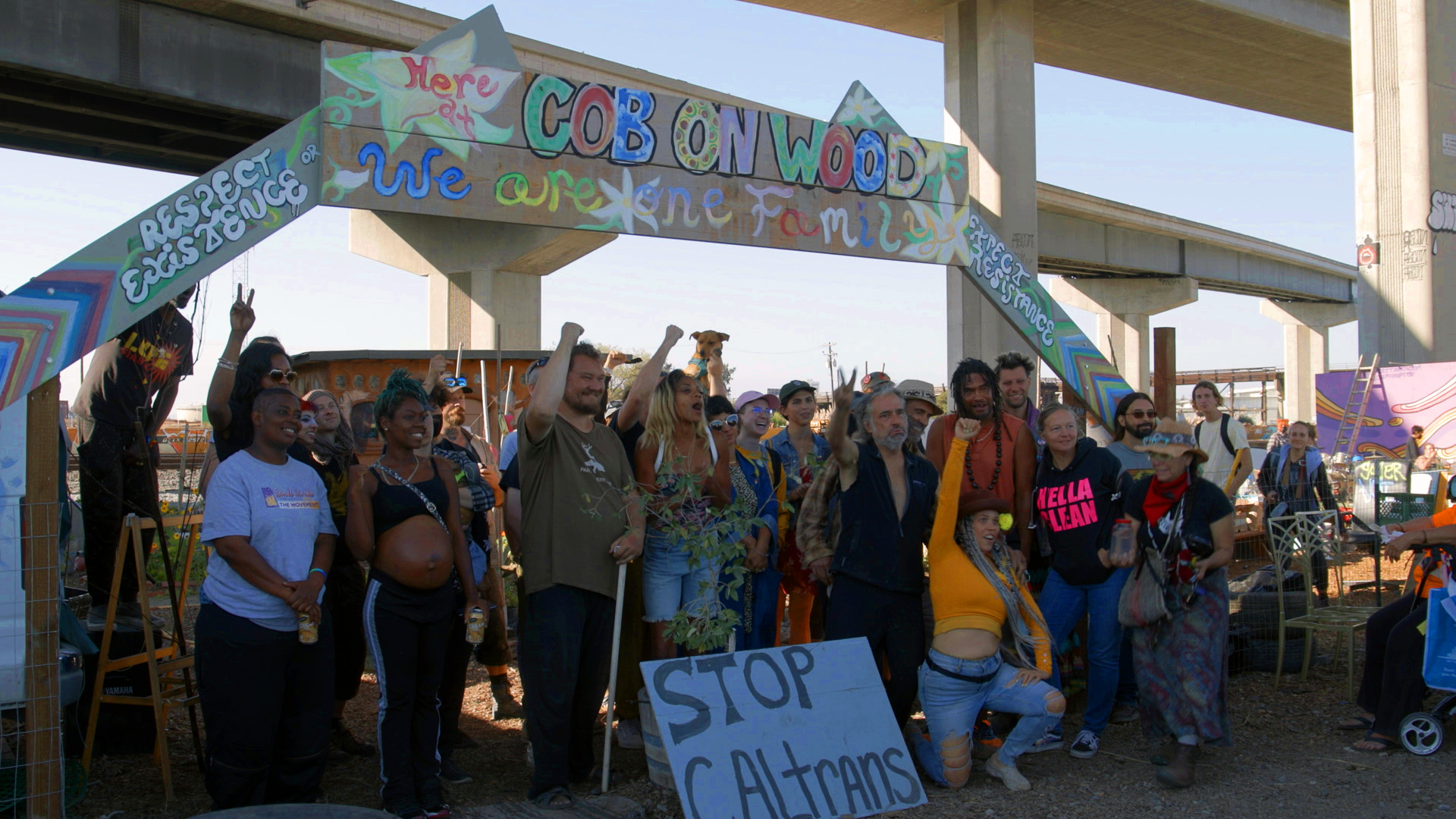
Members of the Wood Street Community at Cob on Wood, circa 2022.
 (16 x 4 in) (12 x 2 in) (12 x 1 in) (4).jpg)
Creating an independent feature film is expensive! If we're able to hit our initial funding goal, any additional donations will be used for the film's impact campaign. We plan to bring the film, the team, and participants to festivals across the country so they can bring the work of the Wood Street community nationwide. That cost includes flights, hotels, food, and other expenses, so we will definitely need more than our 25k goal to achieve our dream of bringing Wood Street across the country. Any donation helps!
Here are three ways you can help support our film:
- You can PLEDGE a donation to our project to help us finish the edit and bring the film to the world in 2026. Any amount helps!
- SHARE our campaign page with 3 friends who you think might be interested in learning more.
- Click the blue "FOLLOW" button at the top of our crowdfunding page – totally free!
.jpg)
Wishlist
Use the WishList to Pledge cash and Loan items - or - Make a pledge by selecting an Incentive directly.
Composer
Costs $9,000
We plan to work with Bay Area-based composer Tyler Blomstrom-Moore to create an original jazz score for the film.
Sound Design
Costs $8,000
We plan to work with Oakland-based post-production studio Roast n Post to complete sound design on the film.
Color Correction
Costs $8,000
We plan to work with Oakland-based post-production studio Roast n Post to complete color correction on the film.
Cash Pledge
Costs $0


Direct link:
Share this update!
About This Team
Caron Creighton (DIRECTOR) is an award winning journalist and filmmaker residing in the Bay Area. Her feature documentary Wood Street has received support from the 2023/24 SF Film FilmHouse Residency, the 2024 Big Sky Pitch, and the 2024 BAVC MediaMaker Fellowship. In 2025, Wood Street participated in Black Public Media’s PitchBlack Forum in New York, and won the Realscreen Pitch competition in Miami. She also earned this year's UFO x Peace is Loud Impact-Post residency, and is part of the Sundance Cultural Impact Residency inaugural cohort. Caron has worked for The Associated Press, AJ+ and The San Francisco Chronicle and has lectured at the UC Berkeley Graduate School of Journalism. She has reported on the struggles faced by Eritrean migrants in Israel, and West African migration through Latin America. Much of her work is focused on displacement within the African diaspora, as informed by her identity.
Estevan Padilla (PRODUCER) is a Mexican-American filmmaker and photographer from Eagle River, Alaska. He is 1/2 of LvL Films, a production company based in San Francisco that focuses on branded content and feature films. He started his career working on major motion pictures for Marvel, Warner Brothers, HBO, and numerous other studios. From there, he turned his attention to the commercial world where he worked as a commercial producer for many of the world's largest brands. More recently, he has shifted his focus towards work that aligns with his values, including socially conscious projects all around the world. As a producer, his first film, The 50, debuted at Doc NYC in 2022 which also screened at Santa Barbara Film Festival, Big Sky Doc Fest, SFF DOC Fest and was acquired by Grasshopper Film. Estevan is an SFFILM supported filmmaker.
Current Team
Incentives
- The Story
- Wishlist
- Updates
- The Team
- Community
Mission Statement
The Story
WOOD STREET shows a year in the life of Oakland’s largest homeless encampment as there’s a countdown to evict them. Members of the community come together to file lawsuits, attend city council meetings, and camp outside city hall. Despite eventually losing their community, WOOD STREET is an empowering story of unhoused organizing that has never before been told.
The story follows John Janosko and LaMonté Ford. They lead the resistance movement, and face challenges organizing a diverse community struggling with addiction and mental health issues. Amid their organizing to stop the eviction, the community meets with the city to discuss plans for a temporary shelter site. But ultimately, they are unsuccessful in changing a broken system, and saving their community.
John Janosko (left) and LaMonté Ford (right) are leaders in the Wood Street community, and the main participants in the film.
California provides millions of dollars in grants to cities to forcibly remove unhoused people from sight. But cities like Oakland often don’t keep track of the results, offering limited data on how many people actually move into permanent housing. WOOD STREET is an empowering example of a community rallying together in an attempt to change things for the better.
In June 2024, the U.S. Supreme Court ruled on the City of Grants Pass v. Johnson, making it legal to ban people from sleeping outside without available alternative shelter– essentially criminalizing homelessness. Dissenting Justice Sotomayor wrote that the ruling “leaves the most vulnerable in our society with an impossible choice: Either stay awake or be arrested.”
Just days after the ruling, a number of cities across the country followed suit– Manchester, New Hampshire was the first to pass a camping ban, with fines of up to $250. In Lakewood, Washington, a camping ban threatens trespassing charges and arrest. In Española, New Mexico, sleeping on public property is a misdemeanor that can lead to arrest. In the Bay Area, San Francisco leads the way, cracking down on homeless encampments, arresting roughly 300 people in 2024 and counting. The Wood Street story is an urgent example of how anti-homeless policies will devastate unhoused communities across the country, by fining, ticketing, arresting and forcibly removing people for the crime of living in public.
Dominant narratives that dehumanize unhoused people contribute to these threats. By contrast, new and self-determined narratives like WOOD STREET can influence people’s attitudes and inspire them to take action to support housing justice.
Overhead view of the Wood Street encampment early 2023.
WOOD STREET is a film made in partnership with the Wood Street Commons community. Since facing eviction, the Wood Street community has come together to form a non-profit organization. They are working with architect Mike Pyatok to design and fundraise to build multi-layered affordable housing that meets people where they're at. You can learn more about their work on their website.
The filmmaking team is in continual contact with John, LaMonté and the rest of the Wood Street community. We show scenes to the film's participants as we cut them, and keep the community updated on our progress. We are planning an impact campaign that centers the community, with the goal of supporting their work.
So far the project has received support from the Sundance Institute, SF Film, Bay Area Video Coalition, the Berkeley Film Foundation, Black Public Media, and other institutions. Director Caron Creighton has worked as a journalist in the Bay Area for years, and reported extensively on the Wood Street community for The San Francisco Chronicle before leaving her job to pursue making this film. Caron's dedication to reporting on homelessness has created a strong base of understanding and connection with the Wood Street community, allowing for an intimate portrait of this community and their activism.
We are working with Dr. Jeffrey Schonberg and filmmaker Amir Soltani as advisors on the film. Dr. Schonberg has over 20 years of experience working with unhoused communities as a professor of medical and visual anthropology. Amir produced and directed the film Dogtown Redemption (2015) about homeless recyclers in West Oakland. They have both been essential resources in developing ethical filmmaking practices.
We believe that continual and open communication is the only way to make a film about unhoused communities. The Wood Street Community's input in the film will be critical to it's success, and is essential to make sure that we are taking everyone's wellbeing into consideration. The Wood Street Community will be an important part of the film's impact campaign, attending screenings and film festivals, and using the film to promote their own projects.
Members of the Wood Street Community at Cob on Wood, circa 2022.
Creating an independent feature film is expensive! If we're able to hit our initial funding goal, any additional donations will be used for the film's impact campaign. We plan to bring the film, the team, and participants to festivals across the country so they can bring the work of the Wood Street community nationwide. That cost includes flights, hotels, food, and other expenses, so we will definitely need more than our 25k goal to achieve our dream of bringing Wood Street across the country. Any donation helps!
Here are three ways you can help support our film:
- You can PLEDGE a donation to our project to help us finish the edit and bring the film to the world in 2026. Any amount helps!
- SHARE our campaign page with 3 friends who you think might be interested in learning more.
- Click the blue "FOLLOW" button at the top of our crowdfunding page – totally free!
Wishlist
Use the WishList to Pledge cash and Loan items - or - Make a pledge by selecting an Incentive directly.
Composer
Costs $9,000
We plan to work with Bay Area-based composer Tyler Blomstrom-Moore to create an original jazz score for the film.
Sound Design
Costs $8,000
We plan to work with Oakland-based post-production studio Roast n Post to complete sound design on the film.
Color Correction
Costs $8,000
We plan to work with Oakland-based post-production studio Roast n Post to complete color correction on the film.
Cash Pledge
Costs $0
Direct link:
Share this update!
About This Team
Caron Creighton (DIRECTOR) is an award winning journalist and filmmaker residing in the Bay Area. Her feature documentary Wood Street has received support from the 2023/24 SF Film FilmHouse Residency, the 2024 Big Sky Pitch, and the 2024 BAVC MediaMaker Fellowship. In 2025, Wood Street participated in Black Public Media’s PitchBlack Forum in New York, and won the Realscreen Pitch competition in Miami. She also earned this year's UFO x Peace is Loud Impact-Post residency, and is part of the Sundance Cultural Impact Residency inaugural cohort. Caron has worked for The Associated Press, AJ+ and The San Francisco Chronicle and has lectured at the UC Berkeley Graduate School of Journalism. She has reported on the struggles faced by Eritrean migrants in Israel, and West African migration through Latin America. Much of her work is focused on displacement within the African diaspora, as informed by her identity.
Estevan Padilla (PRODUCER) is a Mexican-American filmmaker and photographer from Eagle River, Alaska. He is 1/2 of LvL Films, a production company based in San Francisco that focuses on branded content and feature films. He started his career working on major motion pictures for Marvel, Warner Brothers, HBO, and numerous other studios. From there, he turned his attention to the commercial world where he worked as a commercial producer for many of the world's largest brands. More recently, he has shifted his focus towards work that aligns with his values, including socially conscious projects all around the world. As a producer, his first film, The 50, debuted at Doc NYC in 2022 which also screened at Santa Barbara Film Festival, Big Sky Doc Fest, SFF DOC Fest and was acquired by Grasshopper Film. Estevan is an SFFILM supported filmmaker.