How to Grow a Ghost
Sacramento, California | Film Short
Other, Fantasy
A magical realist short on 35mm set in Cambodia, centering a diaspora couple facing the supernatural together, without reducing Southeast Asian life to trauma. If this story resonates, the simplest way to support right now is to follow the campaign.
How to Grow a Ghost
Sacramento, California | Film Short
Other, Fantasy

1 Campaigns | England, United Kingdom
Green Light
This campaign raised $6,355 for pre-production. Follow the filmmaker to receive future updates on this project.
49 supporters | followers
Enter the amount you would like to pledge
A magical realist short on 35mm set in Cambodia, centering a diaspora couple facing the supernatural together, without reducing Southeast Asian life to trauma. If this story resonates, the simplest way to support right now is to follow the campaign.
Participating In
About The Project


- The Story
- Wishlist
- Updates
- The Team
- Community
Mission Statement
The Story
How to Grow a Ghost is a supernatural short film.
A Khmer-led (diaspora) couple returning to Cambodia to help their family rebuild what the war left behind. Strange markings surface. Objects leave outlines where they once stood. Something unseen takes shape in the yard, not as a threat, but as a presence tied to memory and place.
We follow them as they build and tend to a small, yet larger than life, yet impossible creature: part ritual object, part memory device, part ghost. The film moves between daily labor and small acts of haunting: tape lines on the floor, soft objects that hold stories, and the slow, careful work of making something that remembers what a family could not say out loud.
Why this story, why now
This film is about how families carry history when the official record is missing or violent.
For many of us in the Southeast and East Asian diaspora, the afterlives of conflict live less in archives and more in gestures, habits, and small rituals. I’ve watched people I love be haunted by things they never saw on screen, and I’ve also watched them turn away from films that turn their pain into spectacle. This story doesn’t come from a desire to re‑stage harm; it comes from a need to heal. Most horror treats hauntings as threats. In the cultures I come from, spirits can also arrive to comfort, to warn, or to stitch something back together. How to Grow a Ghost starts there: with two people choosing to grow a ghost as an act of care, and seeing what kind of tenderness and difficulty that invites into their lives.
What sets this project apart
A lot of films about war and diaspora lean on flashbacks or big dramatic reveals. This one stays small and close. We’re interested in the everyday work of a marriage: how two people share chores, grief, jokes, and the strange decision to make a creature that might hold what they can’t say.
The haunting isn’t an accident here; the couple makes the ghost slowly, with their own hands, out of tape, fabric, and whatever they can find on the farm. We’re grounding the film on a working family farm in Cambodia, shooting on film stock, and paying attention to touch--fabric, soil, tape, the Loak itself. The ghost isn’t a jump scare; it’s something made and cared for. That mix of intimacy, rural Cambodian life, and a very physical ghost is what we want viewers to leave feeling they’ve spent time with a couple and a place, not just watched an issue illustrated.
Why me / us
I come from two wars:
The one my parents survived (the Killing Fields and the Secret War).
The one I ended up serving in, in Afghanistan.
Film is how I can sit with that without turning it into spectacle.
My short film Papaya has screened at AAPI festivals and brought me into a community of filmmakers who understand and respond to the work I’m trying to make. Those relationships are how this team formed: collaborators from the UK, China, Singapore, Japan, the US, and Cambodia who have seen what I do on small films and still want to build something more ambitious together. We’re bringing our different histories to a single, very specific place--a family farm--and to make a film that feels honest enough that we can all stand by it when it’s done.
Why now (and why the AAPI Rally)
Conversations about AAPI and Southeast Asian stories are growing, but many of our family histories still feel half‑told or only expressed as trauma. I want to make a film that lets a couple be tender and awkward and ordinary, while still honoring the weight of what they’ve lived through.
We chose Seed&Spark and the AAPI Renaissance Rally because we want this project to grow with a community from the start. The Rally asks us to show our work (our progress, our updates, our followers)which matches how I want to make this film: in the open, with people watching and asking questions, not alone in a corner.
Where we are & how this campaign moves us forward
We’re in late development and early pre‑production; this campaign funds the groundwork that makes our April 2027 Cambodia shoot possible.
Right now, we’re in late development and early pre‑production. The script is written, the core creative team is in place, and we’re in conversation with collaborators in Cambodia about the farm, permits, and what it means to bring a crew onto family land.
Our plan is to shoot in April 2027 on a family farm over five to six days. We’ll be working with a small international crew (from the UK, Japan, and the US) alongside Cambodian locals and master’s students. We want to shoot on film and in mostly natural light, so a lot of our planning is about making sure that can happen safely and respectfully.
Phase 1: Production Foundation
Our overall budget is bigger than this campaign. This AAPI Renaissance Rally is funding one specific phase of the project: the production foundation that makes an international shoot possible.
This phase focuses on two things:
- Permits and Administration – National and local filming permits, equipment permissions, paperwork to bring gear in legally, and the administrative costs that keep us honest on the ground.
- A local fixer (7–10 days) – A person or small team in Cambodia who can help us navigate permits, build trust with the community, coordinate with the family farm, and solve problems in real time.
This campaign does not try to cover everything. Food, travel, equipment, and production design will be supported by separate grants, institutional partners, and a later funding phase focused on on‑set needs. Post‑production (editing, sound mix, score, color), festival delivery, and expanded community screenings will also be funded through additional fundraising and support.
Stretch goals: if this ghost grows bigger
If we’re lucky enough to go beyond $6,000 in this phase, we’ll treat that as stretch territory. Extra support will go toward:
- Raising local crew pay and extending paid days for Cambodian collaborators.
- Buying more time for location sound, so the farm, the Loak, and the night noises can breathe.
- Seeding a post‑production fund (edit, sound mix, color) so we don’t have to rush the film’s final shape.
We’ll announce each stretch marker in campaign updates, so you’ll always know exactly what your support is unlocking.
We’re not starting from zero. We already have $8,000 set aside for crew travel and lodging, supported through my master’s programme. That money is ring‑fenced for getting our international team to Cambodia and housed safely. This Seed&Spark campaign is designed to sit alongside that support. The $8,000 covers travel and accommodation; the $6,000 Rally goal covers the production foundation on the ground: permits, a local fixer, and core camera and sound tools for the April 2027 shoot. That number is a phase‑specific goal and based on what our current network can realistically sustain in one campaign and phase.
However, the AAPI Renaissance Rally also has its own milestone criteria. To qualify as a finalist, we must:
- Raise at least $2,500 in cash pledges during the campaign.
- Reach at least 80% of our $6,000 goal to receive any funds at all.
- Gather 350 followers on Seed&Spark.
- Post at least 8 updates over the course of the campaign.
So we are working toward two intertwined objectives:
- Campaign Goal – $6,000 for Phase 1: To secure the administrative and equipment foundation for our international production.
- Rally Goal – Finalist Status: To meet the Rally’s thresholds (cash raised, percentage funded, followers, and updates) so this project can access additional industry support, visibility, and resources.
If we’re lucky enough to go beyond $6,000, we’ll treat that as stretch territory. Extra funds will go toward clearly defined add‑ons like increasing local crew pay, adding more time for location sound, or starting a post‑production fund. We’ll spell out those stretch goals in updates as we get closer.
Roadmap
- Now – April 2026: AAPI Renaissance Rally campaign to fund permits, fixer, and core equipment.
- Mid–Late 2026: Finalize local agreements, casting, and logistics; continue raising funding through grants, labs, and other support for on‑set costs and post‑production.
- April–July 2027: Principal photography on the family farm in Cambodia, followed by post‑production (sound, music, color) editing and work toward my master’s thesis submission in that same April–July 2027 window.
- Late 2027: Festival submissions, and curated community and virtual screenings.
Backers at viewing tiers will either:
- Receive a private screening link after our initial festival run, or
- Be invited to virtual screenings (some hosted via Kinema) with live conversation about the film, the farm, and the journey.
If timelines move, as they sometimes do, we’ll be honest about it in our updates and explain why.
Following the journey between now and 2027
This film is the main thread of ourwork right now, but we don’t disappear between fundraising and shooting. We’re continuing to make smaller pieces, short films on 16mm, 35mm, and digital, and an anthology of love, ghost and memory stories, that are all feeding into how we’ll approach How to Grow a Ghost.
If you follow this campaign, you’ll see updates not only about budgets and permits, but also new shorts, experiments, and process notes. Following is a way to stay close to the work as it’s being made, not just to the final cut.
For a deeper look at past films and the collaborators building this with me, you can visit the Team tab on this page.
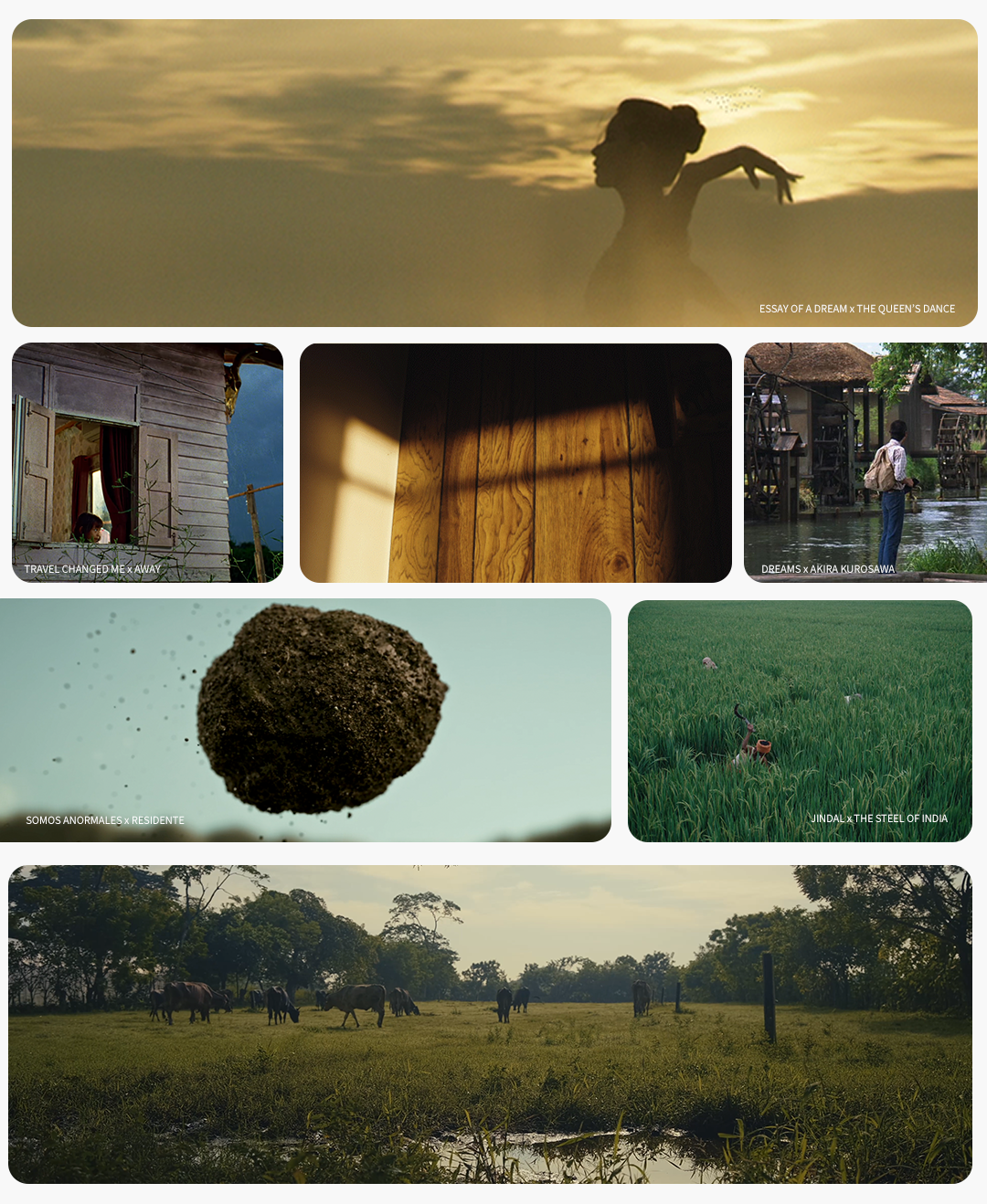
The supernatural in How to Grow a Ghost comes less from jump scares and more from the feeling that the land itself is awake: fields, mud, and farmhouse walls holding secrets just under the surface. We’re borrowing some of horror’s language (slow encroaching frames, off‑screen sound, a sense that something is slightly wrong) but grounding it in the tenderness and everyday magic you might find in Miyazaki’s countryside or Kurosawa’s dreamscapes: ghosts growing out of chores, rituals, and family routines. Visually, that means wide, patient shots where bodies are small against sky and field, natural light and pockets of shadow, compositions that let dust, water, and wind be characters. The mood is quiet, watchful, and sometimes eerie, but always anchored in love and the strange, playful logic of making a ghost together rather than being chased by one.
 While the story centers Khmer experience, it also makes space for the realities of Southeast Asian diaspora relationships shaped by movement, proximity, and shared inheritance.
Casting & community
Casting is about finding a couple who can hold quiet history between them: a sense that they’ve shared years together, even when the script is sparse. We’re looking at both professional actors and performers with lived experience in diaspora and family separation. Because we’re working on a real family farm in Cambodia, we’re also in conversation with the family and local community about how they might appear or be represented, and where the boundaries are. The goal is to make something with the community, not just in front of them.
We are currently opening a conversation‑led casting process for a lead couple:
- One lead of Khmer descent
- One lead open to Southeast Asian diaspora backgrounds
No acting experience is required. This is not an audition yet; the process begins with conversation and alignment. Auditions and paid commitments will take place later. Initial interest is collected through this form: https://forms.gle/Z7dwvM1k4LY6WrCB6
We’ll keep you updated on casting milestones and how the local community is participating.
Ethical production gets said a lot; here is what it means for us in practice:
- Working with a local fixer and partners in Cambodia to make sure permits, equipment, and community relationships are handled properly.
- Being clear about how we are using the family farm, what we are filming, and how the finished work will travel.
- Involving master’s‑level students as collaborators with guidance, not as invisible or unpaid labour.
- Keeping an open channel with both our diasporic communities and local communities, so the film remains accountable to the people whose stories and spaces it touches.
We’ve begun formal collaboration with Sunflower Film Organization in Cambodia to pilot a paid “shadow internship” program for emerging filmmakers, including department‑based mentorship, clear written agreements, fair local day rates, and structured reflections after production.
When you support this film, you’re also backing a model for ethical, cross‑border production that we can share with other teams.
If this story, this couple, or this kind of careful production resonates with you, here are three simple ways to help:
- Pledge at whatever level makes sense for you to help us reach $6,000 for Phase 1 permits and a local fixer/Producer.
- Follow this campaign so we can reach 350 followers and qualify as AAPI Renaissance Rally finalists.
- Share this link with one person or community who cares about Southeast Asian stories, AAPI cinema, or films about love, memory, and making ghosts together.
SHARING KIT: CLICK HERE (RIGHT CLICK & SAVE AS)
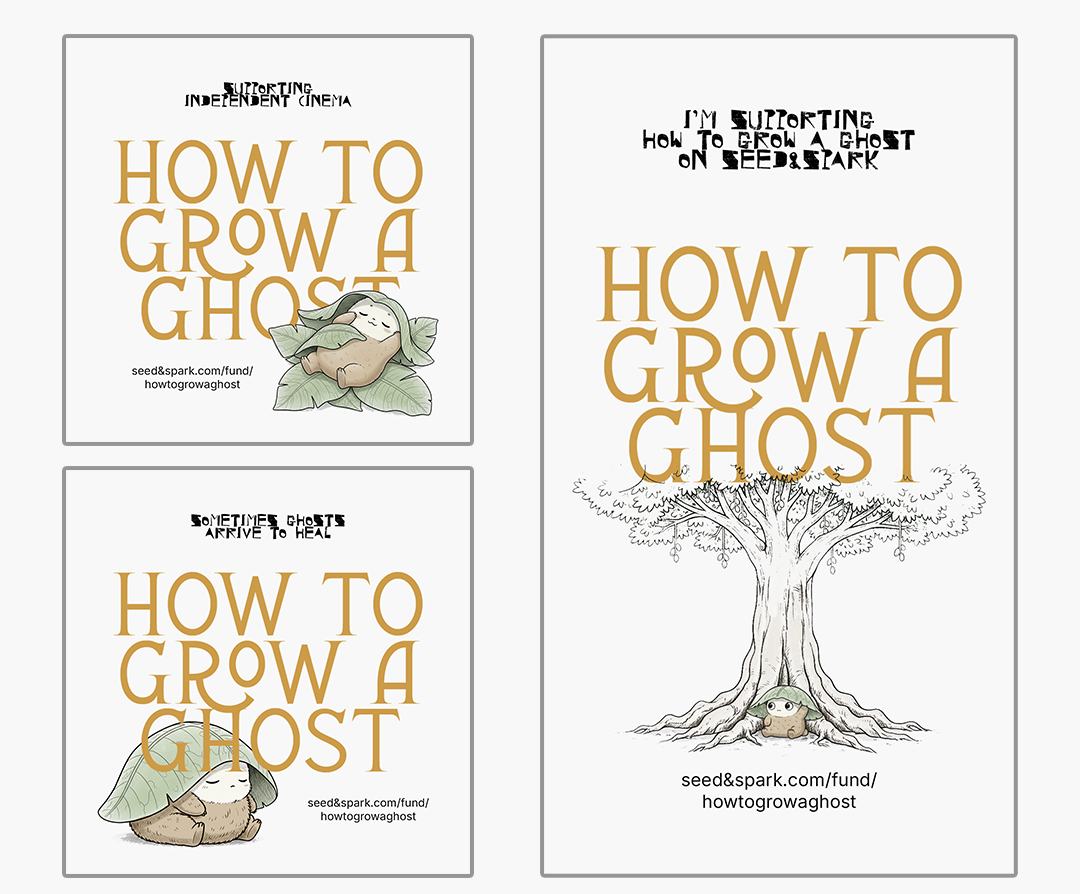
Copy‑paste to share:
I'm supporting HOW TO GROW A GHOST, a magical‑realist short on 35mm set on a Cambodian family farm, made by a Khmer/SEA diaspora filmmaker. Help them reach their AAPI Rally goal and grow this ghost: seedandspark.com/fund/howtogrowaghost
Wishlist
Use the WishList to Pledge cash and Loan items - or - Make a pledge by selecting an Incentive directly.
Permits, admin & insurance
Costs $3,000
National and local filming permits. Equipment and customs permissions. Production insurance & admin.
Local Producer/Fixer
Costs $3,000
Covers 7–10 working days around the 5–7 day shoot:
Cash Pledge
Costs $0


Direct link:
Share this update!
About This Team
Writer / Director / Producer – Kayleb Lee
Southeast Asian American filmmaker working between Los Angeles and London. How to Grow a Ghost continues an ongoing exploration of land, memory, and inheritance across diaspora.
Producers – Gerardo Lara, Angela Wells, Renee Ya (LA / LV)
Associate Producers – April Lee, Muqi Wang (Singapore / UK-China)
We’re building a producing team across the UK, Los Angeles, and Cambodia. This includes collaborators from my graduate program, independent producers based in LA, and a campaign producer focused on Seed&Spark. Final credits will be confirmed as funding and schedule are locked.
Cambodian Producer / Fixer – (in progress)
We are currently meeting with Cambodia‑based producers and fixers to anchor the production locally and ensure permits, logistics, and community relationships are handled responsibly.
Production Designer – Taiyo Nobata
Taiyo and I previously collaborated on Papaya. He builds spaces that feel lived‑in and specific, grounded in texture rather than spectacle—essential for this film’s rural setting. He received Best Production Design at the Asian Cinematography Awards (ACA) in 2020.
Director of Photography – Luke Im
Luke is an LA‑based cinematographer whose work balances natural light and intimate character framing. We’ve confirmed him as DP, pending final scheduling around the April–July 2027 shoot.
Cambodia‑based Production Support – in conversation
We’re in active discussions with local fixers and production partners in Cambodia to make sure this international project is rooted on the ground, not just in our heads.
Collaborations & Organizations
- Sunflower Film Organization (Cambodia) – Partnering on a paid “shadow internship” program for emerging filmmakers (department mentorship, fair local day rates, and structured reflection).
- Additional partners and organizations will be added here as they are confirmed.
Current Team
Incentives
- The Story
- Wishlist
- Updates
- The Team
- Community
Mission Statement
The Story
How to Grow a Ghost is a supernatural short film.
A Khmer-led (diaspora) couple returning to Cambodia to help their family rebuild what the war left behind. Strange markings surface. Objects leave outlines where they once stood. Something unseen takes shape in the yard, not as a threat, but as a presence tied to memory and place.
We follow them as they build and tend to a small, yet larger than life, yet impossible creature: part ritual object, part memory device, part ghost. The film moves between daily labor and small acts of haunting: tape lines on the floor, soft objects that hold stories, and the slow, careful work of making something that remembers what a family could not say out loud.
Why this story, why now
This film is about how families carry history when the official record is missing or violent.
For many of us in the Southeast and East Asian diaspora, the afterlives of conflict live less in archives and more in gestures, habits, and small rituals. I’ve watched people I love be haunted by things they never saw on screen, and I’ve also watched them turn away from films that turn their pain into spectacle. This story doesn’t come from a desire to re‑stage harm; it comes from a need to heal. Most horror treats hauntings as threats. In the cultures I come from, spirits can also arrive to comfort, to warn, or to stitch something back together. How to Grow a Ghost starts there: with two people choosing to grow a ghost as an act of care, and seeing what kind of tenderness and difficulty that invites into their lives.
What sets this project apart
A lot of films about war and diaspora lean on flashbacks or big dramatic reveals. This one stays small and close. We’re interested in the everyday work of a marriage: how two people share chores, grief, jokes, and the strange decision to make a creature that might hold what they can’t say.
The haunting isn’t an accident here; the couple makes the ghost slowly, with their own hands, out of tape, fabric, and whatever they can find on the farm. We’re grounding the film on a working family farm in Cambodia, shooting on film stock, and paying attention to touch--fabric, soil, tape, the Loak itself. The ghost isn’t a jump scare; it’s something made and cared for. That mix of intimacy, rural Cambodian life, and a very physical ghost is what we want viewers to leave feeling they’ve spent time with a couple and a place, not just watched an issue illustrated.
Why me / us
I come from two wars:
The one my parents survived (the Killing Fields and the Secret War).
The one I ended up serving in, in Afghanistan.
Film is how I can sit with that without turning it into spectacle.
My short film Papaya has screened at AAPI festivals and brought me into a community of filmmakers who understand and respond to the work I’m trying to make. Those relationships are how this team formed: collaborators from the UK, China, Singapore, Japan, the US, and Cambodia who have seen what I do on small films and still want to build something more ambitious together. We’re bringing our different histories to a single, very specific place--a family farm--and to make a film that feels honest enough that we can all stand by it when it’s done.
Why now (and why the AAPI Rally)
Conversations about AAPI and Southeast Asian stories are growing, but many of our family histories still feel half‑told or only expressed as trauma. I want to make a film that lets a couple be tender and awkward and ordinary, while still honoring the weight of what they’ve lived through.
We chose Seed&Spark and the AAPI Renaissance Rally because we want this project to grow with a community from the start. The Rally asks us to show our work (our progress, our updates, our followers)which matches how I want to make this film: in the open, with people watching and asking questions, not alone in a corner.
Where we are & how this campaign moves us forward
We’re in late development and early pre‑production; this campaign funds the groundwork that makes our April 2027 Cambodia shoot possible.
Right now, we’re in late development and early pre‑production. The script is written, the core creative team is in place, and we’re in conversation with collaborators in Cambodia about the farm, permits, and what it means to bring a crew onto family land.
Our plan is to shoot in April 2027 on a family farm over five to six days. We’ll be working with a small international crew (from the UK, Japan, and the US) alongside Cambodian locals and master’s students. We want to shoot on film and in mostly natural light, so a lot of our planning is about making sure that can happen safely and respectfully.
Phase 1: Production Foundation
Our overall budget is bigger than this campaign. This AAPI Renaissance Rally is funding one specific phase of the project: the production foundation that makes an international shoot possible.
This phase focuses on two things:
- Permits and Administration – National and local filming permits, equipment permissions, paperwork to bring gear in legally, and the administrative costs that keep us honest on the ground.
- A local fixer (7–10 days) – A person or small team in Cambodia who can help us navigate permits, build trust with the community, coordinate with the family farm, and solve problems in real time.
This campaign does not try to cover everything. Food, travel, equipment, and production design will be supported by separate grants, institutional partners, and a later funding phase focused on on‑set needs. Post‑production (editing, sound mix, score, color), festival delivery, and expanded community screenings will also be funded through additional fundraising and support.
Stretch goals: if this ghost grows bigger
If we’re lucky enough to go beyond $6,000 in this phase, we’ll treat that as stretch territory. Extra support will go toward:
- Raising local crew pay and extending paid days for Cambodian collaborators.
- Buying more time for location sound, so the farm, the Loak, and the night noises can breathe.
- Seeding a post‑production fund (edit, sound mix, color) so we don’t have to rush the film’s final shape.
We’ll announce each stretch marker in campaign updates, so you’ll always know exactly what your support is unlocking.
We’re not starting from zero. We already have $8,000 set aside for crew travel and lodging, supported through my master’s programme. That money is ring‑fenced for getting our international team to Cambodia and housed safely. This Seed&Spark campaign is designed to sit alongside that support. The $8,000 covers travel and accommodation; the $6,000 Rally goal covers the production foundation on the ground: permits, a local fixer, and core camera and sound tools for the April 2027 shoot. That number is a phase‑specific goal and based on what our current network can realistically sustain in one campaign and phase.
However, the AAPI Renaissance Rally also has its own milestone criteria. To qualify as a finalist, we must:
- Raise at least $2,500 in cash pledges during the campaign.
- Reach at least 80% of our $6,000 goal to receive any funds at all.
- Gather 350 followers on Seed&Spark.
- Post at least 8 updates over the course of the campaign.
So we are working toward two intertwined objectives:
- Campaign Goal – $6,000 for Phase 1: To secure the administrative and equipment foundation for our international production.
- Rally Goal – Finalist Status: To meet the Rally’s thresholds (cash raised, percentage funded, followers, and updates) so this project can access additional industry support, visibility, and resources.
If we’re lucky enough to go beyond $6,000, we’ll treat that as stretch territory. Extra funds will go toward clearly defined add‑ons like increasing local crew pay, adding more time for location sound, or starting a post‑production fund. We’ll spell out those stretch goals in updates as we get closer.
Roadmap
- Now – April 2026: AAPI Renaissance Rally campaign to fund permits, fixer, and core equipment.
- Mid–Late 2026: Finalize local agreements, casting, and logistics; continue raising funding through grants, labs, and other support for on‑set costs and post‑production.
- April–July 2027: Principal photography on the family farm in Cambodia, followed by post‑production (sound, music, color) editing and work toward my master’s thesis submission in that same April–July 2027 window.
- Late 2027: Festival submissions, and curated community and virtual screenings.
Backers at viewing tiers will either:
- Receive a private screening link after our initial festival run, or
- Be invited to virtual screenings (some hosted via Kinema) with live conversation about the film, the farm, and the journey.
If timelines move, as they sometimes do, we’ll be honest about it in our updates and explain why.
Following the journey between now and 2027
This film is the main thread of ourwork right now, but we don’t disappear between fundraising and shooting. We’re continuing to make smaller pieces, short films on 16mm, 35mm, and digital, and an anthology of love, ghost and memory stories, that are all feeding into how we’ll approach How to Grow a Ghost.
If you follow this campaign, you’ll see updates not only about budgets and permits, but also new shorts, experiments, and process notes. Following is a way to stay close to the work as it’s being made, not just to the final cut.
For a deeper look at past films and the collaborators building this with me, you can visit the Team tab on this page.
The supernatural in How to Grow a Ghost comes less from jump scares and more from the feeling that the land itself is awake: fields, mud, and farmhouse walls holding secrets just under the surface. We’re borrowing some of horror’s language (slow encroaching frames, off‑screen sound, a sense that something is slightly wrong) but grounding it in the tenderness and everyday magic you might find in Miyazaki’s countryside or Kurosawa’s dreamscapes: ghosts growing out of chores, rituals, and family routines. Visually, that means wide, patient shots where bodies are small against sky and field, natural light and pockets of shadow, compositions that let dust, water, and wind be characters. The mood is quiet, watchful, and sometimes eerie, but always anchored in love and the strange, playful logic of making a ghost together rather than being chased by one.
While the story centers Khmer experience, it also makes space for the realities of Southeast Asian diaspora relationships shaped by movement, proximity, and shared inheritance.
Casting & community
Casting is about finding a couple who can hold quiet history between them: a sense that they’ve shared years together, even when the script is sparse. We’re looking at both professional actors and performers with lived experience in diaspora and family separation. Because we’re working on a real family farm in Cambodia, we’re also in conversation with the family and local community about how they might appear or be represented, and where the boundaries are. The goal is to make something with the community, not just in front of them.
We are currently opening a conversation‑led casting process for a lead couple:
- One lead of Khmer descent
- One lead open to Southeast Asian diaspora backgrounds
No acting experience is required. This is not an audition yet; the process begins with conversation and alignment. Auditions and paid commitments will take place later. Initial interest is collected through this form: https://forms.gle/Z7dwvM1k4LY6WrCB6
We’ll keep you updated on casting milestones and how the local community is participating.
Ethical production gets said a lot; here is what it means for us in practice:
- Working with a local fixer and partners in Cambodia to make sure permits, equipment, and community relationships are handled properly.
- Being clear about how we are using the family farm, what we are filming, and how the finished work will travel.
- Involving master’s‑level students as collaborators with guidance, not as invisible or unpaid labour.
- Keeping an open channel with both our diasporic communities and local communities, so the film remains accountable to the people whose stories and spaces it touches.
We’ve begun formal collaboration with Sunflower Film Organization in Cambodia to pilot a paid “shadow internship” program for emerging filmmakers, including department‑based mentorship, clear written agreements, fair local day rates, and structured reflections after production.
When you support this film, you’re also backing a model for ethical, cross‑border production that we can share with other teams.
If this story, this couple, or this kind of careful production resonates with you, here are three simple ways to help:
- Pledge at whatever level makes sense for you to help us reach $6,000 for Phase 1 permits and a local fixer/Producer.
- Follow this campaign so we can reach 350 followers and qualify as AAPI Renaissance Rally finalists.
- Share this link with one person or community who cares about Southeast Asian stories, AAPI cinema, or films about love, memory, and making ghosts together.
SHARING KIT: CLICK HERE (RIGHT CLICK & SAVE AS)
Copy‑paste to share:
I'm supporting HOW TO GROW A GHOST, a magical‑realist short on 35mm set on a Cambodian family farm, made by a Khmer/SEA diaspora filmmaker. Help them reach their AAPI Rally goal and grow this ghost: seedandspark.com/fund/howtogrowaghost
Wishlist
Use the WishList to Pledge cash and Loan items - or - Make a pledge by selecting an Incentive directly.
Permits, admin & insurance
Costs $3,000
National and local filming permits. Equipment and customs permissions. Production insurance & admin.
Local Producer/Fixer
Costs $3,000
Covers 7–10 working days around the 5–7 day shoot:
Cash Pledge
Costs $0
Direct link:
Share this update!
About This Team
Writer / Director / Producer – Kayleb Lee
Southeast Asian American filmmaker working between Los Angeles and London. How to Grow a Ghost continues an ongoing exploration of land, memory, and inheritance across diaspora.
Producers – Gerardo Lara, Angela Wells, Renee Ya (LA / LV)
Associate Producers – April Lee, Muqi Wang (Singapore / UK-China)
We’re building a producing team across the UK, Los Angeles, and Cambodia. This includes collaborators from my graduate program, independent producers based in LA, and a campaign producer focused on Seed&Spark. Final credits will be confirmed as funding and schedule are locked.
Cambodian Producer / Fixer – (in progress)
We are currently meeting with Cambodia‑based producers and fixers to anchor the production locally and ensure permits, logistics, and community relationships are handled responsibly.
Production Designer – Taiyo Nobata
Taiyo and I previously collaborated on Papaya. He builds spaces that feel lived‑in and specific, grounded in texture rather than spectacle—essential for this film’s rural setting. He received Best Production Design at the Asian Cinematography Awards (ACA) in 2020.
Director of Photography – Luke Im
Luke is an LA‑based cinematographer whose work balances natural light and intimate character framing. We’ve confirmed him as DP, pending final scheduling around the April–July 2027 shoot.
Cambodia‑based Production Support – in conversation
We’re in active discussions with local fixers and production partners in Cambodia to make sure this international project is rooted on the ground, not just in our heads.
Collaborations & Organizations
- Sunflower Film Organization (Cambodia) – Partnering on a paid “shadow internship” program for emerging filmmakers (department mentorship, fair local day rates, and structured reflection).
- Additional partners and organizations will be added here as they are confirmed.