Polluters' Playbook
Washington, District of Columbia | Film Feature
Documentary
Why is a “green” company from a green country spewing toxic chemicals in West Virginia? In seeking answers, Maureen discovers striking similarities to her prior battle against a different company and governments – and that this polluters’ playbook extends beyond the U.S. How can this be stopped?
Polluters' Playbook
Washington, District of Columbia | Film Feature
Documentary

1 Campaigns | District of Columbia, United States
Green Light
This campaign raised $8,225 for production. Follow the filmmaker to receive future updates on this project.
40 supporters | followers
Enter the amount you would like to pledge
Why is a “green” company from a green country spewing toxic chemicals in West Virginia? In seeking answers, Maureen discovers striking similarities to her prior battle against a different company and governments – and that this polluters’ playbook extends beyond the U.S. How can this be stopped?
About The Project


- The Story
- Wishlist
- Updates
- The Team
- Community
Mission Statement
The Story
Why is a “green” company, from a green country, spewing toxic chemicals at West Virginia residents, including children, and into a treasured environment? Why is our government helping that company, and not us? And why do I feel like I’ve been down this road before?
These questions inspired this documentary film – and the formation of Train Whistle Productions LLC.
Hi. I’m Maureen. In my journey from Washington DC to Harpers Ferry WV, I soon discovered that my old and new homes are connected by more than just train tracks. The residents of Jefferson County WV have been engaged for years in a battle against a big polluter – Rockwool, a Danish manufacturer of mineral wool insulation. The multinational corporation is headquartered in Copenhagen and has 45 plants globally.
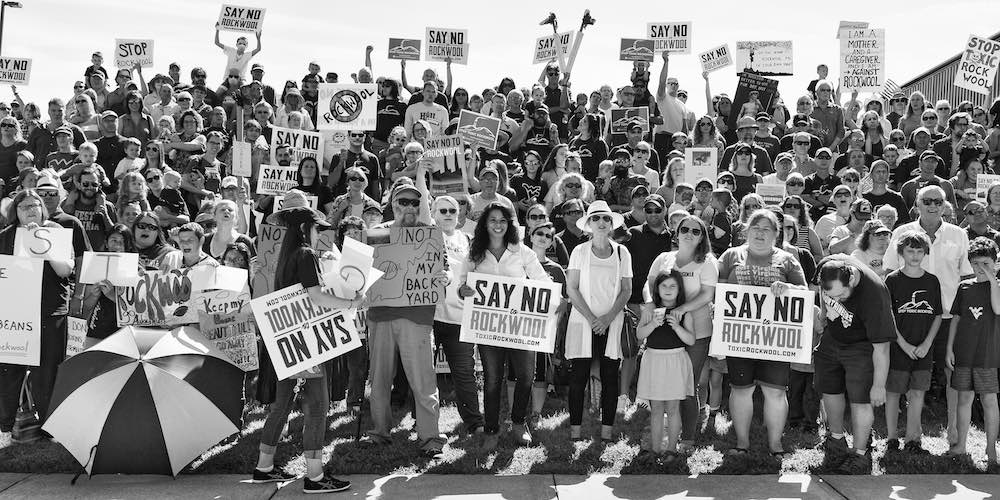
Jefferson County rally against Rockwool in 2018. Photo by Elvin Wilmer.
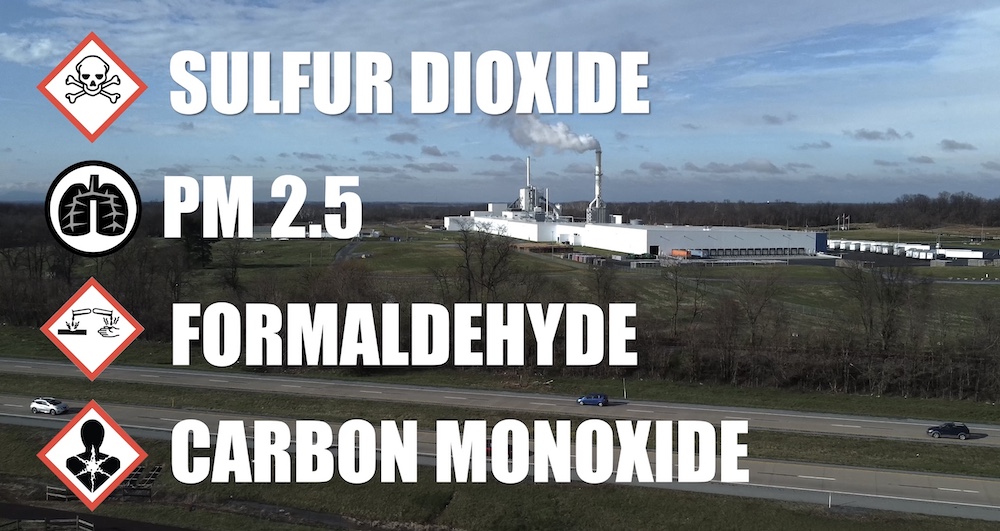
Rockwool’s plant in Jefferson County is now operational.
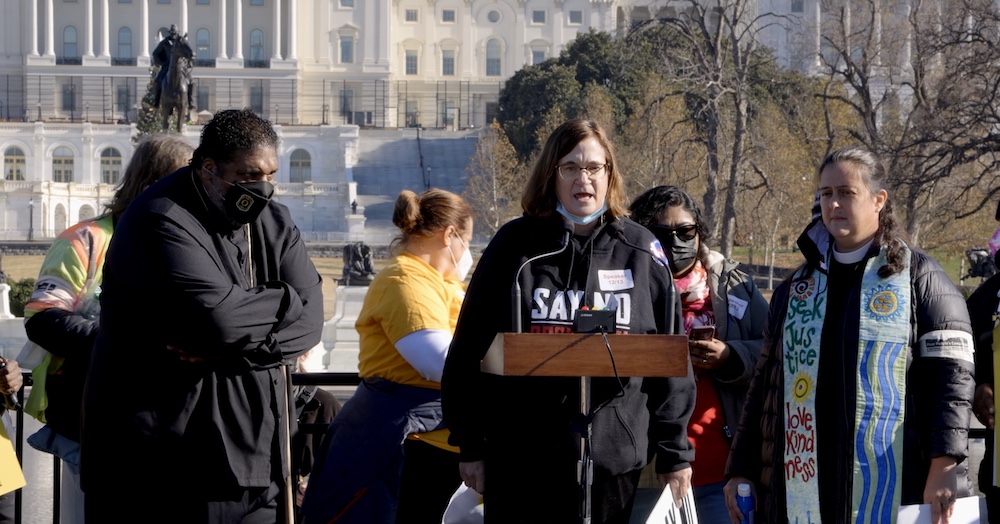
But Jefferson County residents are still fighting for justice. Catherine Jozwik speaking out at the Poor People’s Campaign rally at the U.S. Capitol.
I had worked with environmental organizations, environmental justice communities, and others to fight CSX. The multibillion-dollar freight rail company wanted to send increasing amounts of hazardous materials, at increasing speeds, through the United States capital – courtesy of two tunnels it would build just outside of my home, less than mile from the Capitol building. CSX, and the DC and federal agencies tasked with the environmental review process, ignored community pleas to address the risk of derailments.
Those risks are real.
In fact, while CSX was touting its safety record at a DC Council hearing about the tunnels on April 30, 2014, a CSX train derailed in Lynchburg, Virginia – literally during CSX testimony. The cargo, Bakken crude oil, is so explosive that such trains are commonly called “bomb trains.” The derailed train also dumped nearly 30,000 gallons of Bakken crude oil into the James River.
Whereas manufacturing pollution tends to be chronic, pollution from freight rail derailments can be cataclysmic – as residents of East Palestine, Ohio, and too many other communities now know.
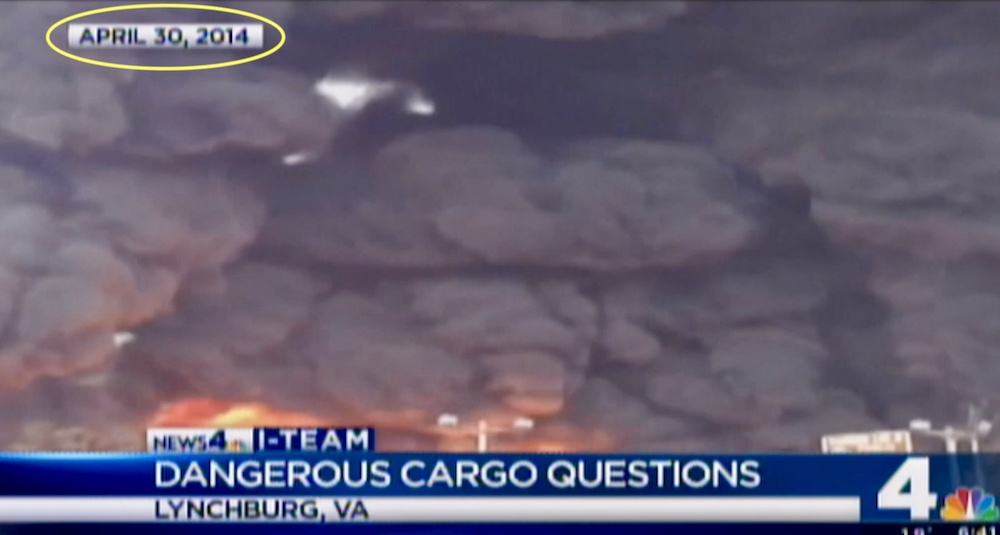
I worked for months with the News4 I-Team, which did a three-part expose about the risks and backroom deals associated with CSX in DC.
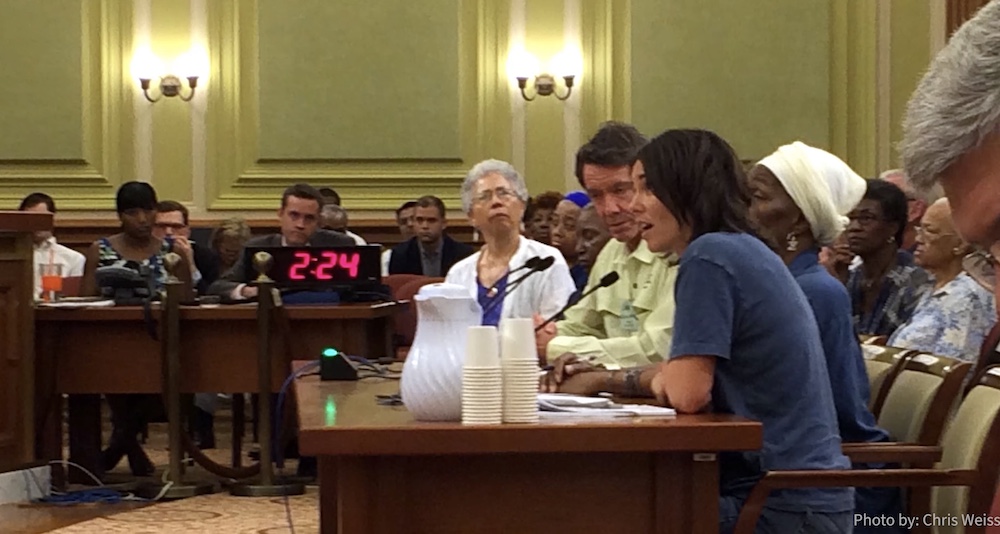
I testified about CSX before the DC Council three times, with many other residents and activists. In contrast with the DC Department of Transportation and Mayor's office, the DC Council was trying to help us get answers and some protection. Photo by Chris Weiss.
The DC and federal governments ultimately approved the CSX tunnels, despite years of strenuous and well-researched community objections on a wide range of concerns.
I sued, as the member of the Committee of 100 on the Federal City with standing.
Our litigation claimed violations of the DC and federal environmental review laws. We argued that the outcome was largely predetermined, with early background agreements between DC and CSX (drafted, but unsigned) revealed only with the record of decision. The review process was also unduly limited in scope. The agencies focused on the construction phase of the project, largely ignoring operational impacts - including possible derailments and adverse effects on passenger rail.
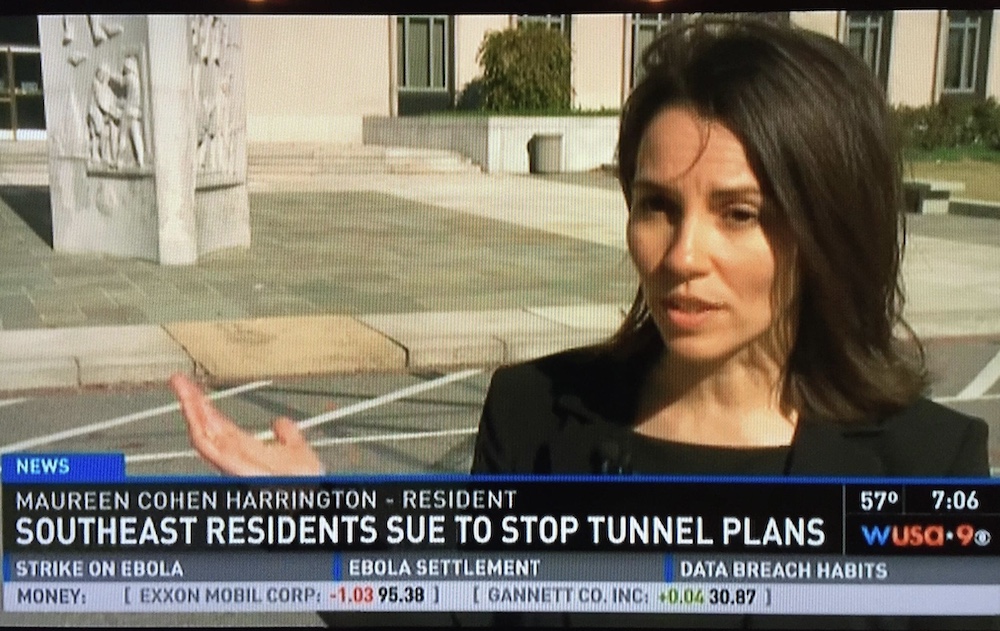
Some coverage from our press conference outside of the courthouse, on the day we filed our lawsuit.
When I learned more about the battle in Jefferson County, I was surprised to see that Rockwool employs many of the same tactics as CSX.
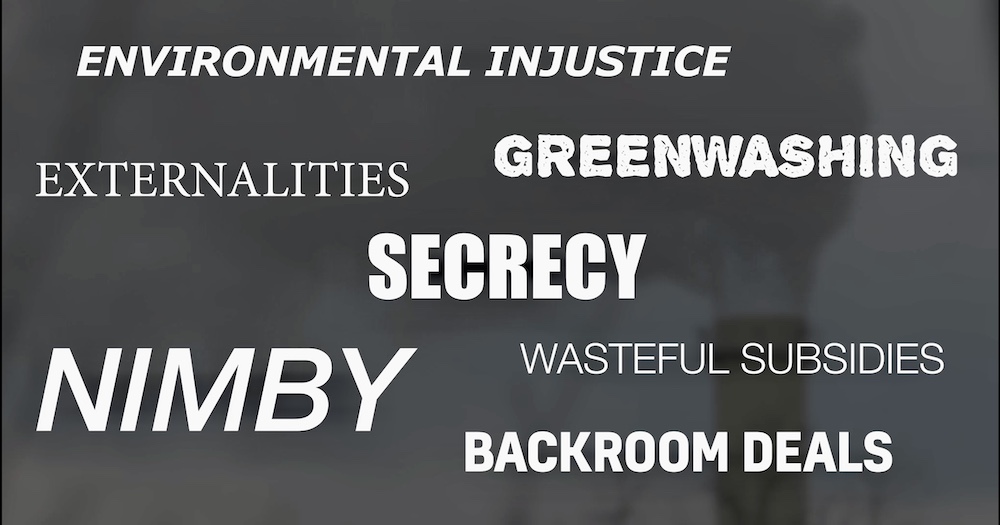
Some common tactics.
I began thinking of these commonalities as the Polluters’ Playbook.
How widespread is this playbook? Why do governments put us through the motions of a democracy, only to ignore our feedback in favor of powerful polluters? How can communities protect themselves?
A multinational corporation, like Rockwool, seems like a good case study. So my co-director, Jonathan, and I met up with activists fighting to prevent Rockwool from building a manufacturing plant in the idyllic French village of Courmelles, near Soissons.
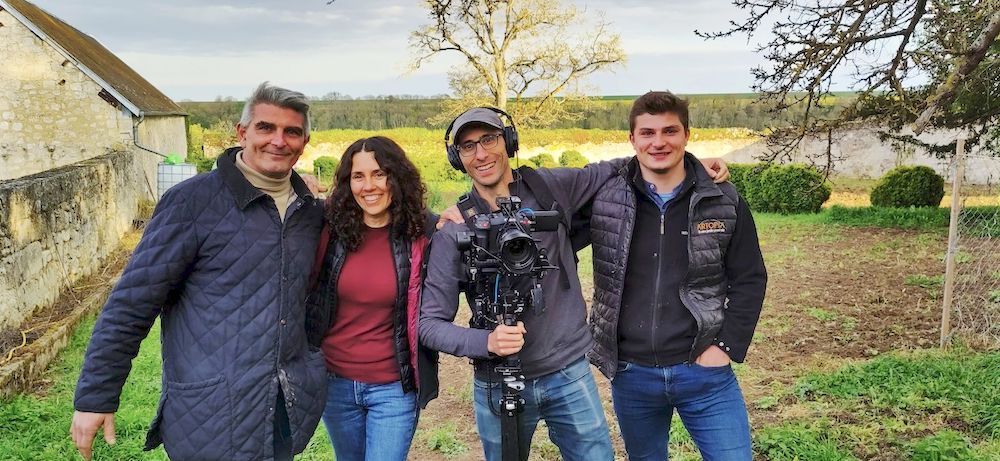
With Arnaud Svrcek and his son, on their farm adjacent to the proposed Rockwool plant. Even as Courmelles’ mayor, Arnaud has not yet been able to stop Rockwool, though he's been leading the fight against it, with near-universal support from his village and the adjacent one, Ploisy. Photo by Patrick Thomas.
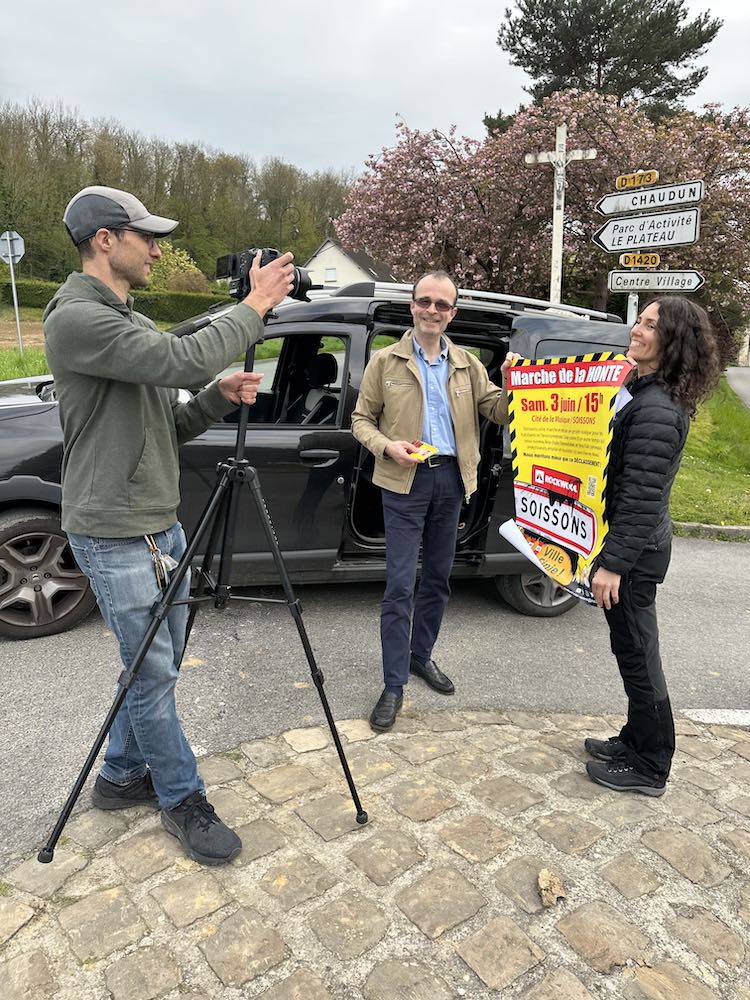
Planning for protests against Rockwool. Photo by Yannick Champain.
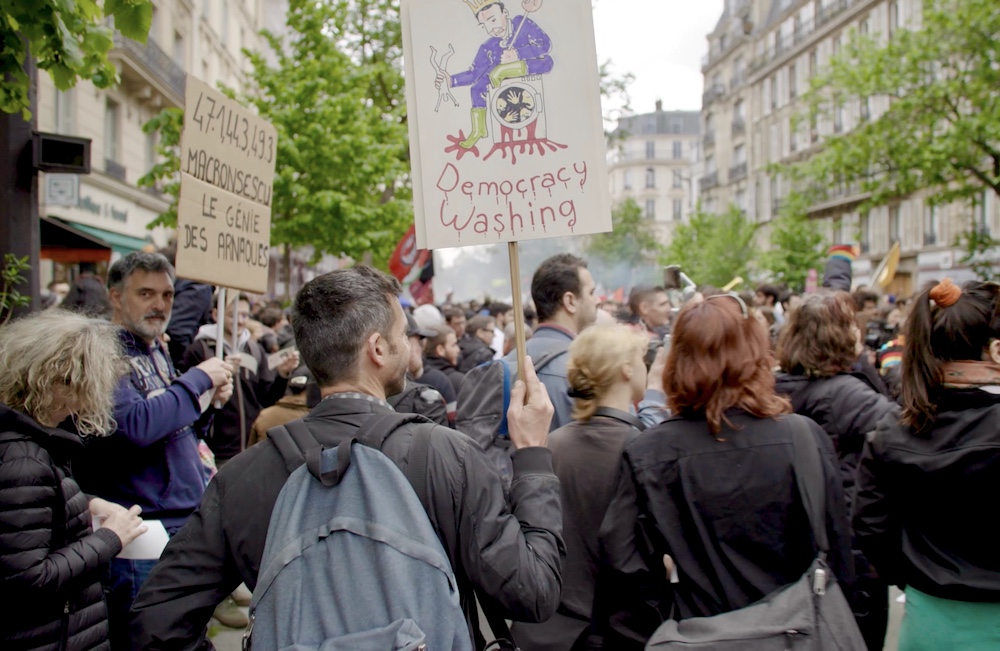
Yannick Champain, a French activist in the film, at May Day in Paris, 2023.
We also traveled to Copenhagen, Denmark – the home of Rockwool – and conducted many interviews there.
Interviews
Our interviews thus far include:
- Rev. Dr. Liz Theoharis, Co-Chair, Poor People’s Campaign
- Justin J. Pearson, Tennessee State Representative
- Jacques Baudrier, Deputy Mayor of Paris, France
- Arnaud Svrcek, Mayor of Courmelles, France, and author of Le Village contre la multinationale
- François Leroux, Mayor of Ploisy, France
- Line Barford, Copenhagen Mayor of Technology and Environment
- Pelle Dragsted, Member, Danish Parliament
- Many activists, experts, and impacted residents
- So far not Rockwool, but we’d love to talk with them, if they change their minds
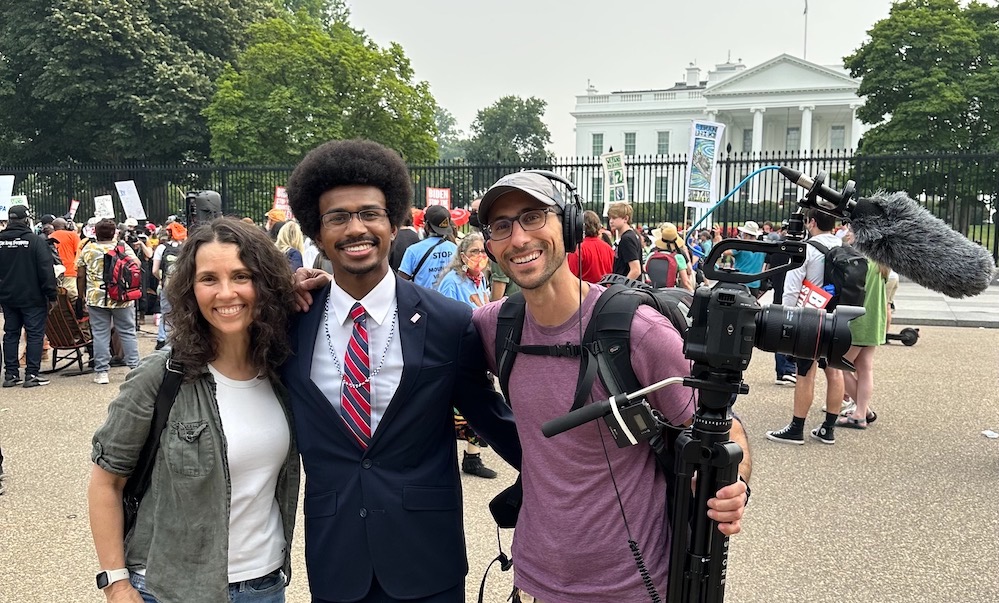
With Justin J. Pearson, Tennessee State Representative, at a protest against the Mountain Valley Pipeline, approvals for which had just been expedited by the debt ceiling deal.
Why We Need Funding
We’re seeking to fund our return travel to France. Rockwool’s efforts to build a manufacturing plant in Courmelles, against strong local opposition, are ongoing. Various approvals are already in place, and construction – and perhaps new kinds of opposition – could be starting soon.
This is neither the beginning nor the end of our production phase, but it’s what we expect to be the single biggest remaining production expense. We’re fortunate that we have so many wonderful interview opportunities local to Jefferson County, West Virginia and Washington DC.
That said, we do have other non-local interviews on our wish list! So, if we with your help reach our campaign goal, here are our production stretch goals.
Stretch Goals
- $5,000 – $15,000 for travel. This will allow us to travel to other communities plagued by big polluters and to interview non-local experts and authorities.
- $3,000 for a drone. This will allow us to capture compelling b-roll footage of the beautiful, natural environments being harmed by these big polluters.
How to Support
Thanks so much for reading about our campaign and watching our crowdfunding trailer! Seed&Spark requires that we raise at least 80% of our fundraising goal to receive funds. Your support is vital. Here’s how you can help us to expose the Polluters’ Playbook.
Pledge
You may directly support this film by making a pledge through this campaign. We very much appreciate contributions of any amount.
Follow Us
You can follow us on:
· Seed&Spark, at https://seedandspark.com/fund/pollutersplaybook
· Facebook, at https://www.facebook.com/PollutersPlaybook/
· X/Twitter, at https://twitter.com/PollutersPlaybk
Share
Please share our campaign on social media, email, and good old-fashioned conversations.
Thanks so very much!
Wishlist
Use the WishList to Pledge cash and Loan items - or - Make a pledge by selecting an Incentive directly.
Travel to France
Costs $5,700
Travel to France for about two weeks, allowing us to capture our second round of filming there and further story development.
Video Editing Computer
Costs $3,067
This allows us to efficiently edit high quality footage without glitches and sets us up for post-production.
External Hard Drives
Costs $1,180
A 22 TB external hard drive for editing and storing all of our files in one place, and three $130 Portable 5th drives for travel.
Cash Pledge
Costs $0


Direct link:
Share this update!
About This Team
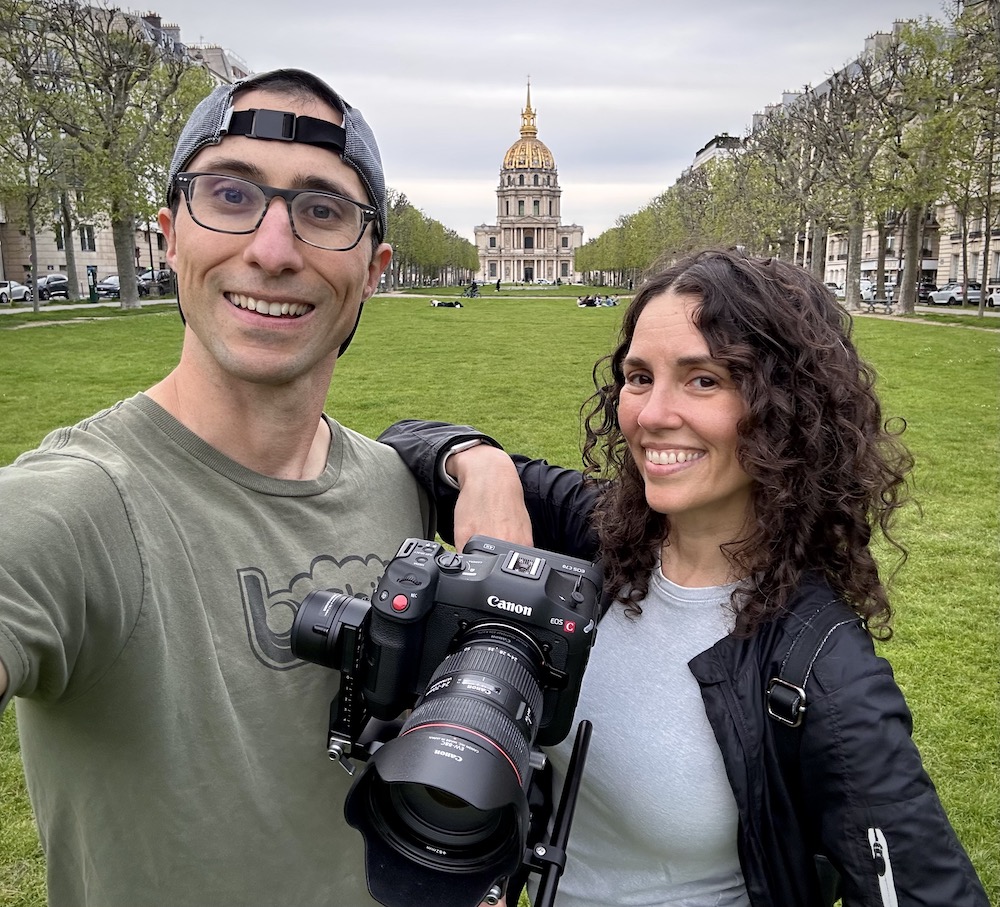 Maureen Cohen Harrington
Co-Director and Writer
Train Whistle Productions LLC
Maureen is an attorney with more than 20 years of nonprofit, private sector, and government experience – and a film degree from the era of literal cut-and-splice. Her primary areas of practice are copyright and government ethics, and she began her legal career representing labor unions. She’s done legal work on films ranging from small productions to blockbusters, as well as on live television broadcasts. She’s on the board of Washington Area Lawyers for the Arts.
Her photo and video journalism have been featured in numerous media outlets, including ABC, NBC, CNN, Fox News, the Washington Post, and USA Today.
She and this film’s co-director, Jonathan, have together created several mini-documentaries, including a series about a field of flags for COVID deaths in the United States. The first film in that series was released the day before Election Day 2016 and reached more than 400,000 views on Twitter alone before the polls closed. Part of that film was later broadcast on PBS NewsHour.
Her work as an activist includes being a leader of the multiyear campaign that is the backstory for this film. She worked with environmental organizations, environmental justice communities, and others to fight the efforts of a multibillion-dollar freight rail company, CSX, to send increasing amounts of hazardous materials, at increasing speeds, through the United States capital.
Jonathan Rosenberry
Co-Director and Director of Photography
Train Whistle Productions LLC
Jonathan is a video producer and award-winning filmmaker who specializes in visual storytelling and impact filmmaking. During his 14 years of professional video production experience, he has worked for several nonprofits and creative marketing companies.
While working as a primary cinematographer for the feature film ‘Humans and Other Animals,’ Jonathan traveled across Europe, Africa, and the U.S. to film interviews of celebrities and experts such as Jane Goodall and Peter Singer. He also captured wildlife footage of chimpanzees and elephants in Kenya and Uganda.
His films have won awards at the Animal Film Festival and the International Vegan Film Festival. He was also awarded “Best Cinematography” in the DC 48 Hour Film Festival. Additionally, he performed the final cut of the documentary feature film “Called to Rescue” and worked as a camera operator for Oscar winning filmmaker Louie Psihoyos.
Jonathan’s nature, animal, and wildlife photography has been prominently showcased as the main feature and cover photos of several print magazines.
He also co-founded and patented the original 360 photo booth, OrcaVue, that has been used by many brands, including Netflix, Fox Sports, the NHL, and HBO.
Current Team
Incentives
- The Story
- Wishlist
- Updates
- The Team
- Community
Mission Statement
The Story
Why is a “green” company, from a green country, spewing toxic chemicals at West Virginia residents, including children, and into a treasured environment? Why is our government helping that company, and not us? And why do I feel like I’ve been down this road before?
These questions inspired this documentary film – and the formation of Train Whistle Productions LLC.
Hi. I’m Maureen. In my journey from Washington DC to Harpers Ferry WV, I soon discovered that my old and new homes are connected by more than just train tracks. The residents of Jefferson County WV have been engaged for years in a battle against a big polluter – Rockwool, a Danish manufacturer of mineral wool insulation. The multinational corporation is headquartered in Copenhagen and has 45 plants globally.
Jefferson County rally against Rockwool in 2018. Photo by Elvin Wilmer.
Rockwool’s plant in Jefferson County is now operational.
But Jefferson County residents are still fighting for justice. Catherine Jozwik speaking out at the Poor People’s Campaign rally at the U.S. Capitol.
I had worked with environmental organizations, environmental justice communities, and others to fight CSX. The multibillion-dollar freight rail company wanted to send increasing amounts of hazardous materials, at increasing speeds, through the United States capital – courtesy of two tunnels it would build just outside of my home, less than mile from the Capitol building. CSX, and the DC and federal agencies tasked with the environmental review process, ignored community pleas to address the risk of derailments.
Those risks are real.
In fact, while CSX was touting its safety record at a DC Council hearing about the tunnels on April 30, 2014, a CSX train derailed in Lynchburg, Virginia – literally during CSX testimony. The cargo, Bakken crude oil, is so explosive that such trains are commonly called “bomb trains.” The derailed train also dumped nearly 30,000 gallons of Bakken crude oil into the James River.
Whereas manufacturing pollution tends to be chronic, pollution from freight rail derailments can be cataclysmic – as residents of East Palestine, Ohio, and too many other communities now know.
I worked for months with the News4 I-Team, which did a three-part expose about the risks and backroom deals associated with CSX in DC.
I testified about CSX before the DC Council three times, with many other residents and activists. In contrast with the DC Department of Transportation and Mayor's office, the DC Council was trying to help us get answers and some protection. Photo by Chris Weiss.
The DC and federal governments ultimately approved the CSX tunnels, despite years of strenuous and well-researched community objections on a wide range of concerns.
I sued, as the member of the Committee of 100 on the Federal City with standing.
Our litigation claimed violations of the DC and federal environmental review laws. We argued that the outcome was largely predetermined, with early background agreements between DC and CSX (drafted, but unsigned) revealed only with the record of decision. The review process was also unduly limited in scope. The agencies focused on the construction phase of the project, largely ignoring operational impacts - including possible derailments and adverse effects on passenger rail.
Some coverage from our press conference outside of the courthouse, on the day we filed our lawsuit.
When I learned more about the battle in Jefferson County, I was surprised to see that Rockwool employs many of the same tactics as CSX.
Some common tactics.
I began thinking of these commonalities as the Polluters’ Playbook.
How widespread is this playbook? Why do governments put us through the motions of a democracy, only to ignore our feedback in favor of powerful polluters? How can communities protect themselves?
A multinational corporation, like Rockwool, seems like a good case study. So my co-director, Jonathan, and I met up with activists fighting to prevent Rockwool from building a manufacturing plant in the idyllic French village of Courmelles, near Soissons.
With Arnaud Svrcek and his son, on their farm adjacent to the proposed Rockwool plant. Even as Courmelles’ mayor, Arnaud has not yet been able to stop Rockwool, though he's been leading the fight against it, with near-universal support from his village and the adjacent one, Ploisy. Photo by Patrick Thomas.
Planning for protests against Rockwool. Photo by Yannick Champain.
Yannick Champain, a French activist in the film, at May Day in Paris, 2023.
We also traveled to Copenhagen, Denmark – the home of Rockwool – and conducted many interviews there.
Interviews
Our interviews thus far include:
- Rev. Dr. Liz Theoharis, Co-Chair, Poor People’s Campaign
- Justin J. Pearson, Tennessee State Representative
- Jacques Baudrier, Deputy Mayor of Paris, France
- Arnaud Svrcek, Mayor of Courmelles, France, and author of Le Village contre la multinationale
- François Leroux, Mayor of Ploisy, France
- Line Barford, Copenhagen Mayor of Technology and Environment
- Pelle Dragsted, Member, Danish Parliament
- Many activists, experts, and impacted residents
- So far not Rockwool, but we’d love to talk with them, if they change their minds
With Justin J. Pearson, Tennessee State Representative, at a protest against the Mountain Valley Pipeline, approvals for which had just been expedited by the debt ceiling deal.
Why We Need Funding
We’re seeking to fund our return travel to France. Rockwool’s efforts to build a manufacturing plant in Courmelles, against strong local opposition, are ongoing. Various approvals are already in place, and construction – and perhaps new kinds of opposition – could be starting soon.
This is neither the beginning nor the end of our production phase, but it’s what we expect to be the single biggest remaining production expense. We’re fortunate that we have so many wonderful interview opportunities local to Jefferson County, West Virginia and Washington DC.
That said, we do have other non-local interviews on our wish list! So, if we with your help reach our campaign goal, here are our production stretch goals.
Stretch Goals
- $5,000 – $15,000 for travel. This will allow us to travel to other communities plagued by big polluters and to interview non-local experts and authorities.
- $3,000 for a drone. This will allow us to capture compelling b-roll footage of the beautiful, natural environments being harmed by these big polluters.
How to Support
Thanks so much for reading about our campaign and watching our crowdfunding trailer! Seed&Spark requires that we raise at least 80% of our fundraising goal to receive funds. Your support is vital. Here’s how you can help us to expose the Polluters’ Playbook.
Pledge
You may directly support this film by making a pledge through this campaign. We very much appreciate contributions of any amount.
Follow Us
You can follow us on:
· Seed&Spark, at https://seedandspark.com/fund/pollutersplaybook
· Facebook, at https://www.facebook.com/PollutersPlaybook/
· X/Twitter, at https://twitter.com/PollutersPlaybk
Share
Please share our campaign on social media, email, and good old-fashioned conversations.
Thanks so very much!
Wishlist
Use the WishList to Pledge cash and Loan items - or - Make a pledge by selecting an Incentive directly.
Travel to France
Costs $5,700
Travel to France for about two weeks, allowing us to capture our second round of filming there and further story development.
Video Editing Computer
Costs $3,067
This allows us to efficiently edit high quality footage without glitches and sets us up for post-production.
External Hard Drives
Costs $1,180
A 22 TB external hard drive for editing and storing all of our files in one place, and three $130 Portable 5th drives for travel.
Cash Pledge
Costs $0
Direct link:
Share this update!
About This Team
Maureen Cohen Harrington
Co-Director and Writer
Train Whistle Productions LLC
Maureen is an attorney with more than 20 years of nonprofit, private sector, and government experience – and a film degree from the era of literal cut-and-splice. Her primary areas of practice are copyright and government ethics, and she began her legal career representing labor unions. She’s done legal work on films ranging from small productions to blockbusters, as well as on live television broadcasts. She’s on the board of Washington Area Lawyers for the Arts.
Her photo and video journalism have been featured in numerous media outlets, including ABC, NBC, CNN, Fox News, the Washington Post, and USA Today.
She and this film’s co-director, Jonathan, have together created several mini-documentaries, including a series about a field of flags for COVID deaths in the United States. The first film in that series was released the day before Election Day 2016 and reached more than 400,000 views on Twitter alone before the polls closed. Part of that film was later broadcast on PBS NewsHour.
Her work as an activist includes being a leader of the multiyear campaign that is the backstory for this film. She worked with environmental organizations, environmental justice communities, and others to fight the efforts of a multibillion-dollar freight rail company, CSX, to send increasing amounts of hazardous materials, at increasing speeds, through the United States capital.
Jonathan Rosenberry
Co-Director and Director of Photography
Train Whistle Productions LLC
Jonathan is a video producer and award-winning filmmaker who specializes in visual storytelling and impact filmmaking. During his 14 years of professional video production experience, he has worked for several nonprofits and creative marketing companies.
While working as a primary cinematographer for the feature film ‘Humans and Other Animals,’ Jonathan traveled across Europe, Africa, and the U.S. to film interviews of celebrities and experts such as Jane Goodall and Peter Singer. He also captured wildlife footage of chimpanzees and elephants in Kenya and Uganda.
His films have won awards at the Animal Film Festival and the International Vegan Film Festival. He was also awarded “Best Cinematography” in the DC 48 Hour Film Festival. Additionally, he performed the final cut of the documentary feature film “Called to Rescue” and worked as a camera operator for Oscar winning filmmaker Louie Psihoyos.
Jonathan’s nature, animal, and wildlife photography has been prominently showcased as the main feature and cover photos of several print magazines.
He also co-founded and patented the original 360 photo booth, OrcaVue, that has been used by many brands, including Netflix, Fox Sports, the NHL, and HBO.