The Loudest Voice in the Room
Los Angeles, California | Film Short
Drama, Experimental
We are emerging writer-directors on a mission to change the industry. This film addresses an aspect of theatre institutions that must shift for progress to be made. We want to hold a light to the institutions that built us, so that it's different for those coming after us.
The Loudest Voice in the Room
Los Angeles, California | Film Short
Drama, Experimental
1 Campaigns |
1 supporter | followers
Enter the amount you would like to pledge
$5,000
Goal: $18,600 for production
We are emerging writer-directors on a mission to change the industry. This film addresses an aspect of theatre institutions that must shift for progress to be made. We want to hold a light to the institutions that built us, so that it's different for those coming after us.
- The Story
- Wishlist
- Updates
- The Team
- Community
Mission Statement
The Story
WHY OTHELLO?
Othello is one of Shakespeare's best written pieces. It is a controversial work from a time where he was truly in a groove. Othello was written alongside Macbeth, King Lear, Measure for Measure, Hamlet -- it is a great work. And yet, it's production history is marred with so much disappointment. Many Black actors will not do this play... and for good reason... in the wrong hands the play becomes a stereotype of black masculinity.
At the same time, it is one of few leading roles of prestige offered to Black actors within Shakespeare's canon. This script in part investigates the nature of this phenomenon, and really gets to what we think is the problem. It comes down very heavily to the creative team, production company, and ultimately the director.
WHY EVEN TALK ABOUT IT?
This story is written out of our love for the theatre, our love for the work of Shakespeare, and the craft of performing the text. But it must be mentioned that many of these prestigious productions at international companies where creatives aspire to work have continued problems with authentic diversity.
Indifference to racial adversity is peaking and affecting the industry in ways we hadn't seen before. Diversity-focused theaters have had their fundings retracted by the government, leaving many theaters known to have outdated practices that make workers of color uncomfortable. Theaters that tell actors playing Othello to not incorporate their racial experiences into character breakdown as it removes "the everyman aspect" of Othello. Theaters that do not protect actors from audience members that blur the lines of reality and have attacked Black actors for the characters they've played on stage. Theaters that do not protect actors from racism experienced in the towns where they must live and work during their theater residencies. Theaters that don't acknowledge the persons of color their stories require that they have normalized hearing the dissent, having the dissenter leave the theater to never return, only to continue the same exact practices and act is if it's brand new when the new dissenter arrives.
THE STORY
A young Black understudy who gets promoted into the lead role during a production of OTHELLO when the former lead quits three weeks before tech. This is a tenured company that has been performing Othello since the early 1950s. This also means that for nearly half-a-century, this country only had white actors in the lead role of Othello. In full blackface...ranging in pigment from true black to chocolate black to dark tan, before finally casting a Black actor in the 1990s.
While we know Ira Aldridge as the first Black actor to play Othello in the 1700s, there were still plenty of companies in the 20th century that waited till the end of the millennium to cast actors of color.
We find out that, like many of these actors of color, the lead is already thinking about leaving the role because of issues with the director, and moreso, issues with the character. Many actors of color refuse to play the character of Othello as he is often reduced to simplistic stereotypes. But there's always been so much more to the character, even in the early 1600s.

Othello processing his inner thoughts
The director calls the rehearsal to begin and instantly there is friction between he and the newly promoted Othello. He ridicules minuscule aspects of the Othello actor's performance, while only lauding Iago... even when Iago cuts off Othello's monologue, the director chastises Othello only to just cut the monologue in full once finding out that Iago was in the wrong (siding with Iago's instincts).
The director is well-intentioned yet mis-focused, in part because of the casting snafu, but also due to the nature of this year's production of Othello... and he doesn't particularly care for it. It's a Gen Z-adaptation designed to introduce the classical institution to a new audience at the behest of the theater's donors. Yet, the director's philosophy maintains that if "Gen Z" will be the issue at hand, then they cannot also stack "race" as it would turn off audience members.
The Othello actor pushes back, bringing light to the director's relationship with the script, the current state of the world, the unspoken tension weighing the production down and the prospect of this actor leaving the production as well. In doing so, the Othello actors risks all the consequences of being the loudest voice in the room.

The Room Where It Happens
ABOUT THE FILMMAKERS
As writers and directors on this project (Xavier & Connor), we've locked in on this project as it closes a circle that has been open since our days on regional theater scenes. Xavier was a mainstay in the Midwestern regional Shakespeare circuit, having performed in shows like Macbeth, Midsummer's Night Dream and Twelfth Night at the American Players Theatre, Chicago Shakespeare; he's also been involved in the workshopping process of pivotal plays like Toni Stone, Dontrell Who Kissed The Sea, and graveyard shift at the Goodman Theater, Writers Theatre, and UIUC (BFA). Connor is a trained director who spent timed studying stagecraft and dramaturgy with Yale University, The Gotham Institute, and Rideback Rise. He got his undergraduate degree in computer engineering from UIUC (BS) and was hired to adapt a book into a feature screenplay for Matt Kennedy (producer at Startling, Inc., Game of Thrones).
Despite attending the same college, the creative pair did not meet until both moving to Los Angeles and working at the same job--servers. They soon connected over their love for film and classical work: with as much affinity for Spielberg's Jurassic Park as Lumet's Long Day's Journey Into Night, or Emmerich's The Day After Tomorrow as Bergman's The Seventh Seal.
We prioritize edgy, agile films with high contrast, deep colors, and a focus on visceral close-ups and unique wides. A few stills from a recent film are included below. An action-sports short, On The Line, which was supported by The Gotham Film & Media Institute and receives award nominations / honorable mentions at Cannes Shorts and San Antonio Black Int'l Film Festival.
Our work has been recognized by The Gotham, Mammoth Film Festival, Beverly Hills Film Festival, San Antonio International Black Film Festival, Cannes Shorts, HorrOrigins Festival, amongst others.
As writers, directors, and producers we aim to be the creators of our own worlds.
This film would mark our first narrative project as a director duo.


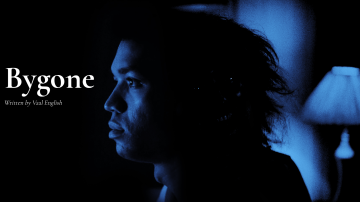
Stills from On The Line (2022, dir. Connor Austin Jones)
Supported by The Gotham Film & Media Institute
INFLUENCES AND VISUAL LANGUAGE
This project is heavily influenced by Nick Payne's Constellations and Trevor Nunn's 1979 production of Macbeth. The power of a Black Box Theatre, costuming, lighting, and some great performances. The spirit of that production courses through our film. The actor is powerful. The characters even moreso when you're working with text as rich as Shakespeare's.

Our visual language oscillates between two extremes -- cold, institutional wides and visceral, evocative close-ups. The wides are meant to create a storybook or painting-esque moment. Referencing the long-lasting histories within prestigious Shakespearean companies and theatre institutions... it also highlights the box workers are often forced to exist within. On the opposing end are visceral, sweaty close-ups used whenever we are in the scene with the actors, the characters, and the text.
The point is to make the characters feel like the giants they are, getting interrupted by the bureaucratic suggestions of the wider institution. It's a back-and-forth conversation highlighting the push-and-pull of the rehearsal room.


Reference Shots
At a time where theater is being under-serviced, we want to BRING THEATER TO FILM. Some of the best actors are working in regional theater circuits and we'll never know their names... their work is nevertheless earth-shattering. We are privileged to be in a medium that has fans. However, our roots in film remain in industries like theater, ballet, and the opera. We can't forget where the craftwork is truly mined and we must discuss the reasons why many top performers choose not to return (be-it pay, availability, or adversity).
Wishlist
Use the WishList to Pledge cash and Loan items - or - Make a pledge by selecting an Incentive directly.
Catering
Costs $600
With a two-day shoot planned we have to make sure we feed our cast and crew. This would cover food and on-set refreshments for both days.
Leading Cast
Costs $3,000
Cost of 5-person cast over 2-day shoot. $250 per day per cast member. SAG SPA recommended minimum.
Music Score
Costs $1,500
Covers the cost of our composer to create, orchestrate, and record the score for the final short deliverable.
Camera, Lighting & Grip Rentals
Costs $3,500
Equipment to be rented from connections with Old Fast Glass and other local equipment rental houses. Covers spherical lenses, lighting, etc.
Location Rental (Two Days)
Costs $2,000
Covers two days of filming at our location, Thymele Arts, the Shirley Dawn Studio.
Crew Expenses
Costs $4,500
No film is made without a crew. We're operating with a lean crew working over two-days. This amount covers both days of filming for all crew
Film Festivals
Costs $1,500
Most productions don't put enough into post-production, much rather into distribution. This would cover festival submissions and roll-out.
Wardrobe + Design Costs
Costs $2,000
Covers costume department: costume mockups for set dressing, Othello's stage dress, rehearsal outfits and design / material costs.
About This Team
This team came together through years of conversation and random Linked-in messages. Over the weeks spent in early development on this project we've come to respect each other's varied backgrounds and perspectives on The Loudest Voice. We all have individual theater experience, but are also truly film forward. Together we've courted Emmy-winning sound editors, make-up artists, and composers to support us in producing the best version of this short we love so much.
Incentives
- The Story
- Wishlist
- Updates
- The Team
- Community
Mission Statement
The Story
WHY OTHELLO?
Othello is one of Shakespeare's best written pieces. It is a controversial work from a time where he was truly in a groove. Othello was written alongside Macbeth, King Lear, Measure for Measure, Hamlet -- it is a great work. And yet, it's production history is marred with so much disappointment. Many Black actors will not do this play... and for good reason... in the wrong hands the play becomes a stereotype of black masculinity.
At the same time, it is one of few leading roles of prestige offered to Black actors within Shakespeare's canon. This script in part investigates the nature of this phenomenon, and really gets to what we think is the problem. It comes down very heavily to the creative team, production company, and ultimately the director.
WHY EVEN TALK ABOUT IT?
This story is written out of our love for the theatre, our love for the work of Shakespeare, and the craft of performing the text. But it must be mentioned that many of these prestigious productions at international companies where creatives aspire to work have continued problems with authentic diversity.
Indifference to racial adversity is peaking and affecting the industry in ways we hadn't seen before. Diversity-focused theaters have had their fundings retracted by the government, leaving many theaters known to have outdated practices that make workers of color uncomfortable. Theaters that tell actors playing Othello to not incorporate their racial experiences into character breakdown as it removes "the everyman aspect" of Othello. Theaters that do not protect actors from audience members that blur the lines of reality and have attacked Black actors for the characters they've played on stage. Theaters that do not protect actors from racism experienced in the towns where they must live and work during their theater residencies. Theaters that don't acknowledge the persons of color their stories require that they have normalized hearing the dissent, having the dissenter leave the theater to never return, only to continue the same exact practices and act is if it's brand new when the new dissenter arrives.
THE STORY
A young Black understudy who gets promoted into the lead role during a production of OTHELLO when the former lead quits three weeks before tech. This is a tenured company that has been performing Othello since the early 1950s. This also means that for nearly half-a-century, this country only had white actors in the lead role of Othello. In full blackface...ranging in pigment from true black to chocolate black to dark tan, before finally casting a Black actor in the 1990s.
While we know Ira Aldridge as the first Black actor to play Othello in the 1700s, there were still plenty of companies in the 20th century that waited till the end of the millennium to cast actors of color.
We find out that, like many of these actors of color, the lead is already thinking about leaving the role because of issues with the director, and moreso, issues with the character. Many actors of color refuse to play the character of Othello as he is often reduced to simplistic stereotypes. But there's always been so much more to the character, even in the early 1600s.

Othello processing his inner thoughts
The director calls the rehearsal to begin and instantly there is friction between he and the newly promoted Othello. He ridicules minuscule aspects of the Othello actor's performance, while only lauding Iago... even when Iago cuts off Othello's monologue, the director chastises Othello only to just cut the monologue in full once finding out that Iago was in the wrong (siding with Iago's instincts).
The director is well-intentioned yet mis-focused, in part because of the casting snafu, but also due to the nature of this year's production of Othello... and he doesn't particularly care for it. It's a Gen Z-adaptation designed to introduce the classical institution to a new audience at the behest of the theater's donors. Yet, the director's philosophy maintains that if "Gen Z" will be the issue at hand, then they cannot also stack "race" as it would turn off audience members.
The Othello actor pushes back, bringing light to the director's relationship with the script, the current state of the world, the unspoken tension weighing the production down and the prospect of this actor leaving the production as well. In doing so, the Othello actors risks all the consequences of being the loudest voice in the room.

The Room Where It Happens
ABOUT THE FILMMAKERS
As writers and directors on this project (Xavier & Connor), we've locked in on this project as it closes a circle that has been open since our days on regional theater scenes. Xavier was a mainstay in the Midwestern regional Shakespeare circuit, having performed in shows like Macbeth, Midsummer's Night Dream and Twelfth Night at the American Players Theatre, Chicago Shakespeare; he's also been involved in the workshopping process of pivotal plays like Toni Stone, Dontrell Who Kissed The Sea, and graveyard shift at the Goodman Theater, Writers Theatre, and UIUC (BFA). Connor is a trained director who spent timed studying stagecraft and dramaturgy with Yale University, The Gotham Institute, and Rideback Rise. He got his undergraduate degree in computer engineering from UIUC (BS) and was hired to adapt a book into a feature screenplay for Matt Kennedy (producer at Startling, Inc., Game of Thrones).
Despite attending the same college, the creative pair did not meet until both moving to Los Angeles and working at the same job--servers. They soon connected over their love for film and classical work: with as much affinity for Spielberg's Jurassic Park as Lumet's Long Day's Journey Into Night, or Emmerich's The Day After Tomorrow as Bergman's The Seventh Seal.
We prioritize edgy, agile films with high contrast, deep colors, and a focus on visceral close-ups and unique wides. A few stills from a recent film are included below. An action-sports short, On The Line, which was supported by The Gotham Film & Media Institute and receives award nominations / honorable mentions at Cannes Shorts and San Antonio Black Int'l Film Festival.
Our work has been recognized by The Gotham, Mammoth Film Festival, Beverly Hills Film Festival, San Antonio International Black Film Festival, Cannes Shorts, HorrOrigins Festival, amongst others.
As writers, directors, and producers we aim to be the creators of our own worlds.
This film would mark our first narrative project as a director duo.


Stills from On The Line (2022, dir. Connor Austin Jones)
Supported by The Gotham Film & Media Institute
INFLUENCES AND VISUAL LANGUAGE
This project is heavily influenced by Nick Payne's Constellations and Trevor Nunn's 1979 production of Macbeth. The power of a Black Box Theatre, costuming, lighting, and some great performances. The spirit of that production courses through our film. The actor is powerful. The characters even moreso when you're working with text as rich as Shakespeare's.

Our visual language oscillates between two extremes -- cold, institutional wides and visceral, evocative close-ups. The wides are meant to create a storybook or painting-esque moment. Referencing the long-lasting histories within prestigious Shakespearean companies and theatre institutions... it also highlights the box workers are often forced to exist within. On the opposing end are visceral, sweaty close-ups used whenever we are in the scene with the actors, the characters, and the text.
The point is to make the characters feel like the giants they are, getting interrupted by the bureaucratic suggestions of the wider institution. It's a back-and-forth conversation highlighting the push-and-pull of the rehearsal room.


Reference Shots
At a time where theater is being under-serviced, we want to BRING THEATER TO FILM. Some of the best actors are working in regional theater circuits and we'll never know their names... their work is nevertheless earth-shattering. We are privileged to be in a medium that has fans. However, our roots in film remain in industries like theater, ballet, and the opera. We can't forget where the craftwork is truly mined and we must discuss the reasons why many top performers choose not to return (be-it pay, availability, or adversity).
Wishlist
Use the WishList to Pledge cash and Loan items - or - Make a pledge by selecting an Incentive directly.
Catering
Costs $600
With a two-day shoot planned we have to make sure we feed our cast and crew. This would cover food and on-set refreshments for both days.
Leading Cast
Costs $3,000
Cost of 5-person cast over 2-day shoot. $250 per day per cast member. SAG SPA recommended minimum.
Music Score
Costs $1,500
Covers the cost of our composer to create, orchestrate, and record the score for the final short deliverable.
Camera, Lighting & Grip Rentals
Costs $3,500
Equipment to be rented from connections with Old Fast Glass and other local equipment rental houses. Covers spherical lenses, lighting, etc.
Location Rental (Two Days)
Costs $2,000
Covers two days of filming at our location, Thymele Arts, the Shirley Dawn Studio.
Crew Expenses
Costs $4,500
No film is made without a crew. We're operating with a lean crew working over two-days. This amount covers both days of filming for all crew
Film Festivals
Costs $1,500
Most productions don't put enough into post-production, much rather into distribution. This would cover festival submissions and roll-out.
Wardrobe + Design Costs
Costs $2,000
Covers costume department: costume mockups for set dressing, Othello's stage dress, rehearsal outfits and design / material costs.
About This Team
This team came together through years of conversation and random Linked-in messages. Over the weeks spent in early development on this project we've come to respect each other's varied backgrounds and perspectives on The Loudest Voice. We all have individual theater experience, but are also truly film forward. Together we've courted Emmy-winning sound editors, make-up artists, and composers to support us in producing the best version of this short we love so much.